
Last updated November 3, 2026
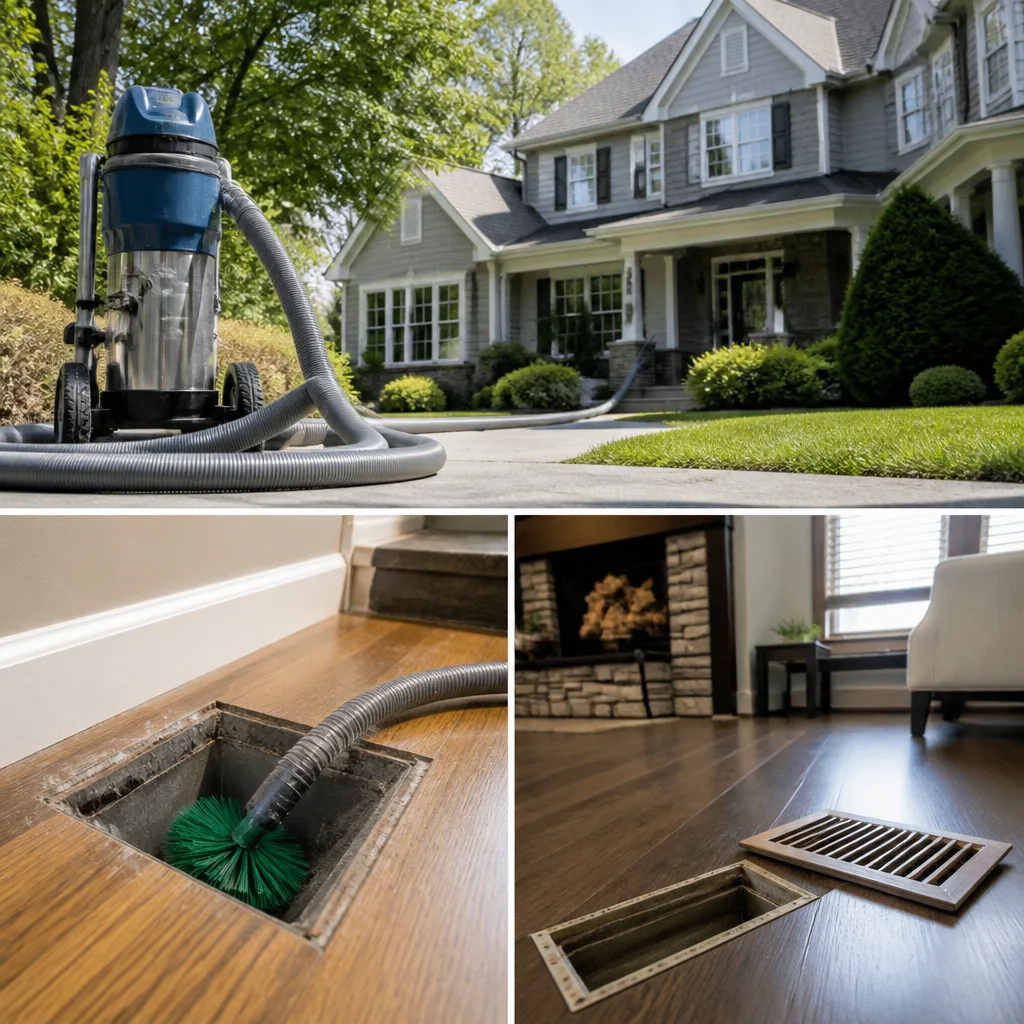 Whole-home duct cleaning
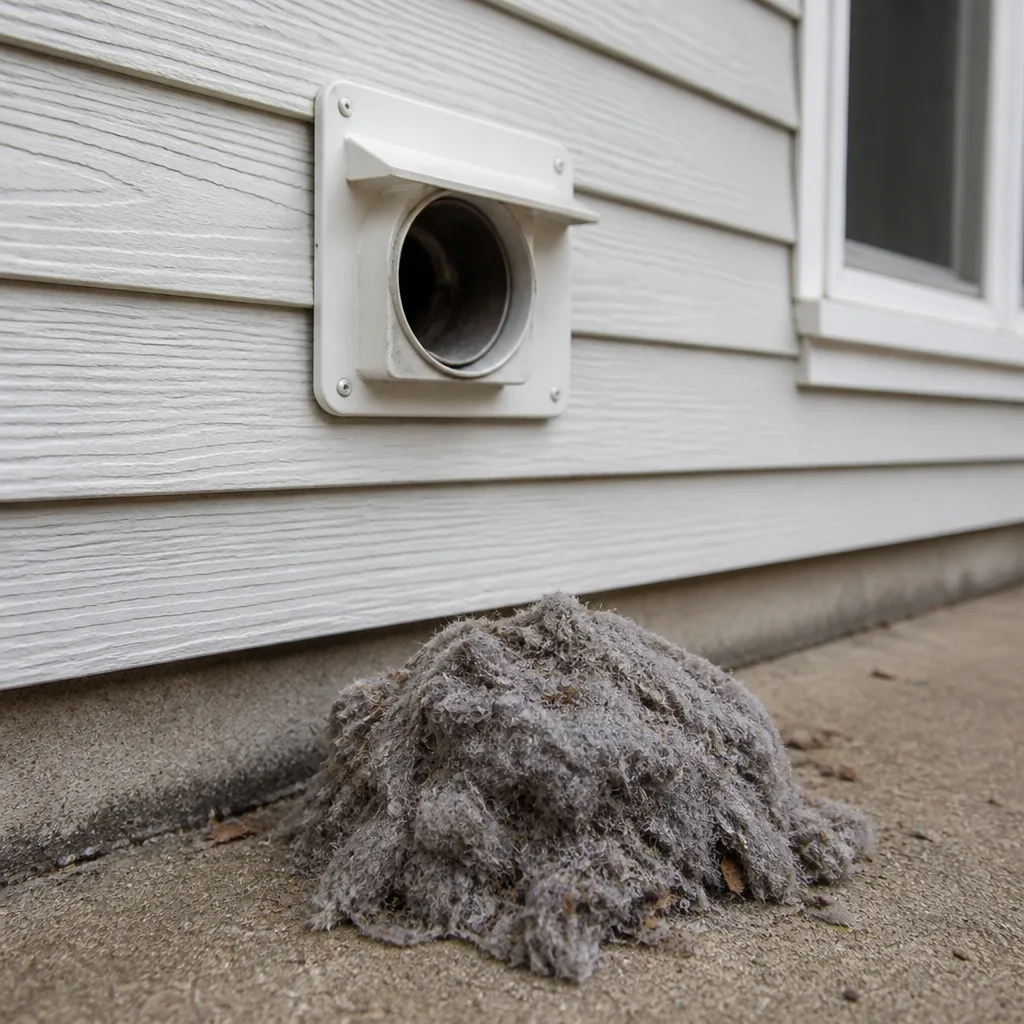 Dryer vent cleaning
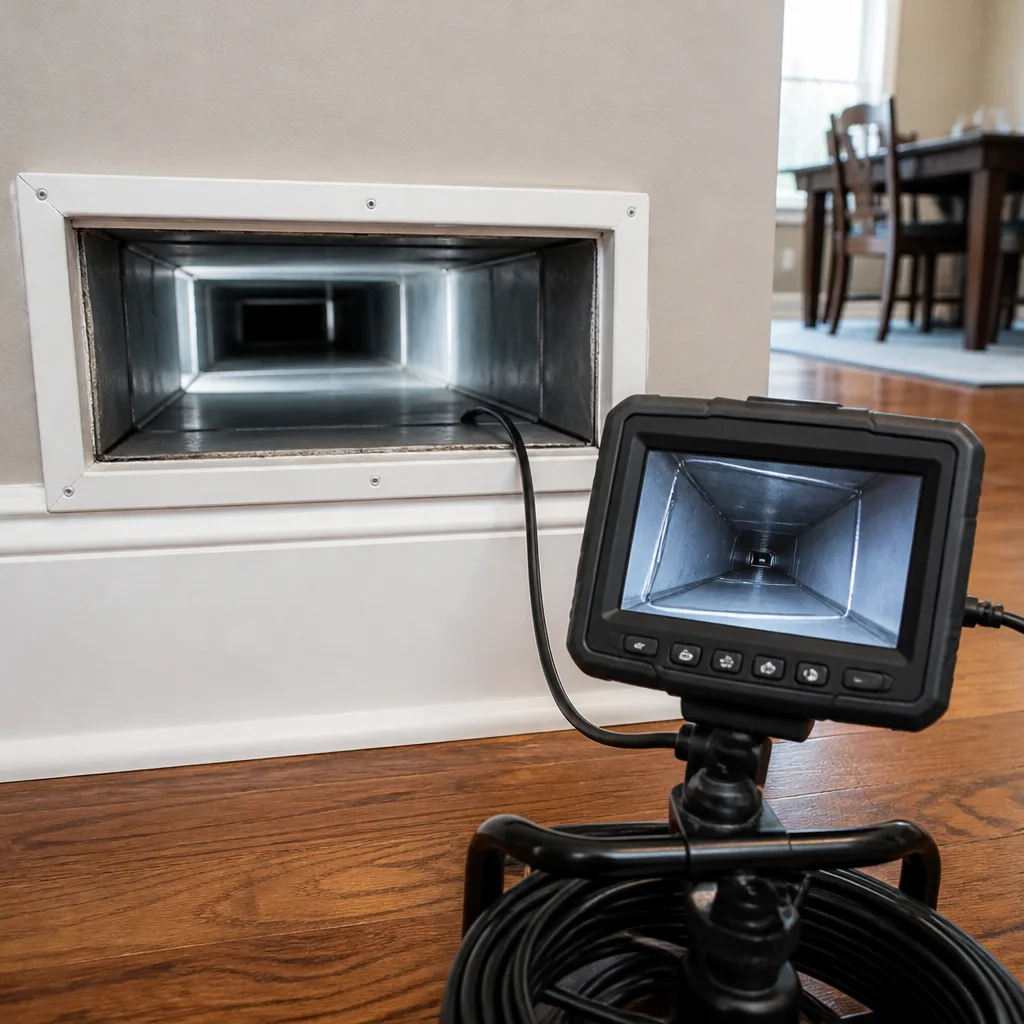 Camera inspection
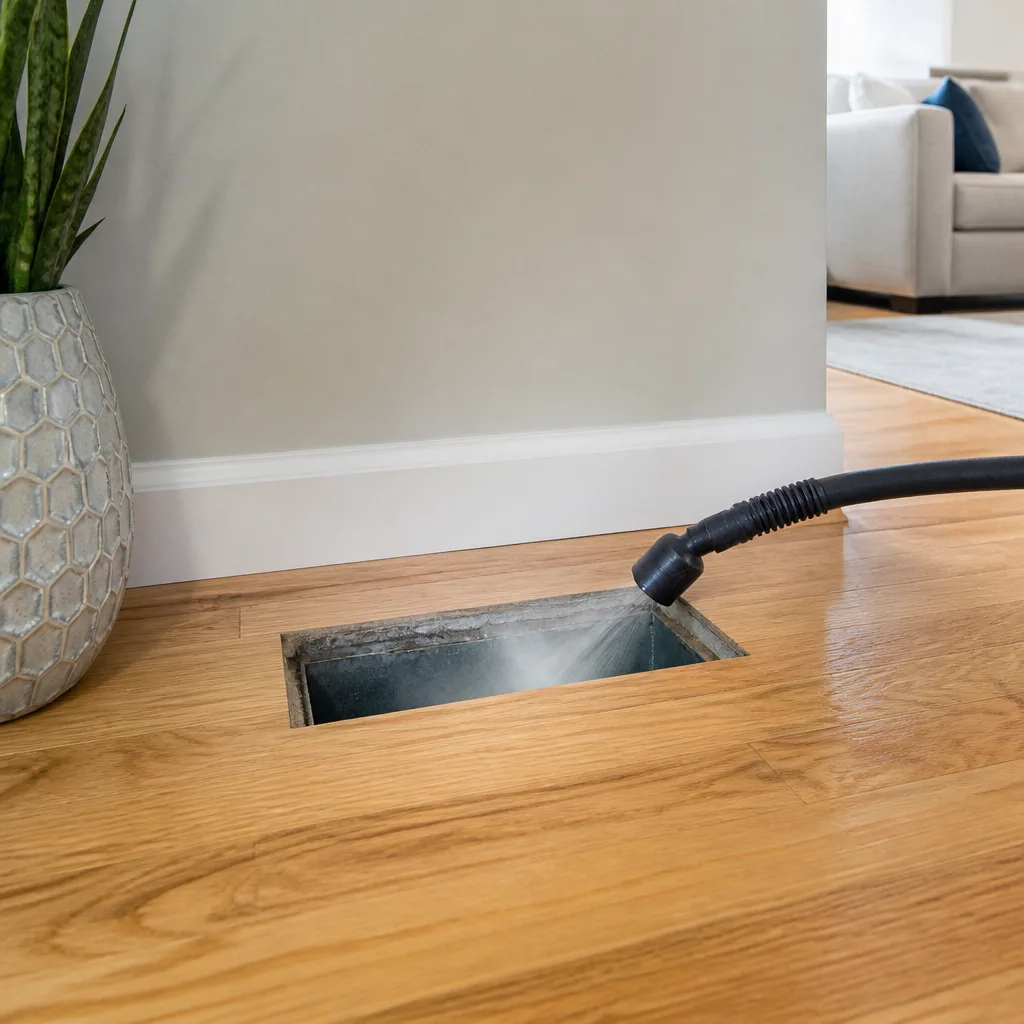 Sanitizing & deodorizing
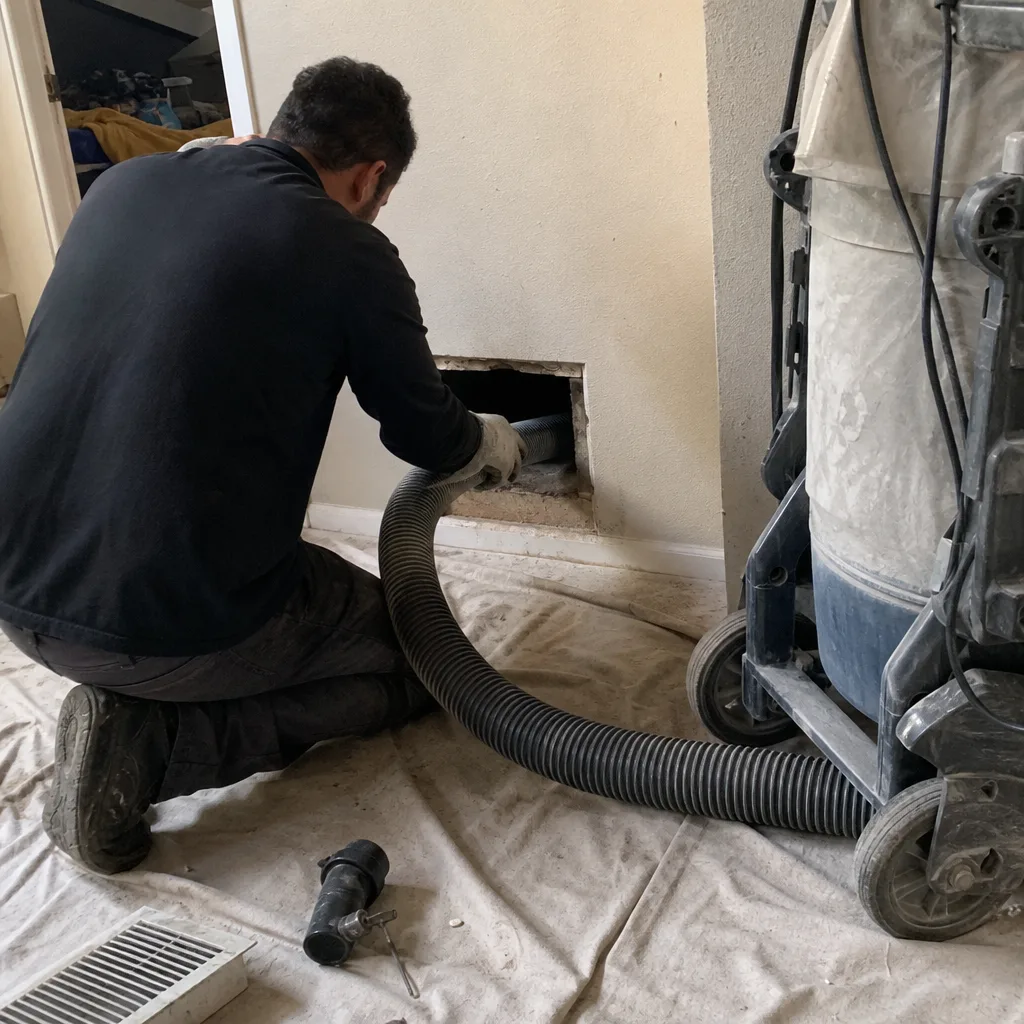
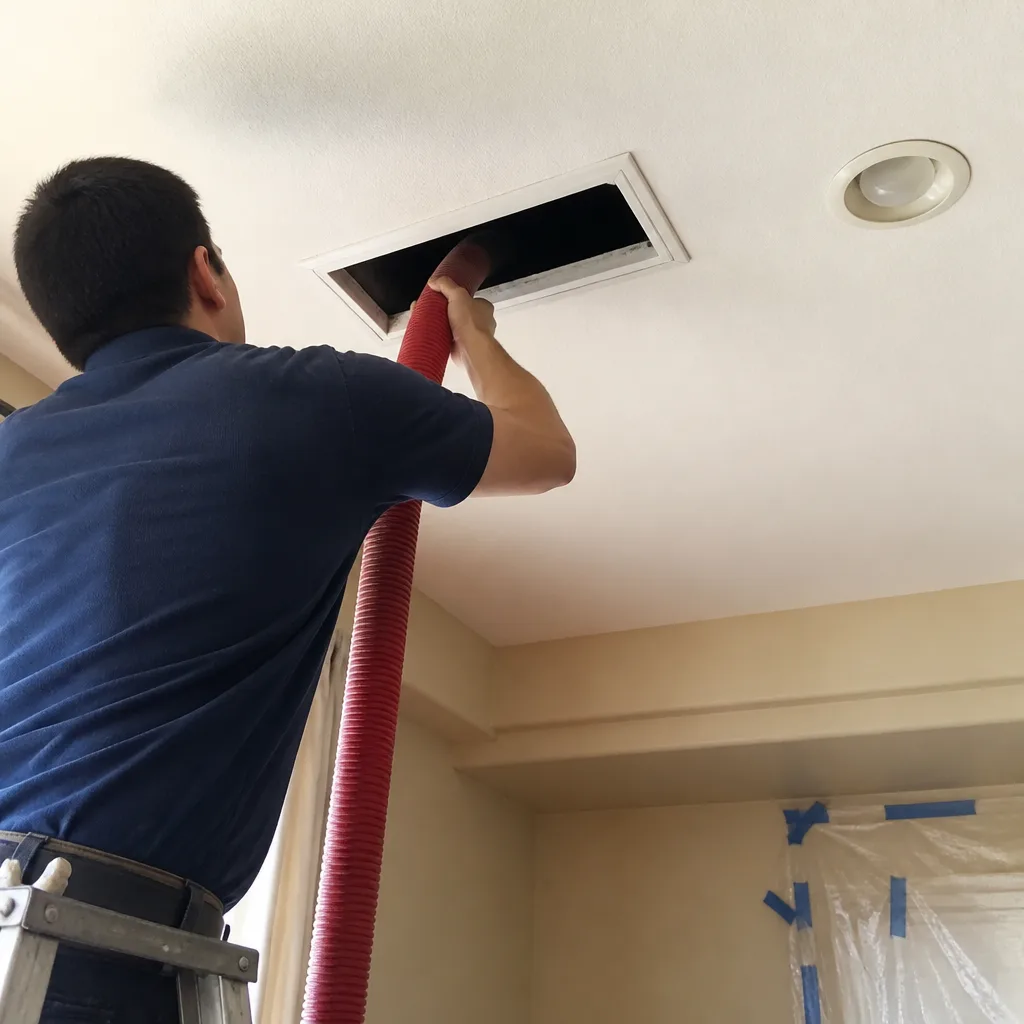
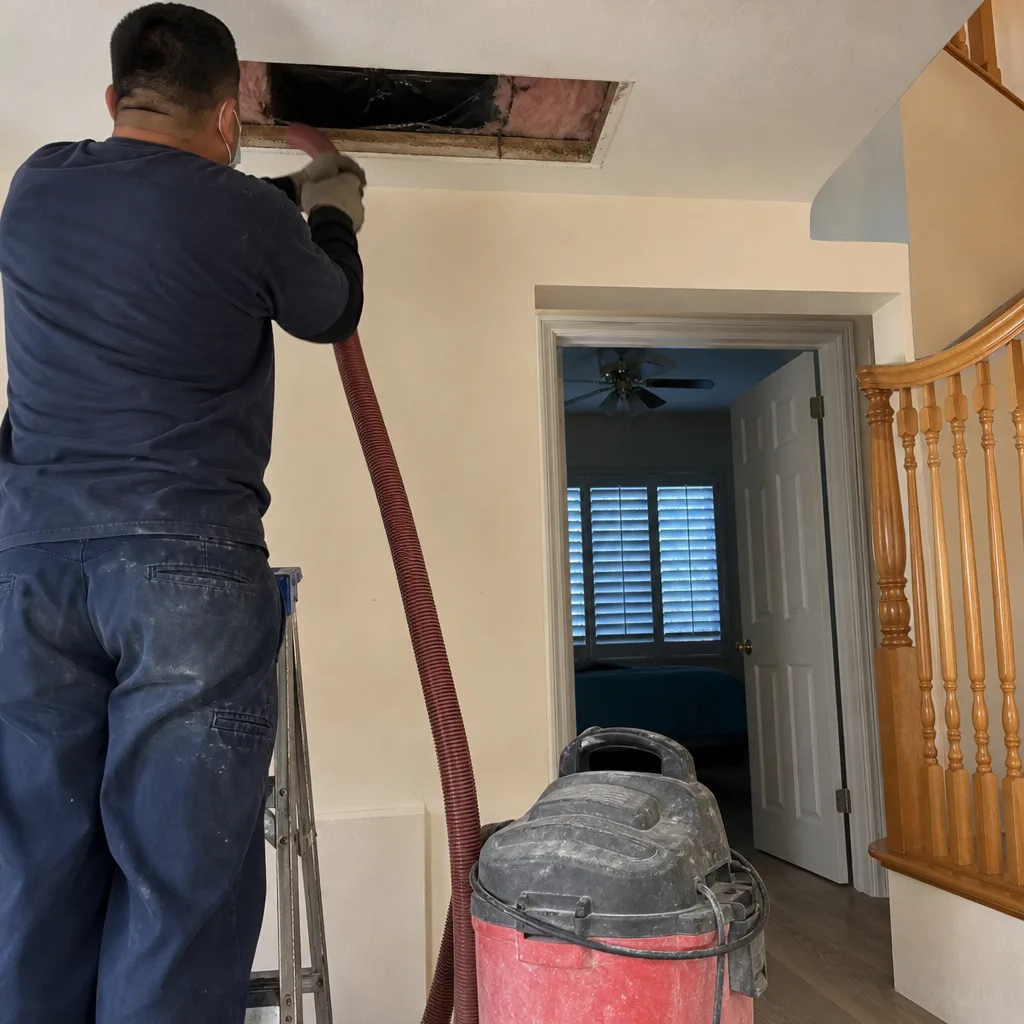
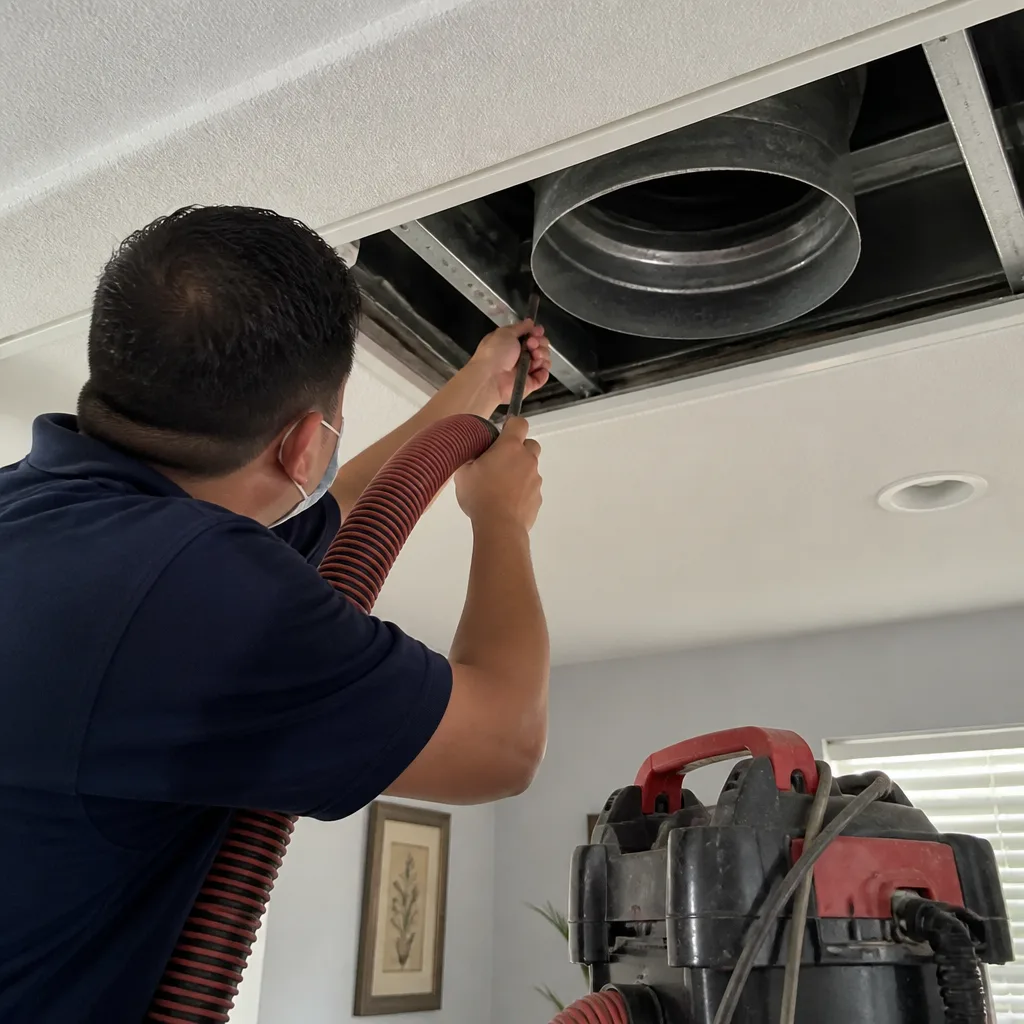
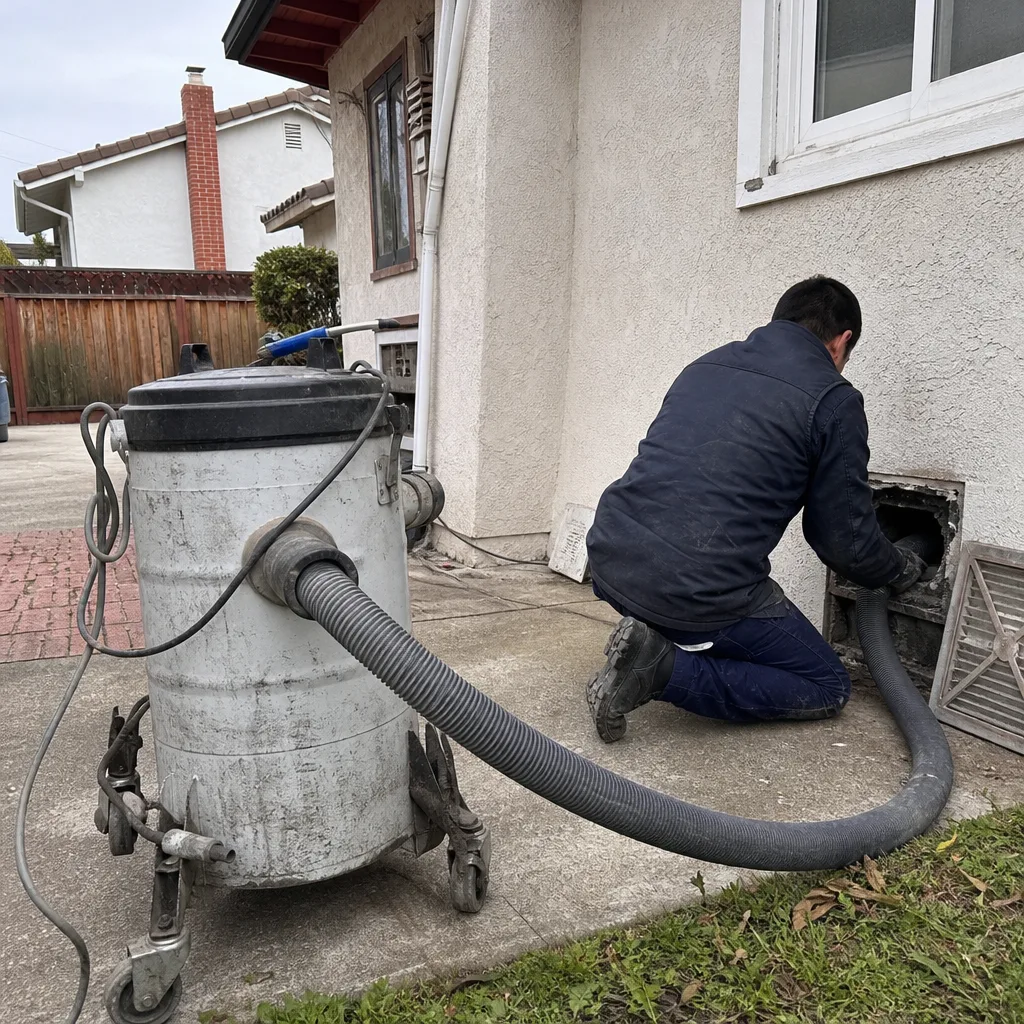
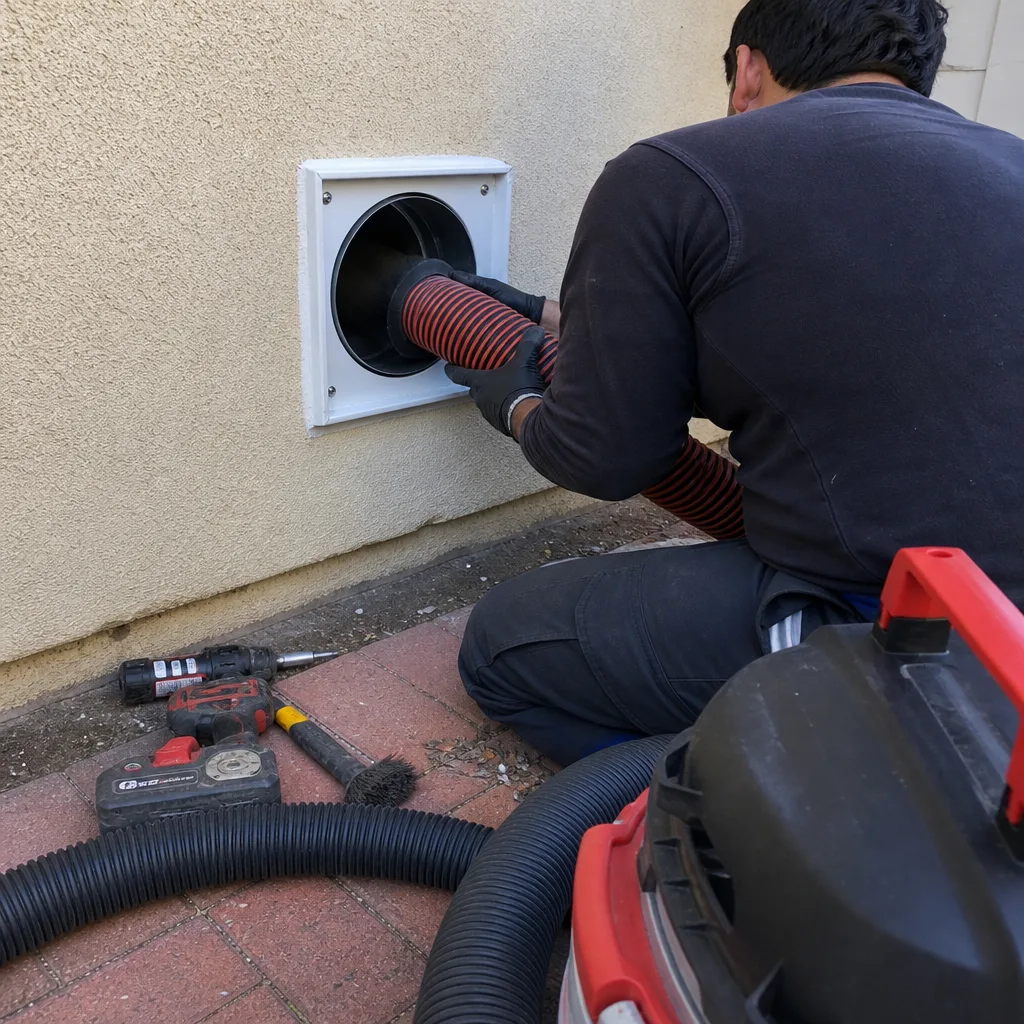
Whole-system duct and dryer vent check with before-and-after photos - you see exactly what came out of your vents
That "$99 whole-house special" is a bait ad - the real number appears once they are in your hallway, or the "clean" is a shop-vac at the register. We photograph the inside of your ducts before and after instead.
The Complete Air Duct Cleaning Guide for Milpitas Homeowners
Milpitas sits at the southern end of the Bay’s worst particulate corridor. On unhealthy air days, your HVAC system cycles outdoor air through your ductwork dozens of times, and a dirty duct system doesn’t filter that load. It stores it. Every time the blower kicks on, some of what accumulated last August gets stirred back into your living room. This guide – along with The Complete Guide to Air Duct Cleaning in Milpitas – explains how local conditions change the math on duct cleaning, what a legitimate cleaning actually involves, and how to verify the work was done right.
Quick Answer
Our Air Duct Cleaning services in Milpitas typically cost $350 to $600 for a full system, and most homes along the 880 corridor need it every 2 to 3 years rather than the generic 3-to-5-year interval because of valley dust and wildfire smoke cycles. The right method is negative-pressure source removal with professional-grade equipment, not a contact vacuum or a glorified shop vac.
Styles & brands we work with
- Whole-home duct cleaning
- Dryer vent cleaning
- Camera inspection
- Sanitizing & deodorizing
Table of Contents
- Why Milpitas Conditions Change the Cleaning Schedule
- How Concrete-Slab Construction Changes Duct Routing and Contamination
- Two Cleaning Methods: Contact Vacuum vs. Negative-Pressure Source Removal
- What a Legitimate Pre-Cleaning Inspection Documents
- Flex Duct in 1980s-2000s Milpitas Builds: Why It Needs Different Handling
- How to Read a Post-Cleaning Verification
- Common Mistakes to Avoid
- When to Call a Professional
- Frequently Asked Questions
- The Bottom Line
Why Milpitas Conditions Change the Cleaning Schedule
NADCA’s generic recommendation of every 3 to 5 years assumes an average American home in an average climate. Milpitas is not average. The Santa Clara Valley acts as a natural bowl that traps particulate matter, and the prevailing winds push much of it toward the southern edge of the bay. Milpitas catches that load. Add wildfire smoke season, which now runs reliably from July through October, and most systems here carry meaningfully more contamination than the national baseline.
Here’s what we see in Milpitas homes, neighborhood by neighborhood:
- Homes near Coyote Creek and the 880 corridor: continuous fine dust from freeway brake and tire wear, plus higher humidity that makes dust adhere to duct walls rather than blow through.
- Homes in the hillside developments east of Piedmont Road: dry, fine soil particles and wildfire smoke residue that settles into return ducts during wildfire season.
- Midtown and Sunnyhills tract homes from the 1960s-1970s: decades of layered contamination, often with original return ducting that was undersized for modern filter media.
- Newer builds near the Great Mall and BART extension areas: construction dust from ongoing development that enters during the build cycle and lingers in the system.
The practical takeaway is this: if you run your HVAC system regularly during wildfire season, or if you live within a half mile of a major arterial or the freeway, a 2-to-3-year cleaning interval is more realistic than the NADCA guideline. If you have the system running year-round for cooling, add another layer of reasoning. The air handler moves more total air through the system in a mild California climate than it would in a seasonal heating climate, and that means more total particulate passes through the ducts every year.
We recommend checking your return register filters on the first of every month. If you see visible gray-brown coating within 30 days, start planning a cleaning sooner than the calendar suggests. Milpitas dust loads show up fast, and the evidence is on the filter.
How Concrete-Slab Construction Changes Duct Routing and Contamination
Most Milpitas tract homes are slab-on-grade construction. That has a direct, structural consequence for your duct system: supply ducts in slab foundation homes are often routed through the slab itself, in channels that run under the concrete, or in horizontal runs squeezed through the crawl space below the floor joists where the slab transitions to raised sections.
This matters for cleaning in three specific ways.
First, long horizontal runs are the norm. A two-story home on a raised foundation in other parts of the country often has vertical duct runs that can be cleaned top-down with relative ease. In Milpitas slab homes, duct runs are frequently 20 to 40 feet long and horizontal, which means the cleaning system has to maintain strong negative pressure across the entire run to pull debris out, not just disturb it.
Second, slab-embedded ducts take longer to dry. Milpitas does not get much rain, but when humidity builds during fall mornings or when a condensate line backs up, moisture in a slab channel has nowhere to go. Damp dust becomes matted, adhered debris that a low-power vacuum cannot pull loose. A professional cleaning system with sealed negative pressure and mechanical agitation is necessary, not optional, in these situations.
Third, access points are often undersized or inconveniently placed. In many slab homes built before the 1990s, the only register access to the duct run is the floor vent itself. A proper cleaning requires tools designed to reach through register openings and access the full length of the run without cutting access holes. We see this daily in older Milpitas neighborhoods.
The concrete slab also acts as a thermal mass. Ducts routed through it transfer heat differently than ducts in a conditioned attic. When a slab duct collects heavy dust, the dust layer acts as insulation against the slab, which changes the system’s thermal performance and makes the HVAC work harder during Milpitas’s warm season from May through October.
The lesson here is simple: slab-construction homes in Milpitas need a duct cleaning approach built around horizontal runs and long-reach equipment. That’s not what consumer-grade equipment was designed to do.
Two Cleaning Methods: Contact Vacuum vs. Negative-Pressure Source Removal
There are two broad categories of duct cleaning in practice today, and they are not remotely the same service – see DIY vs Professional Air Duct Cleaning: The Milpitas Homeowner’s Decision Guide for a deeper comparison. Understanding the difference matters because it explains most of the price spread you’ll see when you get quotes in Milpitas.
Contact Vacuum Cleaning
Contact vacuum cleaning uses a rotating brush or agitation device that moves through the duct, physically scrubbing the walls. The brush loosens debris, and a vacuum pulls some of it out. The problem in most residential applications is that the vacuum side is often underpowered relative to the agitation side. The brush kicks dust into the air stream, the dust becomes airborne in the duct, and when the system turns back on without a true sealed negative-pressure extraction, that dust exits through the registers into the home.
Think of it this way: dry-sweeping a garage with the bay door closed. You’re moving dust around, not removing it. Contact vacuum is better than nothing, but in a Milpitas slab home with long horizontal runs, it is rarely sufficient on its own.
Negative-Pressure Source Removal
Negative-pressure source removal is what recognized industry equipment, specifically Nikro and Rotobrush systems, is engineered to do. The process works like this:
- The technician connects a high-powered negative air machine to the duct system, typically at the air handler or a main trunk access point, creating a sealed vacuum that pulls the entire duct run to below ambient air pressure.
- With the vacuum running, the technician opens one supply register at a time and introduces a mechanically driven agitation tool into the duct run.
- The agitation scrubs the duct walls, dislodging adhered debris, while the continuous negative air stream immediately carries loosened particulate backward to the collection point.
- No loosened dust escapes into the living space because air only moves one direction: from the open register into the duct and out through the filtration system.
- The process is repeated for every supply run, the return side, and the trunk lines, so the entire system sees extraction, not just the square footage near the access point.
The critical difference is air direction. Negative-pressure source removal keeps all loosened debris moving toward the collection device. Contact vacuum allows debris to resuspend and settle wherever it lands.
This is why the cheapest quote often delivers the least removal. A portable vacuum with a spinning brush attachment is not the same tool class as a Rotobrush or Nikro system. Milpitas slab homes with long horizontal runs need the latter. The physics of pulling material through a 30-foot horizontal run under negative pressure is not something a consumer-grade vacuum can overcome.
You can start with our Air Duct Cleaning in Milpitas service page for the specifics of how we approach each system.
What a Legitimate Pre-Cleaning Inspection Documents
A real inspection is not a flashlight aimed into a register. A quick look at the return side can show surface dust, but it cannot tell you what is inside the supply runs, how much static pressure the system is fighting, or whether filter bypass is making the whole system dirtier than it should be. Any inspector who spends two minutes with a flashlight and a camera is doing a sales pitch, not an assessment.
A legitimate pre-cleaning inspection should document three things.
1. Static Pressure Differential
Static pressure is the resistance to airflow inside the duct system, measured in inches of water column. A healthy residential system in a Milpitas slab home usually runs between 0.3 and 0.5 inches. When duct contamination accumulates, static pressure rises. At 0.6 inches or above, the system is working against itself, shortening blower motor life and reducing airflow at the farthest registers. A competent technician should measure static pressure on both the supply and return sides, before and after cleaning. If your system sees a measurable static pressure drop after cleaning, that is objective proof the restriction was real and the removal improved airflow.
2. Visible Contamination Index
This is a structured visual assessment of the interior of the supply trunk, the return plenum, and representative runs. It should be photographed with a borescope or inspection camera and the images shown to you, not just described. The technician should be able to tell you what they saw, where they saw it, and what it means. Dust film, pet hair accumulation, construction debris, and moisture staining are all material findings.
3. Filter Bypass Gaps
In many Milpitas homes, particularly older ones, the filter rack does not seal correctly. Air bypasses the filter entirely through gaps at the edges or through an improperly sized slot. This means even a high-quality filter is meaningless because airborne particulate flows around it. We use and recommend Honeywell and Aprilaire filtration products specifically because their filter media and housing systems are engineered to reduce bypass. A proper inspection should check the filter rack fit and document any gaps with photos.
If the inspector cannot show you these measurements, they are not inspecting. They are estimating. And an estimate without inspection data is a guess.
Flex Duct in 1980s-2000s Milpitas Builds: Why It Needs Different Handling
A large share of Milpitas homes built from the early 1980s through the 2000s use flex duct for at least part of the system. Flex duct is a wire-reinforced inner liner wrapped with fiberglass insulation and covered with a foil or plastic vapor barrier. It is cheap, easy to route around slab obstructions, and everywhere in California tract construction.
It also degrades differently than sheet metal, and the cleaning approach has to account for that. The three material differences are:
- The inner liner is plastic. Unlike sheet metal, which can tolerate aggressive brush pressure, a flex duct liner tears when a stiff-bristle brush is run at high speed. A punctured liner leaks conditioned air into the building cavity and pulls attic or crawl space air into the duct. That is a worse outcome than the dust you were cleaning.
- Flex duct sags between supports. Over 20 or 30 years, the duct develops low spots that collect debris by gravity. These low spots become moisture traps on humid mornings. Aggressive agitation in a sagging flex run can stretch the wire coil and worsen the sag.
- The insulation jacket hides damage. A flex duct can look fine on the outside and be compromised on the inside. The only way to know is an inspection camera run through the duct before cleaning.
The correct approach for flex duct is reduced brush speed, softer brush media, and more time on the vacuum side than the agitation side. A technician who understands flex duct will run the agitation tool at a lower RPM and make multiple passes rather than one aggressive pass. This is equipment-and-technique territory. Rotobrush systems, for example, are designed with variable-speed agitation that can be tuned to duct material. This is the kind of detail that separates a specialist from a generalist.
When flex duct is damaged, cleaning is not the answer. The answer is repair or replacement, which is a separate service. If your inspection reveals a compromised liner or torn insulation jacket, you’ll want to look at Air Duct Repair in Milpitas before spending money on cleaning.
How to Read a Post-Cleaning Verification
The single most important question in duct cleaning is this: how do you know the work was actually done? You cannot see inside your ducts, and most homeowners will not crawl into an attic or under a slab to check. A legitimate post-cleaning verification should make the answer visible before the technician leaves your driveway.
Here is a step-by-step of what you should expect:
- Before-and-after photos of the same locations. The inspection should have established photographic baseline points in the supply trunk, return plenum, and two or three representative runs. After cleaning, the technician should return to those same points and take comparison photos. Same angle, same lighting. You should be able to line them up side by side.
- A static pressure re-measurement. The same test done before cleaning should be repeated after. A lower static pressure reading indicates the restriction inside the system was reduced. If the number didn’t move, ask why.
- A register-by-register airflow check. A simple airflow measurement at each supply register, before and after, often shows improvement at the farthest runs. That’s the concrete payoff of removing contamination from the duct walls.
- A collection debrief. A professional cleaning produces a visible collection of debris in the extraction system. You should see what came out of your home, not just be told it was removed. Abatement Technologies collection systems are built for exactly this kind of source capture, which is why they’re used in professional IAQ work.
- A system condition summary. If the technician saw flex duct damage, filter bypass issues, or moisture staining, those findings should appear in the final report. A good cleaning report is honest about what cleaning did not solve.
If a company cannot or will not provide this level of verification, look elsewhere. You are paying for removal, not for a story. The Duct Cleaning Milpitas home page explains how we document every step of the process.
Common Mistakes to Avoid
- Hiring on price alone. The spread between a $199 advertised special and a $450 professional cleaning is exactly the spread between contact vacuuming and negative-pressure source removal. The cheaper quote often leaves the debris in the long horizontal runs where Milpitas slab homes hide it.
- Skipping the dryer vent. Many duct cleaning companies do not touch dryer vents. That leaves the single highest-fire-risk component of your duct system untouched. Dryer Vent Cleaning in Milpitas should be part of the same service call where possible.
- Trusting a one-glance inspection. A technician who spends ninety seconds with a flashlight and then quotes you a number is not assessing anything. Demand static pressure readings, filter bypass photos, and a borescope tour of the main runs.
- Thinking a new filter fixes old ducts. A Honeywell or Aprilaire filtration upgrade is genuinely valuable, but it does not remove debris already adhered to the interior walls of the system. Filter upgrades control new particulate; cleaning removes existing accumulation. They work as a pair, not as substitutes.
- Waiting for visible dust. By the time you see dust blowing from registers or collecting on surfaces within a day of cleaning, the problem has been building for years. Duct contamination is an indoor accumulation problem long before it shows up as visible discharge.
- Cleaning without documenting the before state. Without baseline photos and measurements, you have no way to verify the work. A legitimate company supplies both. You should not have to ask for evidence; it should be offered.
- Using a generalist handyman. Duct cleaning is a specialist trade. The right equipment, the training to use it on flex duct versus sheet metal, and the ability to identify actual contamination issues all matter. A handyman with a rented vacuum cannot provide the negative pressure required for slab-home horizontal runs.
When to Call a Professional
There are moments where the answer is obvious: visible mold growth on duct interiors or registers, rodent or pest activity in the system, construction debris left behind after a remodel, or a major dust event like a nearby wildfire season that filled the system with smoke particulate. These all require professional equipment and verification, not a weekend cleanup attempt.
There are also quieter signals. Rising allergy symptoms that worsen when the system runs, uneven heating or cooling between rooms, a blower motor that seems to run longer than it used to, or a persistent musty odor from the registers. Each of these is a warning sign that the duct system is contributing to the problem, not just carrying air.
Duct Cleaning Milpitas offers free estimates in Milpitas – call (877) 358-5491 to schedule an inspection and get a documented, system-specific quote before any work is agreed to.
Frequently Asked Questions
A full-system air duct cleaning in Milpitas typically runs between $350 and $600 for a standard single-family home, assuming a single HVAC system and 8 to 14 supply runs. Slab-foundation homes with long horizontal duct runs may run higher because the work requires more time per run. Avoid quotes under $200, as they almost always reflect contact-vacuum cleaning or bait pricing. Call (877) 358-5491 for an exact quote based on your system. Estimates are free.
The price difference is almost entirely equipment and process. A $99 or $149 quote reflects a portable vacuum with a spinning brush, applied by a technician who may spend 30 minutes in the home. A professional quote reflects negative-pressure source removal with Nikro or Rotobrush equipment, a pre-cleaning inspection backed by static pressure and photos, and a post-cleaning verification. The cheaper option often leaves loosened debris in the system. If a quote seems too good to be true for Milpitas slab construction, it usually is.
Most Milpitas homes should plan on air duct cleaning every 2 to 3 years, not the generic 3-to-5-year NADCA interval. The valley dust load, the 880 corridor particulate drift, and the extended wildfire smoke season all shorten the meaningful interval. Homes near Coyote Creek or the freeway corridors, and homes with pets or residents with respiratory conditions, fall on the shorter end of that range. Homes in newer subdivisions with well-sealed systems may stretch closer to 3 years.
You should receive before-and-after photos of the same duct locations, a static pressure re-measurement after cleaning, and a register-by-register airflow comparison. The technician should also show you the debris collection from your system. If a company cannot provide photographic verification and repeat measurements, do not hire them. A verbal assurance is not documentation.
Duct cleaning removes particulate that has accumulated inside the system, including wildfire smoke residue that adheres to duct walls during smoke events. It is not a substitute for filtration, but it directly reduces the amount of stored particulate that the blower re-entrains when the system runs. Pairing a cleaning with a Honeywell or Aprilaire upgrade is the most effective approach for allergy sufferers in Milpitas who face compounding dust and smoke triggers. Call (877) 358-5491 to discuss the combination.
A professional cleaning in a Milpitas home includes: a pre-cleaning inspection with static pressure readings and borescope photos, sealing the system to a negative air machine, cleaning each supply run under continuous negative pressure with mechanical agitation at the correct speed for the duct material, cleaning the return side, cleaning the trunk lines, and finishing with a post-cleaning verification that includes photos and measurement comparisons. The entire process on a typical slab-home system takes 3 to 5 hours.
The Bottom Line
Duct cleaning in Milpitas is not a generic maintenance ritual. It is a response to measurable, local conditions: valley dust, wildfire smoke, slab-foundation duct runs, and flex duct that behaves differently than sheet metal. The right approach is negative-pressure source removal with professional-grade equipment, documented before and after so you can verify the work. The wrong approach is a contact vacuum and a cheap quote that leaves the debris where it was, just looser. Understanding the difference is the entire game. Choose a specialist who uses real equipment, documents the process, and treats your dryer vent as part of the same safety picture. That is the full duct system approach, and it is the only one that makes sense for Milpitas homeowners.
Contact Duct Cleaning Milpitas
If you are ready to get your duct system assessed by a specialist, Duct Cleaning Milpitas serves homes throughout Milpitas with free estimates. Call (877) 358-5491 to schedule an inspection with documented findings and a flat, system-specific quote before any work begins.
Written by the team at Duct Cleaning Milpitas, serving Milpitas since 2018. For more guides & resources, visit our blog.
See the difference
 Before
 After
 Before
 After
 Before
 After