
Last updated November 2, 2026
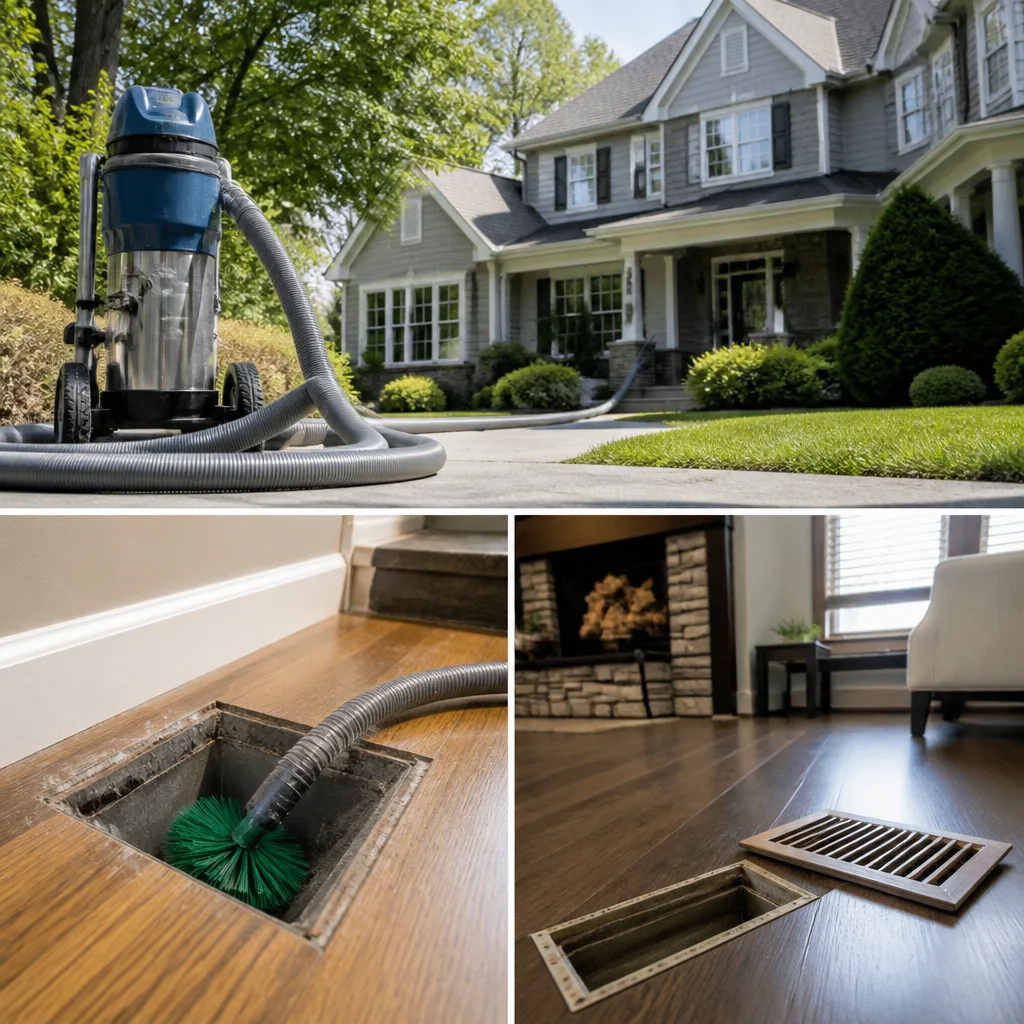 Whole-home duct cleaning
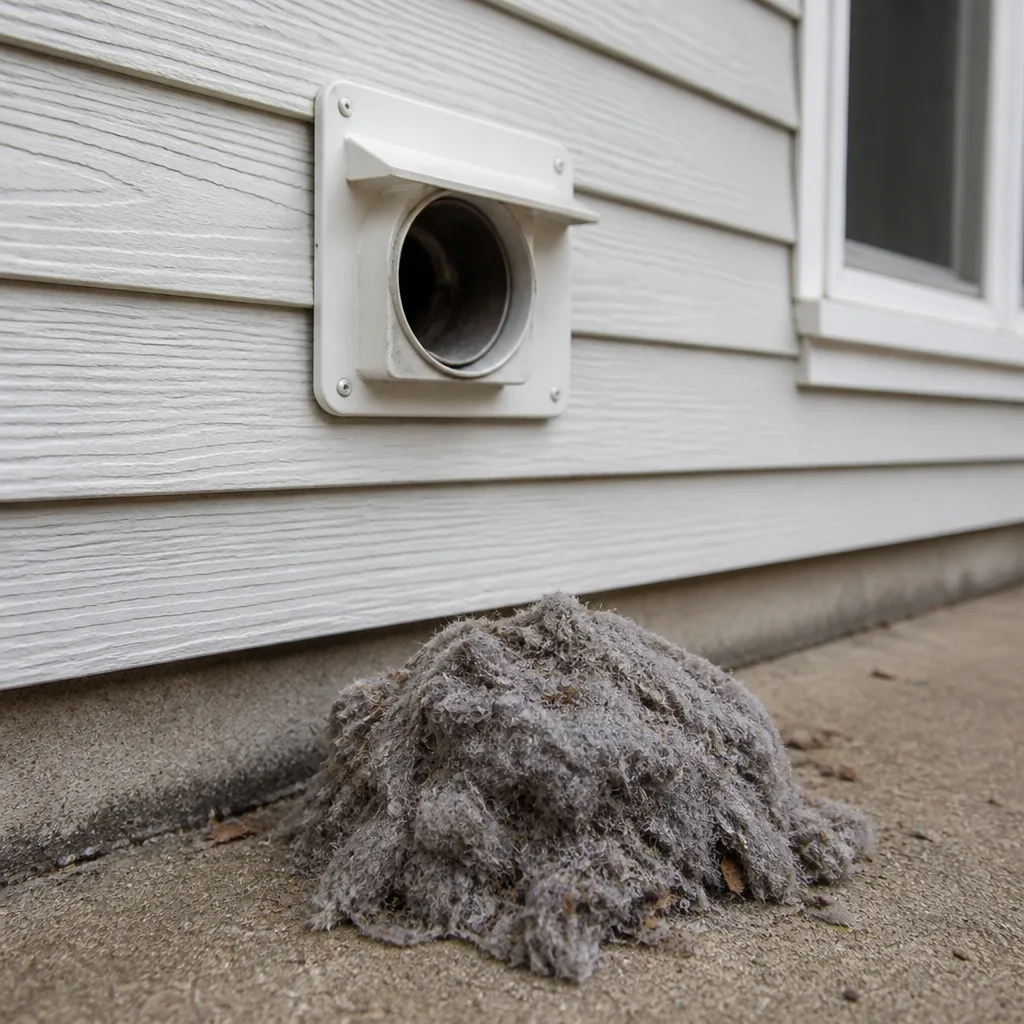 Dryer vent cleaning
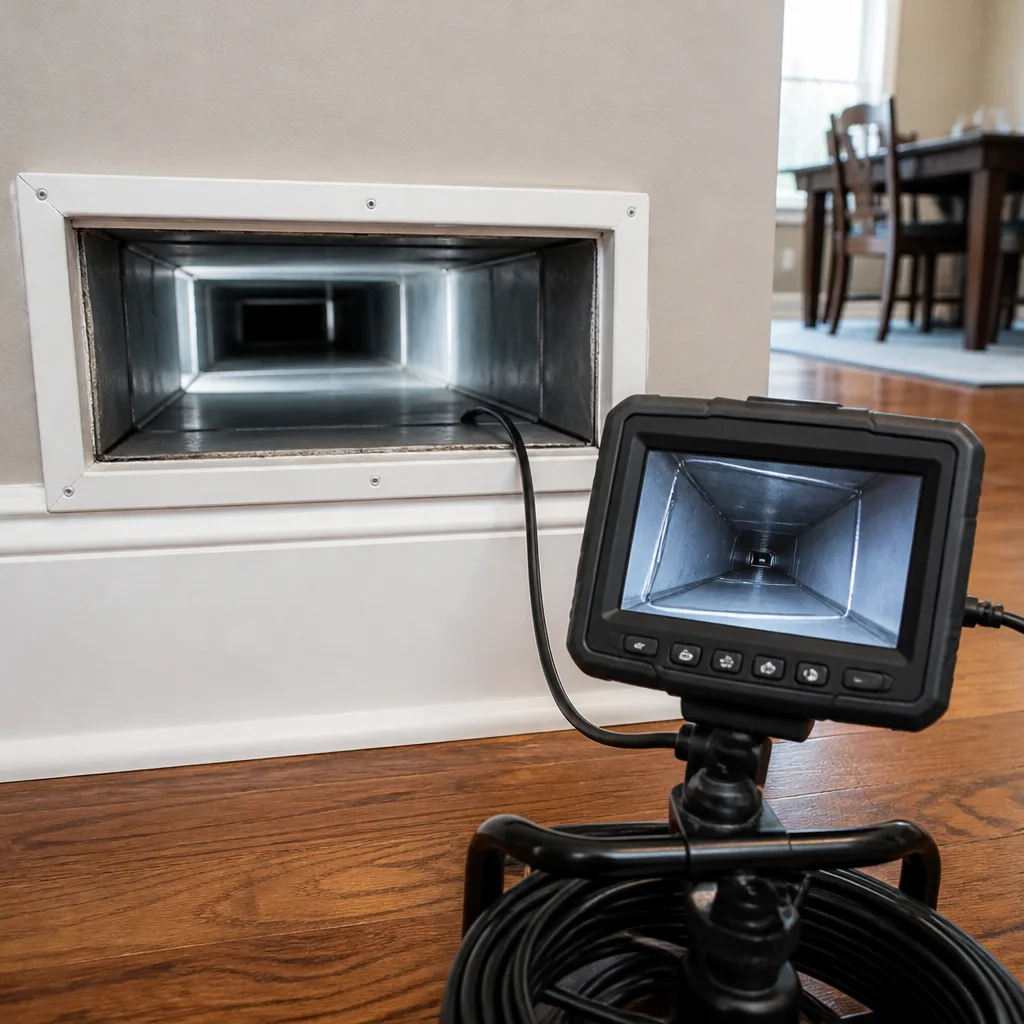 Camera inspection
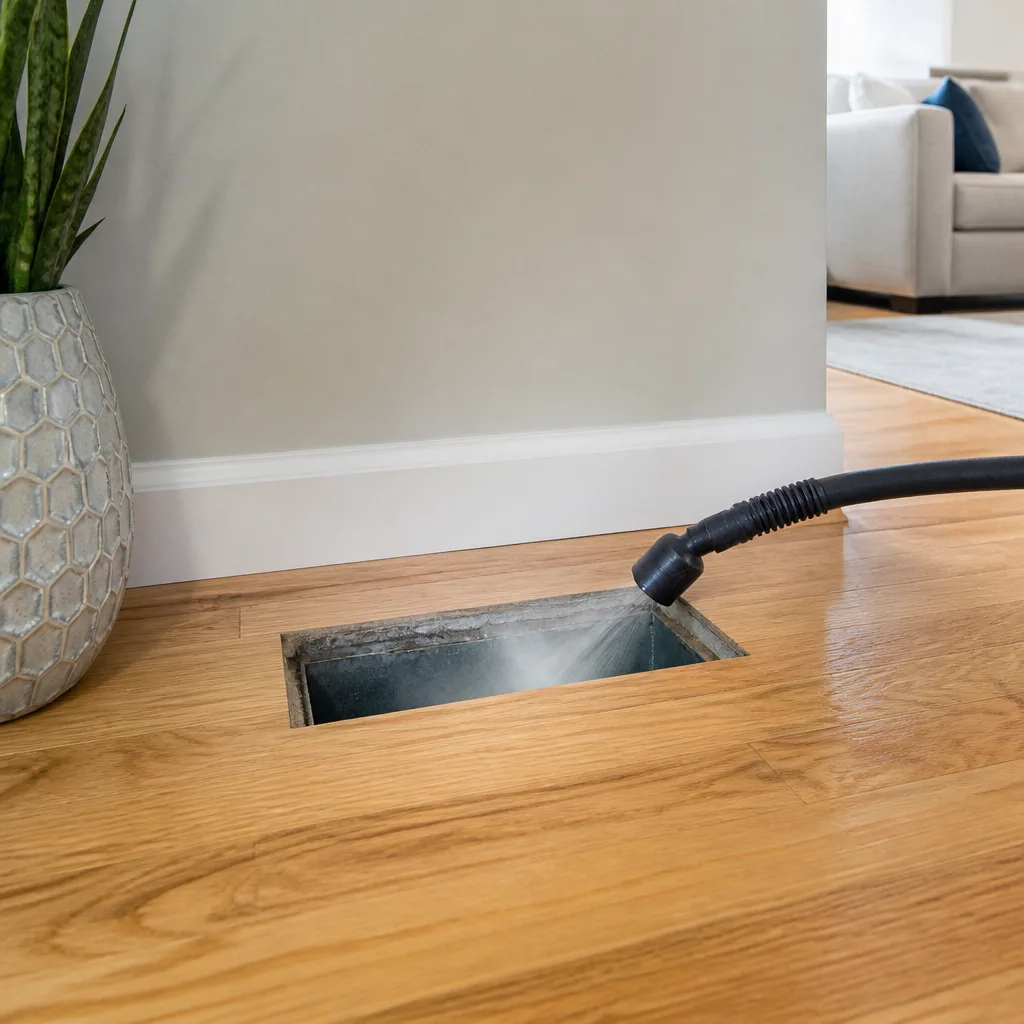 Sanitizing & deodorizing
Whole-system duct and dryer vent check with before-and-after photos - you see exactly what came out of your vents
That "$99 whole-house special" is a bait ad - the real number appears once they are in your hallway, or the "clean" is a shop-vac at the register. We photograph the inside of your ducts before and after instead.
Seasonal Air Duct Cleaning Care for Milpitas: Year-Round Homeowner’s Guide
After the 2020 and 2021 wildfire seasons, HVAC technicians across the South Bay reported something that surprised a lot of homeowners: duct systems coated in a fine layer of ash that standard filter maintenance had completely missed. The reason, in most cases, was that smoke infiltration happened at return air leaks and small plenum gaps – not at the filter face where everyone looks. Milpitas sits in a uniquely exposed position for this kind of seasonal contamination: close enough to Diablo Range grass and oak pollen, ringed by freeway corridors, and downwind of every major fire complex that pushes smoke into the Bay Area. Homeowners who understand the annual cycle – when each contaminant arrives, how it deposits, and when cleaning yields the most benefit – can turn what feels like a random indoor air quality problem into a predictable maintenance calendar. This guide walks through that calendar month by month, explains what actually lands in your ducts each season, and tells you when a professional cleaning in Milpitas is genuinely worth the investment.
Styles & brands we work with
- Whole-home duct cleaning
- Dryer vent cleaning
- Camera inspection
- Sanitizing & deodorizing
Quick Answer
In Milpitas, the highest-value time for professional air duct cleaning is early to mid-fall – after wildfire smoke season ends, before heating season begins. Spring cleaning has a smaller but real benefit: it flushes out pollen and dust that accumulated during winter’s closed-window months. If you only schedule once a year, schedule it between September and early November; if you clean twice a year, add a late-spring appointment in May or early June.
Table of Contents
- Milpitas’s Air Quality Calendar: What Actually Happens Each Month
- How Wildfire Smoke Gets Into Ducts (It’s Not What You Think)
- The 48 Hours After a Spare the Air Event: What to Do First
- Why Fall Is the Highest-Value Cleaning Window in Milpitas
- Milpitas Temperature Swings and Flex Duct Integrity
- Seasonal Maintenance Steps for Homeowners (Without Professional Equipment)
- What Professional-Grade Equipment Actually Does Differently
- Common Mistakes to Avoid
- When to Call a Professional
- Frequently Asked Questions
- The Bottom Line
Milpitas’s Air Quality Calendar: What Actually Happens Each Month
Milpitas doesn’t get dramatic seasons the way the Midwest or Northeast does, but that doesn’t mean the duct environment is static. The city’s inland microclimate – warmer than San Francisco, cooler than Livermore, and sealed between the Diablo foothills and the bay – creates a predictable annual cycle of contaminant loading. Here’s what lands in your ducts, and when.
- January – February: Tule fog season. Dense, low fog forms in the Central Valley and often spills into the bay-side flats. It traps pollutants close to the ground – vehicle particulate from I-880 and CA-237, wood smoke from fireplaces, and industrial emissions – and holds them there for days. Homes run their furnaces heavily, pulling that stagnant air through return registers. Duct systems slowly accumulate fine particulate that settles in the trunk line and branch runs.
- March – April: Pollen surge begins. The Diablo foothills wake up first, with oak, walnut, and grass pollen pushing into Milpitas on west-flowing afternoon winds. April is typically the single heaviest pollen month in the South Bay. If you run your system with marginal filtration, pollen infiltrates and settles. For allergy-sensitive households, this is the season that makes existing duct contamination impossible to ignore.
- May – June: Pollen tapers, dust rises. The hills dry out, and dust from the open spaces above Milpitas starts moving. First heat waves trigger full-time AC use, which re-suspends anything already sitting in the duct system – and pulls more in through any return-side leakage. This is the second-strongest case for a spring cleaning, especially if you have flex ducts over ten years old.
- July – August: Warm, stable air, moderate contamination. This is the quiet accumulation window. Milpitas experiences less wind, less pollen, and less fog. Particles from cooking, pet dander, and normal occupancy dominate. Ducts don’t get dramatically worse – but they don’t get better either.
- September – October: Wildfire smoke season. For half a decade, late summer and early fall have brought smoke from fires in the North Bay, the Sierra foothills, and the Diablo Range. Even when fires are hundreds of miles away, atmospheric patterns funnel smoke into the Bay Area, and Milpitas – positioned at the southern end of the bay – catches it. This is the single highest-contamination window of the year.
- November – December: First rains, first heating demand. Rain knocks down pollen and smoke but raises humidity, which can affect clogged coils and make dust in ducts sticky. Heaters fire up, and anything – smoke particulate, pollen, fabric lint, hair – that accumulated over the prior ten months bakes onto heat exchangers and gets blown into living spaces.
Most homeowners assume ducts get dirty gradually and uniformly throughout the year. In Milpitas, that’s not what happens. The loading is event-driven, and the events are predictable: fog, pollen, smoke, heating startup. Understanding that pattern is what makes seasonal planning useful at all.
How Wildfire Smoke Gets Into Ducts (It’s Not What You Think)
The default assumption is that smoke enters your duct system through the return registers, hits the filter, and – if the filter is doing its job – stays out. That assumption is wrong. In Milpitas homes with typical duct leakage, the most significant smoke infiltration happens at air-handler return plenums, cabinet seams, and loose flex-duct connections in attics and crawlspaces. When the blower runs, those leakage points create negative pressure. Air gets sucked in from everywhere it can – and that includes the smoke-laden air sitting in your attic or crawlspace during a wildfire event.
This is why standard filter maintenance, even with a high-MERV filter installed, misses a substantial share of smoke particulate. The filter only sees the air that passes through the return-side path. Any air entering through a leak downstream of the filter joins the airstream unfiltered and is delivered directly to every room in the house. In our experience, post-wildfire duct inspections in Milpitas routinely show a distinctive pattern: heavy deposition in the first few feet of the supply trunk line, exactly where leakage-entrained air mixes with filtered air. The filter looks fine; the duct interior doesn’t.
What ends up inside is not just ash. Wildfire smoke contains fine particulate (PM2.5), acidic compounds, volatile organic compounds, and soot. The particulate that settles in duct interiors is often hydrophobic and electrostatically charged, so it doesn’t re-entrain easily during normal airflow – it sits there until humidity changes or velocity spikes disturb it. That means a home can carry wildfire residue in its ducts for months, even after the outdoor air clears. Homeowners report phantom smoke smell in December, weeks after the last Spare the Air alert, and it’s usually the ducts re-releasing volatile compounds on first heating-cycle startup.
For this reason, a post-wildfire-season cleaning matters more than a generous MERV rating. The filter strategy helps reduce what enters through the intended path; the cleaning addresses what already made it in through the unintended ones. If you have air duct repair needs – leaks at plenums, separated flex connections, deteriorated boots – addressing them before any smoke season matters more than buying a better filter. A repaired duct system reduces smoke intrusion at the source.
The 48 Hours After a Spare the Air Event: What to Do First
When the Bay Area Air Quality Management District issues a Spare the Air alert and the sky over Milpitas turns orange, the instinct is to shut everything down and wait it out. That’s mostly right, but the 48 hours after the alert lifts are when you’ll either minimize duct loading or lock in contamination for the season. Here’s a practical sequence, no professional visit required.
- Delay filter replacement. Don’t swap your filter during the event or immediately after. The old filter is already loaded with particulate and will continue to catch more during the smoke event. Swapping it early wastes a filter and sends the replacement into a smoke-rich environment with no protection. Wait until the air clears, then replace it.
- Run the fan on “ON” for 48 hours, not just “Auto.” After the worst of the smoke passes, running the fan continuously pushes air through whatever filtration you have much more often than the heat/cool cycle ever does. It won’t remove smoke already inside the ducts, but it does capture more of what’s still circulating in the living space and prevents further settling.
- Do not open windows right away. The first clear afternoon feels like relief, but outdoor particle levels can remain elevated for a day or two after the visible smoke clears. Opening windows then pulls new particulate into the home and toward return registers. Give it 24-48 hours after AQI returns to normal.
- Wipe down surfaces before running the blower on high. A thick layer of surface dust – on registers, shelves, window sills – will re-entrain into the air when the system runs. Damp-wiping visible surfaces reduces what gets pulled back into the return path and deposited in ducts.
- Watch for smoke smell at register level. A few days after the event, place your nose near a supply register while the system runs. If you catch smoke odor from the airflow, that’s a sign the ducts themselves are holding residue. Filters don’t smell of smoke months after the event; the ducts do.
None of these steps eliminates the need for post-season professional attention in a heavy smoke year. But they do keep the total load lower, which makes the eventual cleaning more effective and reduces what the system re-circulates in the weeks after the event. We recommend this sequence to homeowners across Milpitas, from the hillside streets near Hidden Lake Park to the condo developments along Alder Drive – the physics of smoke infiltration don’t change by neighborhood, only the severity.
Why Fall Is the Highest-Value Cleaning Window in Milpitas
If you’re scheduling one professional duct cleaning per year, the September-through-early-November window delivers a better return than any other time in Milpitas. The reasoning is straightforward once you see the annual cycle stacked up: by early fall, the system is carrying everything the year threw at it. Winter fog particulate, spring pollen, summer dust, and – in fire years – smoke residue are all deposited and at rest. The heating season hasn’t yet begun, which means blowers aren’t re-suspending and re-baking that material onto heat exchangers. Cleaning now removes the entire year’s load before it gets heated, re-volatilized, and forced into living spaces.
There’s a second, less obvious factor: post-cleaning performance matters most in the months immediately ahead. Milpitas heating demand runs from November through February. During those months, homes are sealed, windows closed, and indoor air recirculated constantly. If the starting point in November is a clean duct system, the winter indoor air quality baseline is dramatically better. If the starting point is a dirty system with a full deposition layer, every heating cycle through February is an opportunity for re-entrainment.
Fall is also when dryer vent cleaning has a compounding benefit. Laundry loads rise when sweaters and heavy bedding come out of storage, and a lint-clogged vent is a fire risk that gets worse exactly when dryer runtime goes up. We frequently clean both the supply ducts and the dryer vent in a single visit during this window – it’s the one appointment that addresses the full duct-system picture before the season that stresses it most.
Our service area sees similar dynamics across the South Bay, but Milpitas specifically sits on flat, bay-adjacent terrain with an inland temperature bump that makes the heating-season transition sharp. The system cycles hard in late October and November, and the first sustained heating spike is when homeowners notice residual smoke smell, dusty air, or musty register output. Scheduling a professional cleaning before that transition beats reacting to it after it’s already happening.
Milpitas Temperature Swings and Flex Duct Integrity
Milpitas’s inland microclimate – consistently warmer than San Jose’s airport, cooler than Pleasanton, and prone to larger daily temperature swings than either – puts real mechanical stress on flex ductwork. Attic temperatures climb above 140°F on summer afternoons, then drop into the 50s overnight. That’s a daily expansion-and-contraction cycle that, repeated for ten years, loosens connections, stretches inner liners, and cracks the outer vapor barrier.
At season transitions, this stress is worth a visual check. Spring and fall are the two periods when separated flex duct is most likely to reveal itself: the system has just survived a season of extreme cycling, and the first heavy use cycle pushes air at velocity through fittings that may have loosened. Homeowners can listen for hissing at register boots, feel for weak airflow in rooms furthest from the air handler, or check the attic after the system has been running for signs of a sagging or kinked flex run. A separated flex line in an unconditioned attic doesn’t make noise in a dramatic way; it just leaks tempered air into the attic and pulls dusty attic air into the built interior.
This matters seasonally because separated or damaged flex duct changes the contamination behavior of the entire system. A leak on the supply side creates positive indoor pressure that pushes conditioned air out, forcing the home to pull outdoor air back in through the building envelope – bypassing all filtration. A leak on the return side does the reverse, pulling unfiltered attic air directly into the duct path. Neither condition is obvious without looking for it, and both make seasonal contaminant loading significantly worse than it would be in a sealed system.
Seasonal Maintenance Steps for Homeowners (Without Professional Equipment)
Professional cleaning addresses what’s inside the duct system; seasonal maintenance on the homeowner’s side controls what enters it. The two work together. Here’s the calendar we recommend for Milpitas homeowners, built around the specific weather events this area actually experiences.
Spring (March – April): Pollen Readiness
- Upgrade the filter before pollen peaks in April. A MERV 11 or MERV 13 filter works significantly better than the standard MERV 8 at capturing fine pollen. Verify your blower can handle the increased pressure drop – older systems with marginal airflow may need to stay at MERV 11.
- Inspect and clean register grilles in rooms that face the hills. North and east-facing rooms in Milpitas catch more pollen intrusion on the prevailing winds. Register grilles in those rooms should be removed and washed monthly during peak season.
- Check return air ducts for visible gaps at the wall or floor connection. The joint between a return boot and the wall cavity is a common leak path in South Bay ranch and two-story construction. A visible gap here pulls attic or wall-cavity air into the return stream.
Summer (June – August): Dust and Smoke Preparation
- Pre-season smoke inspection by early August. Don’t wait for the first Spare the Air alert. Walk the system: check the air handler cabinet, return plenum, and visible duct joints for signs of separation before smoke season begins.
- Clean the blower compartment if accessible. Dust that accumulates on the blower wheel and motor housing during the mild months gets re-blown into the system during first heavy AC demand. A careful wipe-down of the accessible blower area reduces re-entrainment.
- Verify dryer vent flow before summer laundry loads climb. The vent exhaust should push a steady, strong current against the back of your hand. Weak flow means lint accumulation in the vent line – a fire hazard and a sign the vent needs professional attention.
Fall (September – November): The Big Window
- Schedule professional duct cleaning in early fall. This is the highest-value appointment of the year in Milpitas for the reasons detailed above: post-smoke, pre-heating, maximum deposition load.
- After cleaning, install a fresh MERV 11+ filter. Starting the heating season with both clean ducts and a high-efficiency filter means the system runs the winter from the best possible baseline.
- Run the system for 30 minutes with windows open after the cleaning visit. This clears any residual cleaning-agent smell and verifies that air is flowing at the expected velocity and temperature from every register.
Winter (December – February): Fog and Stagnation
- Check filters monthly during tule fog events. Dense fog carries a surprising amount of fine particulate. Filters in Milpitas homes can load visibly within 30 days during extended fog periods.
- Watch for condensation near register boots. Cold attic air meeting warm duct surfaces can cause localized sweating. Persistent moisture at a register boot signals an insulation or sealing problem worth investigating before mold becomes possible.
What Professional-Grade Equipment Actually Does Differently
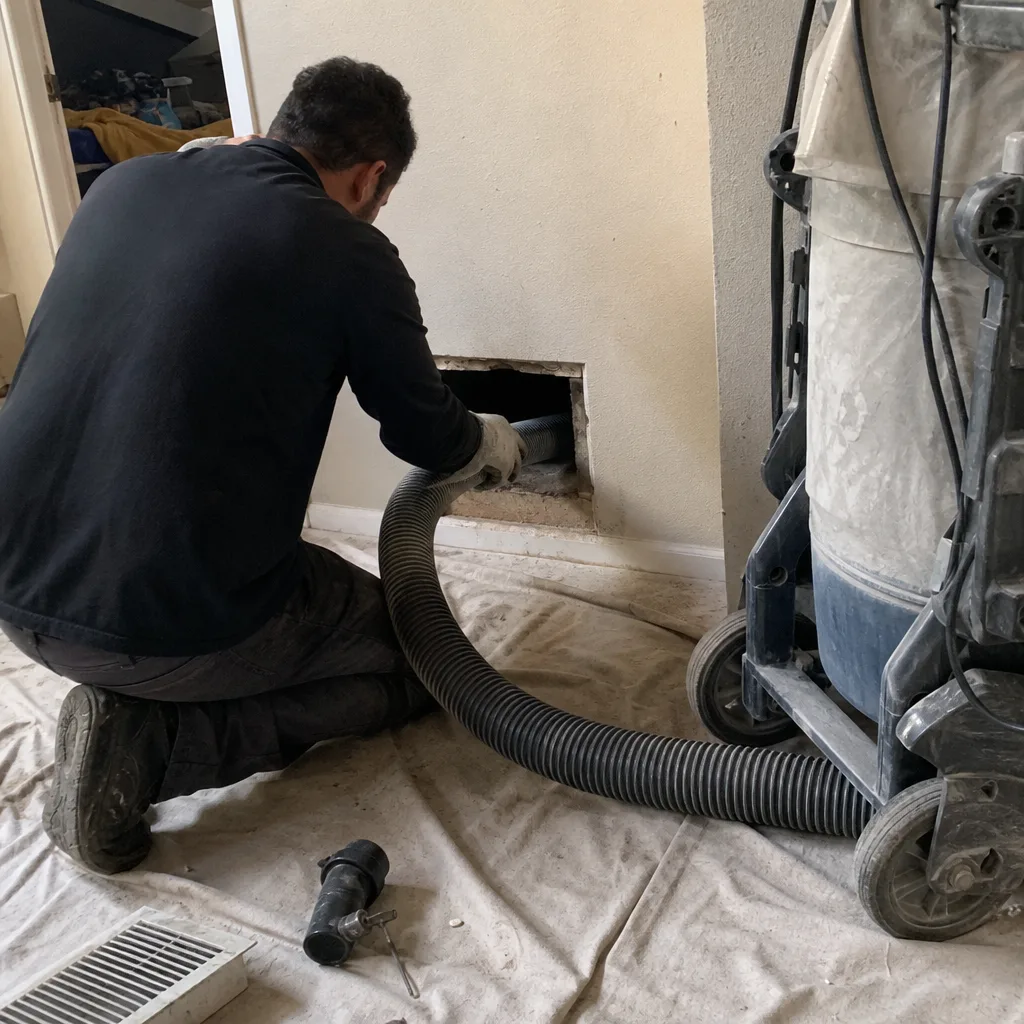
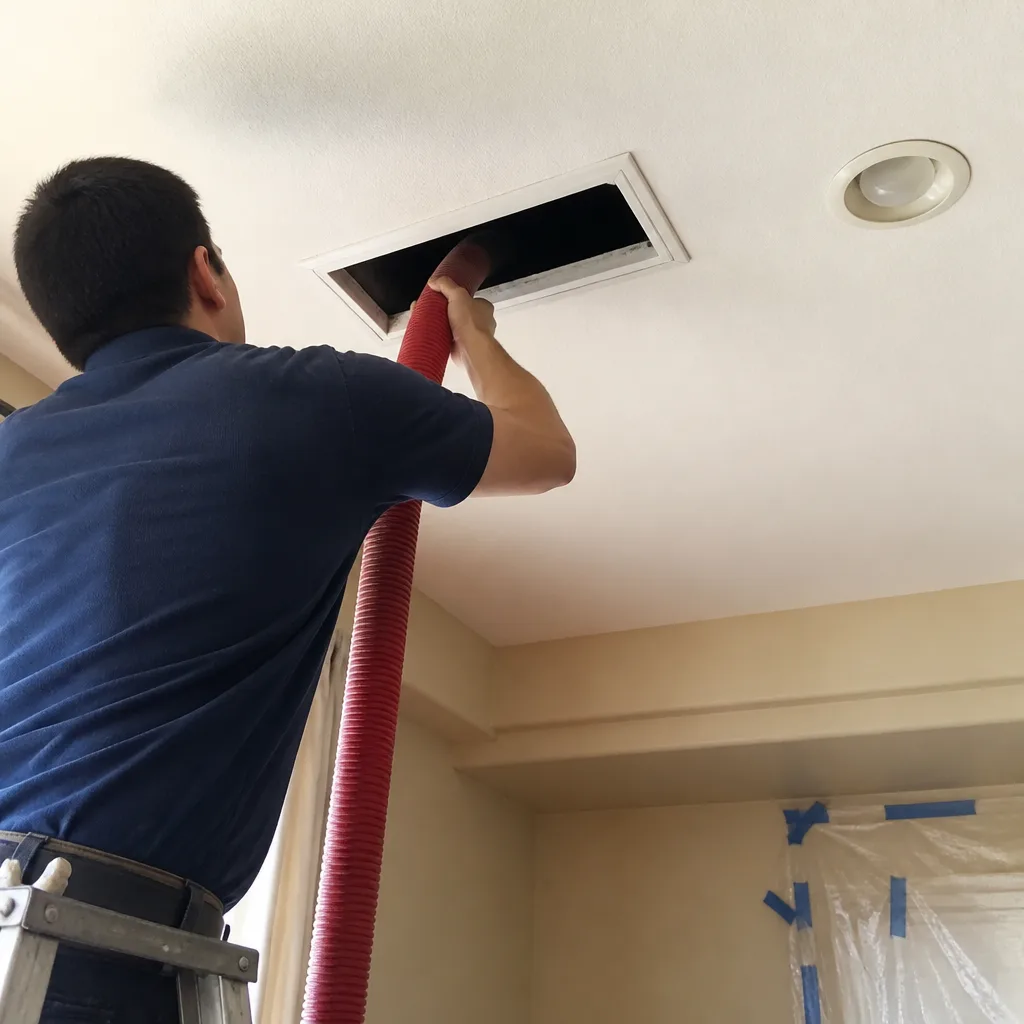
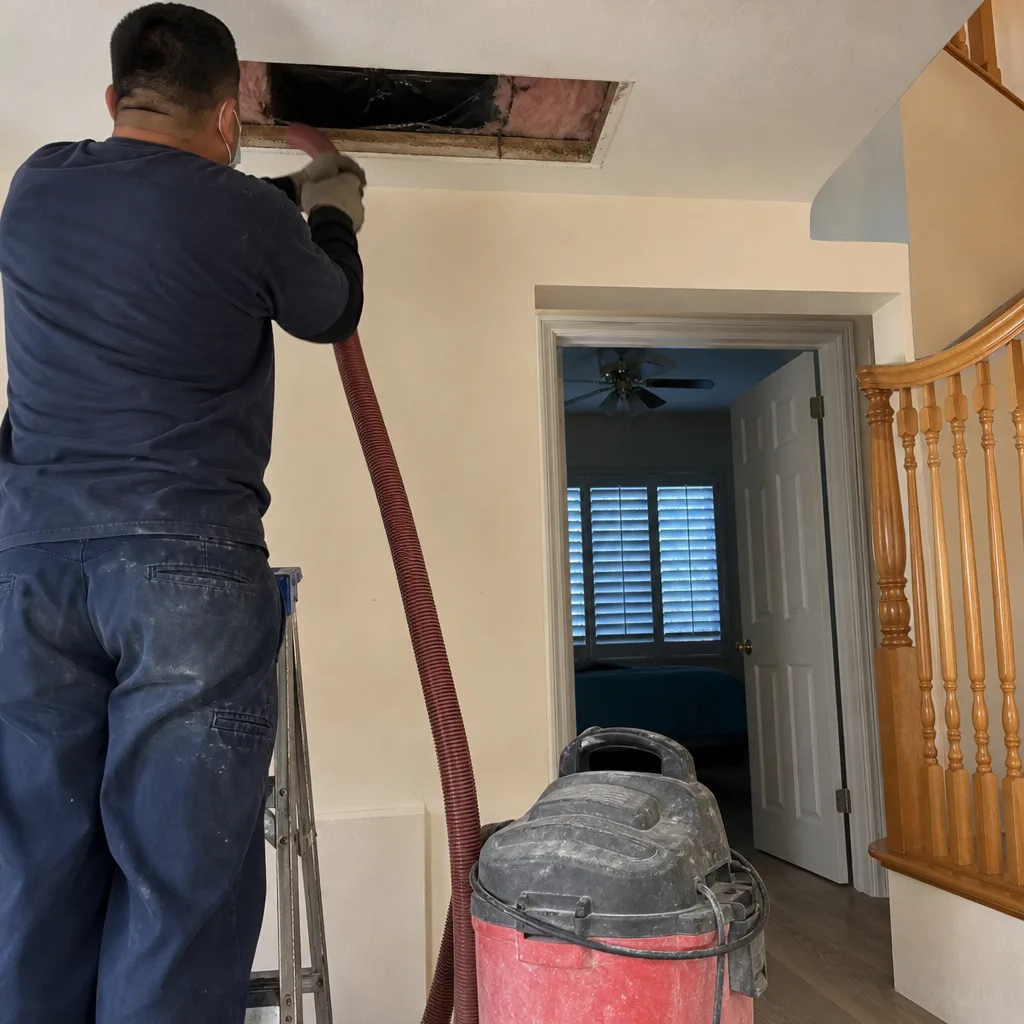
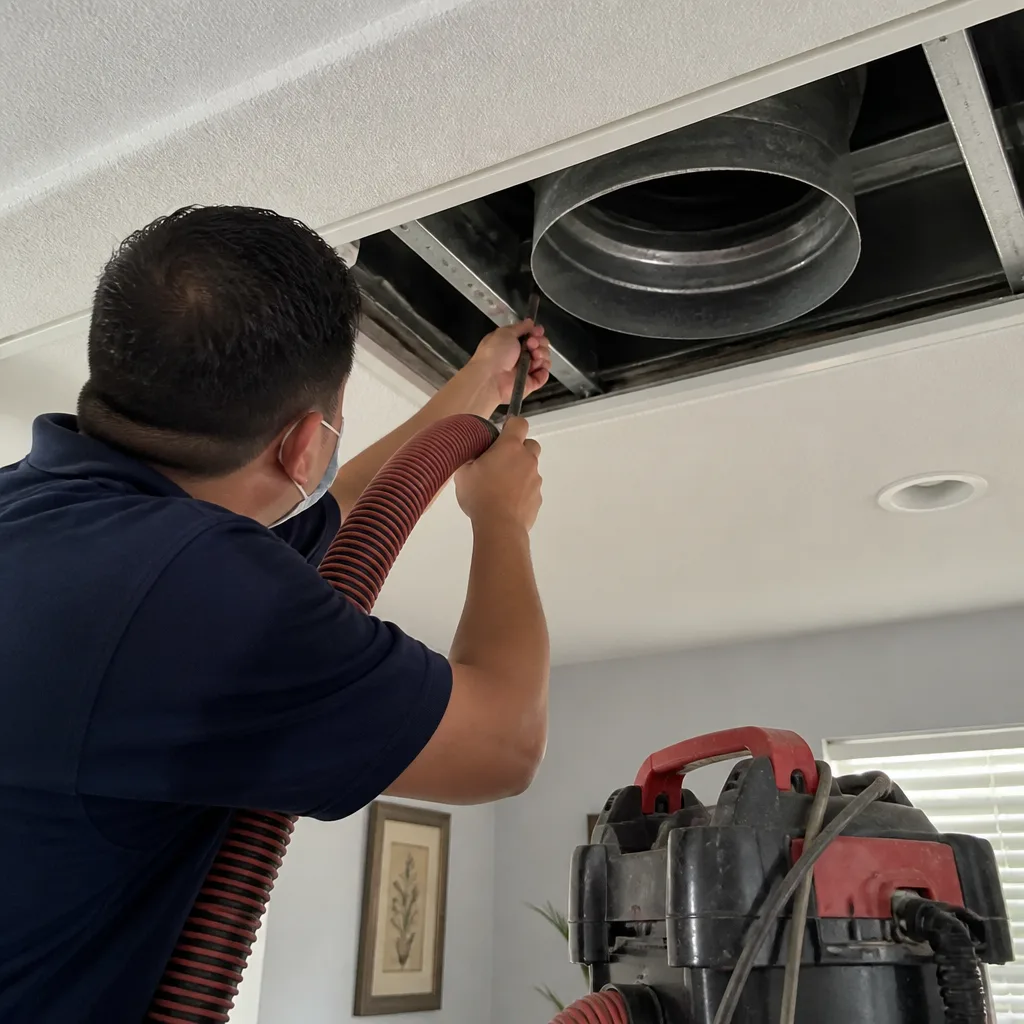
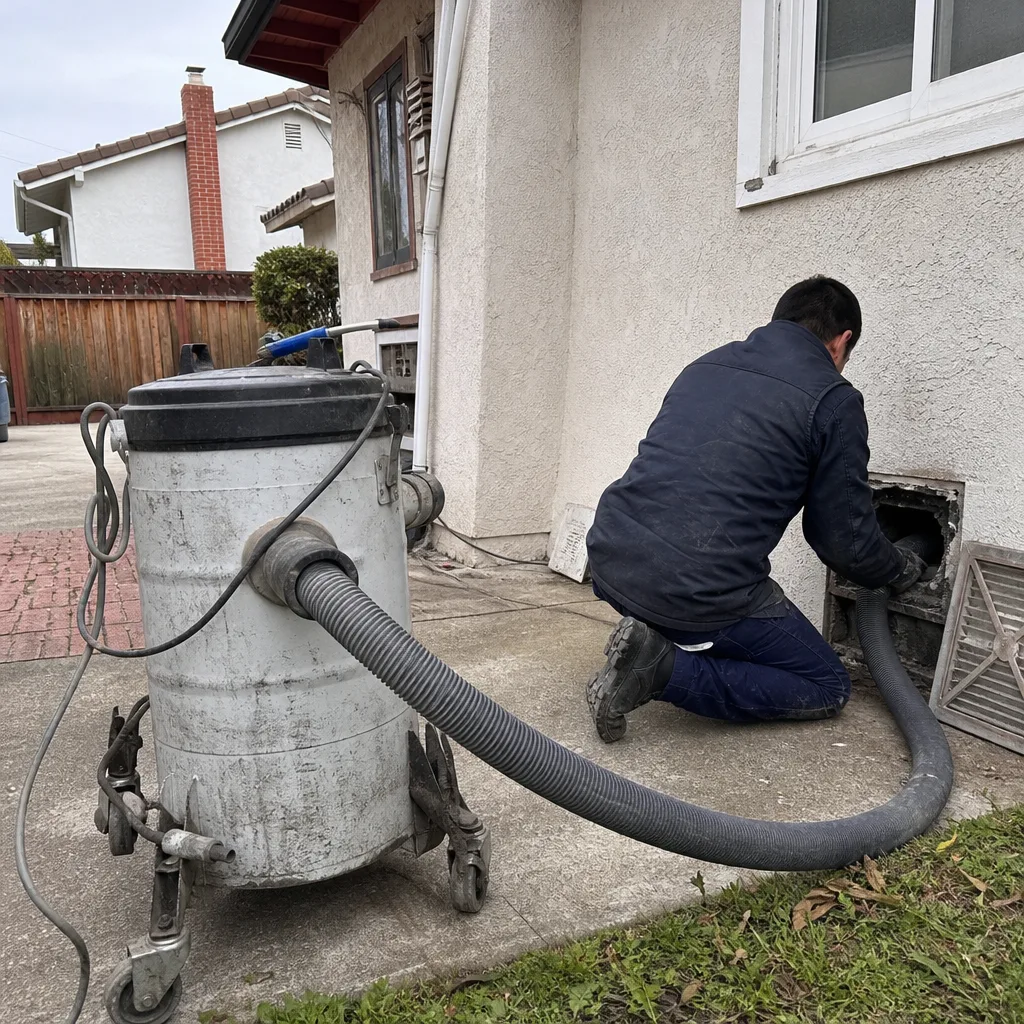
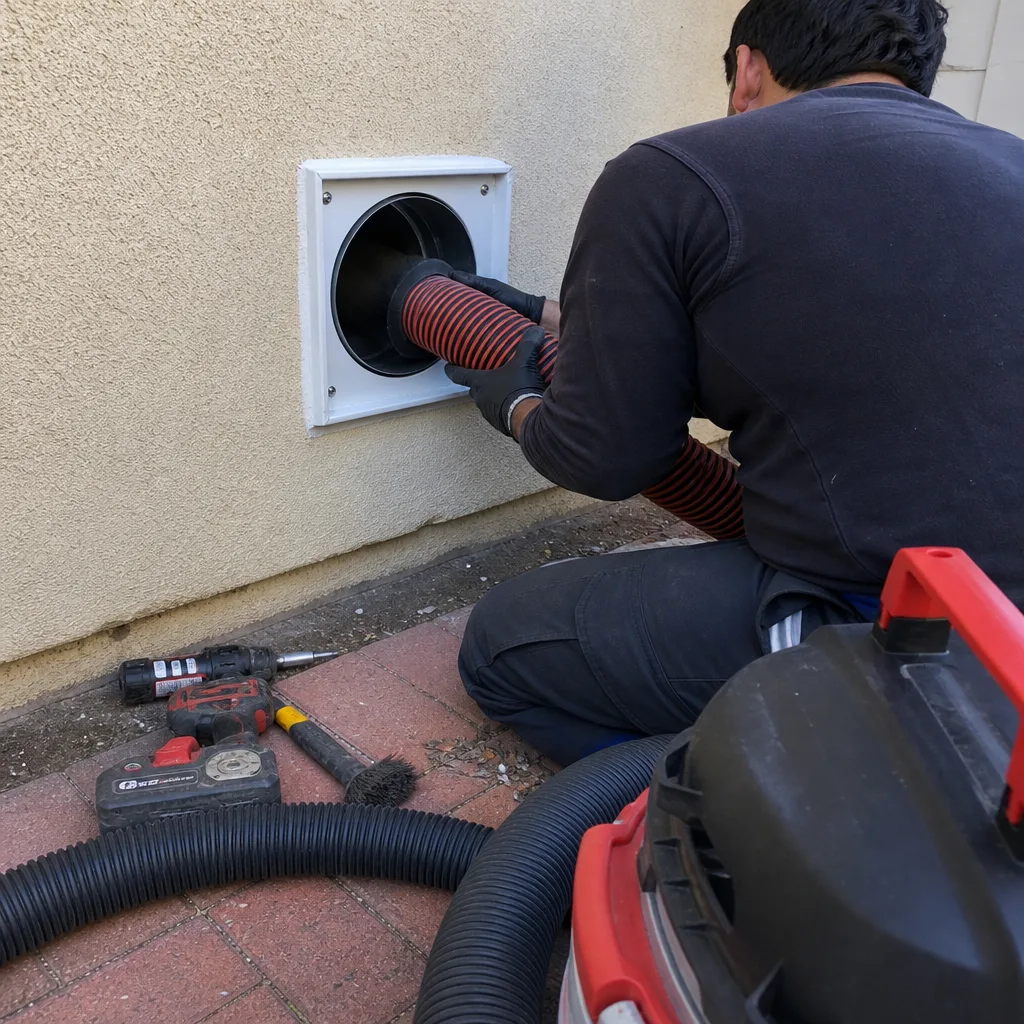
When we talk about seasonal duct contamination in Milpitas, the underlying assumption is that the contamination gets removed – not just stirred around. That’s where equipment differentiation stops being marketing language and becomes a functional difference. A shop-vac attached to a hardware-store hose can reach about three feet into a duct run. A professional-grade system operating on the full-length removal principle reaches the entire length of the duct trunk and branches, dislodging the deposition layer and carrying it to a collection point outside the living space.
We run Rotobrush and Nikro duct-cleaning systems for exactly this reason – they’re engineered for the volumetric airflow and agitation required to break up the fine-particulate layer that wildfire smoke and South Bay dust leave behind. Fine smoke particulate bonds loosely to duct walls and doesn’t respond to simple surface vacuuming; it needs agitation at the wall surface combined with continuous negative pressure. That’s the standard professional approach, and it’s what separates a genuine cleaning from a cosmetic register wipe-down.
The same principle applies to dryer vent cleaning, which is a safety service above all else. Lint that accumulates in a vent line is the most common cause of dryer fires, and it can’t be reached with household tools beyond the first few feet. Professional rotary-brush vent cleaning removes the lint column along the full length of the run to the exterior termination. In Milpitas’s older housing stock – where dryer vent runs are frequently long, multi-turn, and roof-terminated – this matters more than in newer construction with short wall vents.
For post-cleaning air-quality verification and ongoing filtration, we work with Honeywell and Aprilaire products and can discuss integration options with homeowners who’ve been through a heavy smoke season. Abatement Technologies equipment – built specifically for source-capture and particulate control in IAQ applications – is part of our toolkit when the job demands more than standard air washing. None of these names are decorative. They’re functional commitments that determine what the service can actually remove from your system.
If you’re researching professional cleaning options in Milpitas, the equipment question is one of the most productive things to ask any contractor. Not “how much for a house this size,” but “what system do you run, and what’s your agitation method at the duct wall.” The answer tells you more about the likely outcome than the quote does.
Common Mistakes to Avoid
- Treating duct cleaning as a once-a-decade task. In a static environment without seasonal events, that might be defensible. In Milpitas – with fog, pollen, and wildfire smoke driving deposition every year – a 3-to-5-year interval is more realistic for most homes, and a heavy smoke year can justify cleaning sooner than that.
- Relying on filter upgrades alone to address smoke. Higher-MERV filters help with what passes through the filter path. They do nothing for what enters through return-side leaks, which is exactly where smoke infiltration concentrates. Leak repair first, then filtration.
- Cleaning immediately after a wildfire before the season is over. If the smoke keeps returning, the cleaning gets compromised by the next event. Wait until the smoke window has closed for the year – usually mid-to-late October in the South Bay – then schedule the cleaning that resets the system for winter.
- Measuring the cleaning by “before and after” photos alone. Photos of the trunk line are useful, but they can miss deposition in branch runs and return-side paths. Ask about method and equipment, not just visuals.
- Ignoring dryer vent maintenance in the overall seasonal plan. Dryer vent cleaning isn’t a comfort upgrade; it’s fire-risk management. A duct cleaning schedule without vent maintenance leaves the most dangerous part of the system unaddressed.
- Running the blower during high-pollen days with old filters. A load-loading error. The system pulls outdoor air through the building envelope, and during peak pollen weeks that means active deposition inside the ducts. New filters, even MERV 8, do much better than old MERV 13.
- Forgetting to close fresh-air intakes during Spare the Air events. Homes with whole-house ventilation or open fresh-air dampers pull smoke in through the designed path. Close those dampers during events; they can be reopened when AQI recovers.
When to Call a Professional
Some duct problems show themselves clearly: visible dust blowing from registers on system startup, persistent smoke odor months after a fire season, rooms in the same house with noticeably different airflow, a dryer that takes two cycles to dry a single load. These are not maintenance items – they’re system-level conditions that require professional air duct repair or cleaning attention, and they won’t resolve with a better filter. If your home sits on the bay-facing flats near Dixon Landing Road or further east near Piedmont Road, the environmental loading is broadly similar, but older homes often have longer duct runs and more joint failure points. Duct Cleaning Milpitas offers free estimates in Milpitas – call (877) 358-5491 to schedule a system assessment.
Frequently Asked Questions
Whole-house duct cleaning in Milpitas typically ranges from $400 to $1,200, depending on home size, number of duct runs, accessibility, and whether the dryer vent is included. A multi-system package that covers supply ducts, return ducts, and dryer vent usually falls in the $600 to $900 range for a typical 3-4 bedroom South Bay home. The most important thing to ask for is one flat price agreed before work starts. Call (877) 358-5491 for a fixed estimate based on your system’s actual configuration, not a per-vent price that escalates on arrival.
In almost every case we’ve seen, the low-price offers are using consumer-grade equipment that can’t reach more than a few feet into the duct system, or they’re quoting a teaser price that becomes much larger when “mold treatment” or “sanitizing” gets added on. A genuine full-length cleaning with professional agitation equipment takes real time and has real equipment costs, and any quote that looks dramatically cheaper is pricing a different, smaller job than the one a proper cleaning requires.
Before-and-after photos of the main trunk line and representative branch runs are the most meaningful proof, and a reputable contractor will provide them without being asked. You can also verify airflow feel at the farthest registers after the cleaning – the air should move with the same velocity as the nearest registers – and ask for a written description of what was removed.
Every three to five years for most homes is a reasonable baseline, but Milpitas’s specific seasonal loading – pollen from the Diablo foothills, tule fog particulate, and wildfire smoke – pushes many homeowners toward the more frequent end of that range. A heavy smoke year in which you smell smoke at the registers after cleaning the filter should move that timeline sooner, not later.
Not necessarily every year, but duct inspection is warranted after any season where smoke visible or measurable at ground level persisted for more than a few days. Smoke particulate deposits in the duct system through leakage paths that filters can’t address, and the deposition stays in the system until physically removed. If your home smelled smoke indoors for more than 48 hours during a Spare the Air event, a post-season cleaning is worth serious consideration. Call (877) 358-5491 to discuss what we’ve found in Milpitas homes after the last several fire seasons.
They’re adjacent systems but completely separate jobs, and they require different equipment. Duct cleaning addresses the supply-and-return air distribution system that serves your HVAC equipment. Dryer vent cleaning addresses the exhaust line running from your clothes dryer to the building exterior, where lint accumulation creates a fire hazard. We perform both, but the scope, tools, and safety implications are distinct, and both should be on a Milpitas homeowner’s seasonal maintenance radar.
The Bottom Line
Duct contamination in Milpitas follows a calendar. Winter fog deposits fine particulate, spring brings pollen from the Diablo foothills, summer heat re-suspends what’s already settled, and fall wildfire smoke – in the years it arrives – loads the system in ways filters can’t prevent. A seasonal maintenance approach that acknowledges that cycle – upgraded filtration before pollen season, smoke-intake minimization during Spare the Air events, and professional cleaning in early fall before heating season – produces better indoor air with less reactive spending. The “do it whenever the air smells musty” approach costs more over time, because you’re always cleaning after the problem has already circulated through the house. Seasonal planning with Duct Cleaning Milpitas puts the intervention ahead of the contamination cycle, not behind it.
Written by the team at Duct Cleaning Milpitas, serving Milpitas since 2018.
See the difference
 Before
 After
 Before
 After
 Before
 After