
Last updated November 2, 2026
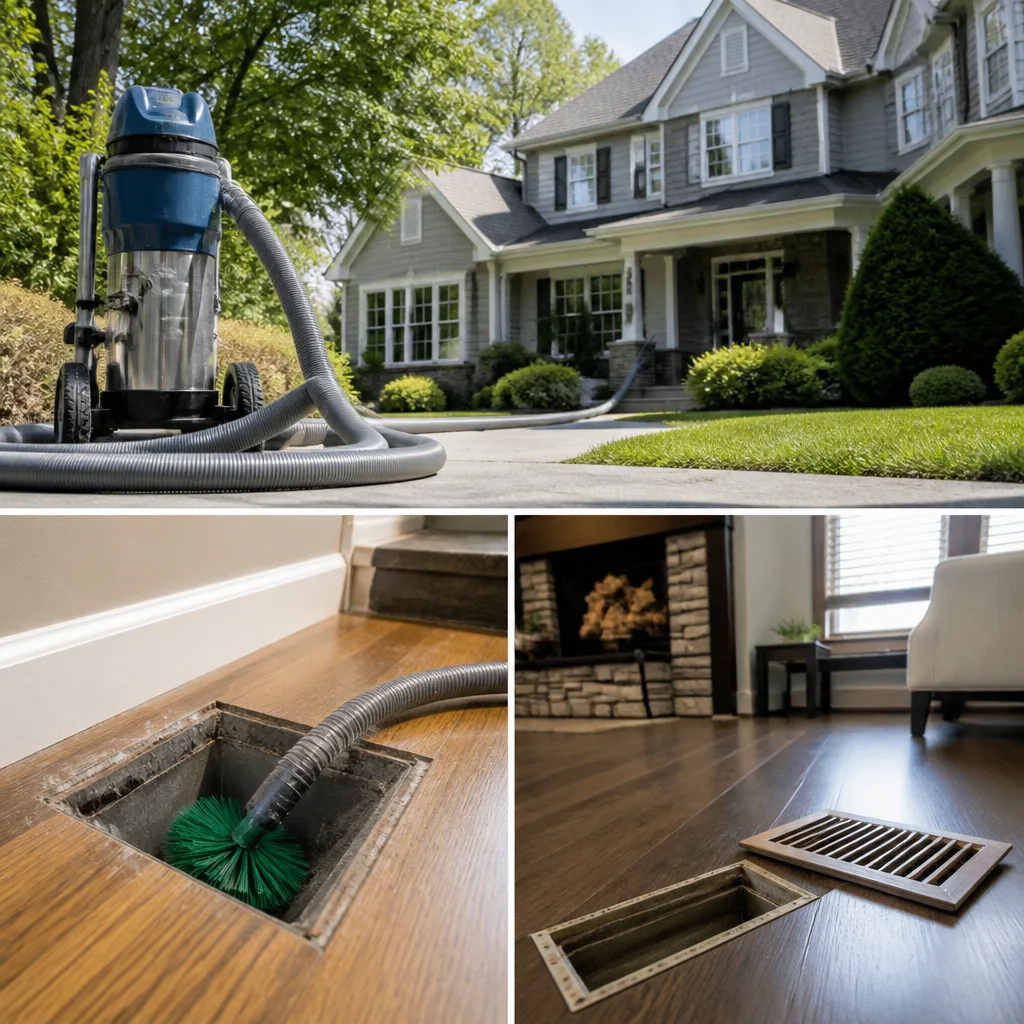 Whole-home duct cleaning
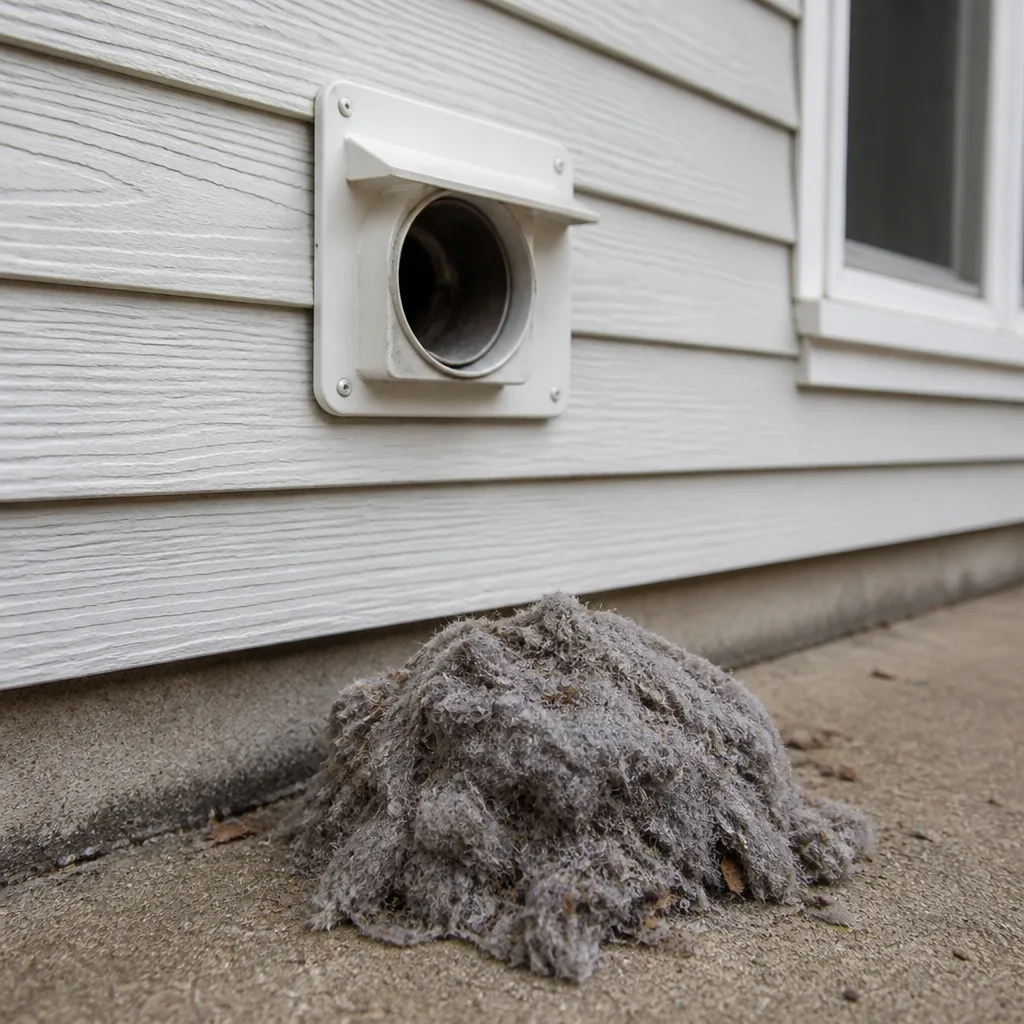 Dryer vent cleaning
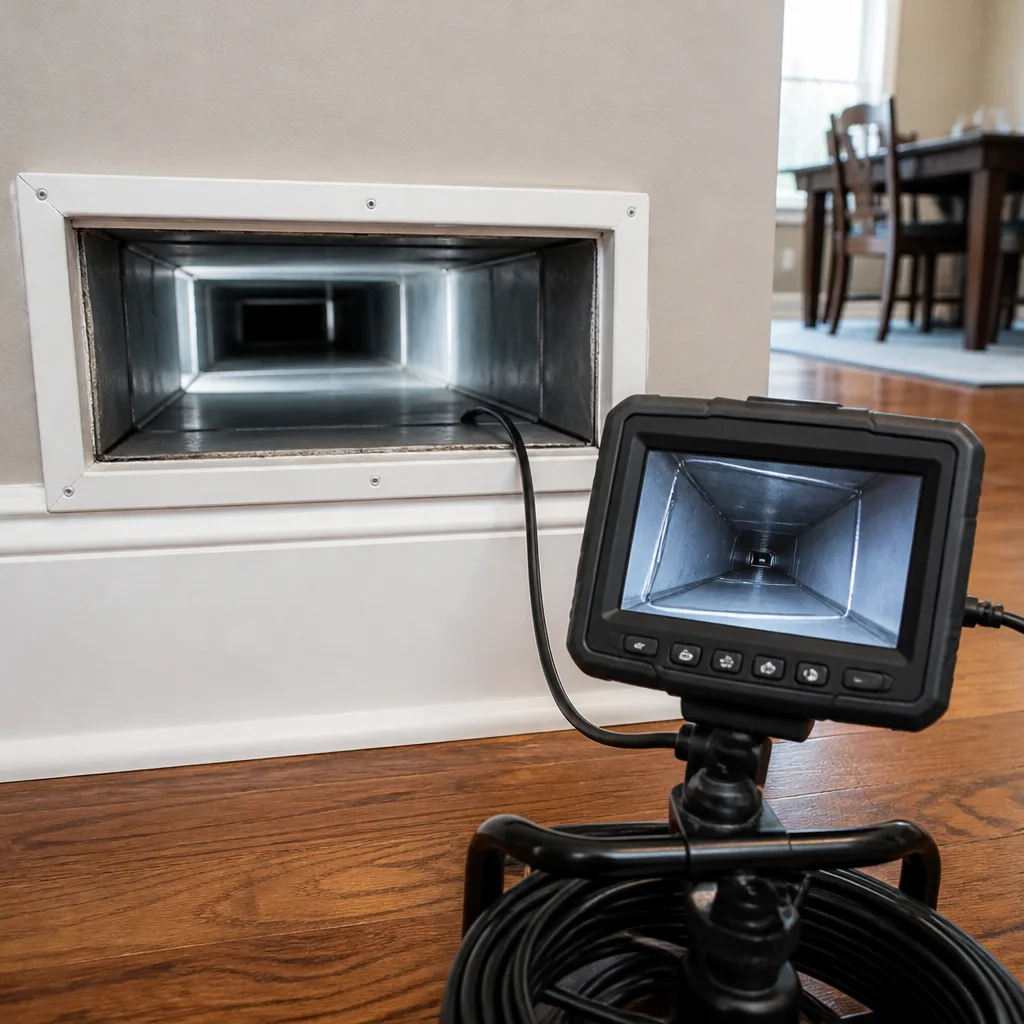 Camera inspection
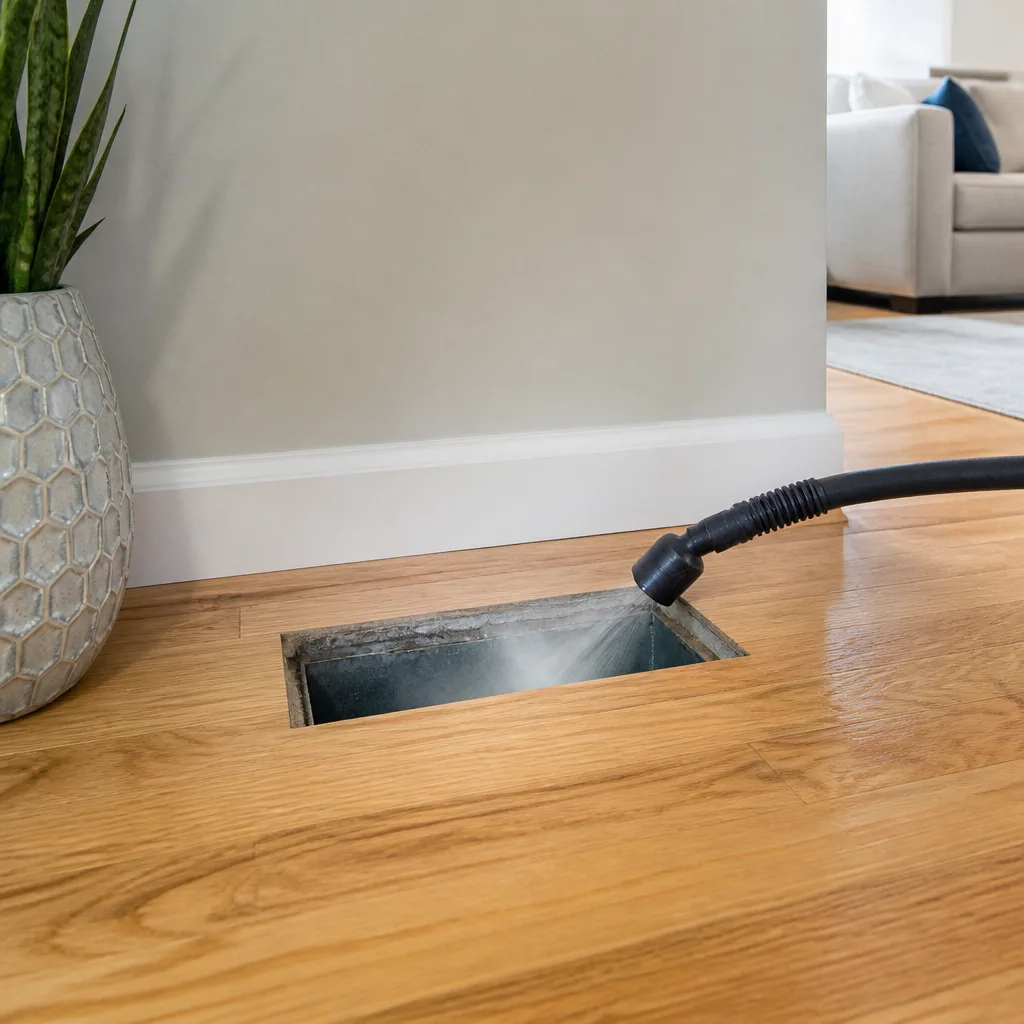 Sanitizing & deodorizing
Whole-system duct and dryer vent check with before-and-after photos - you see exactly what came out of your vents
That "$99 whole-house special" is a bait ad - the real number appears once they are in your hallway, or the "clean" is a shop-vac at the register. We photograph the inside of your ducts before and after instead.
Air Duct Cleaning Maintenance Checklist for Milpitas Homeowners
The most common thing we find during duct inspections in Milpitas isn’t dust. It’s a disconnected supply boot or a collapsed flex run that has been quietly heating or cooling a crawlspace instead of a bedroom, sometimes for years. Homeowners replace filters, pay rising utility bills, and wonder why one room never gets comfortable while the real problem sits a few feet away in the ductwork. This checklist is built around what Milpitas homes actually show on our Air Duct Cleaning services calls. You’ll learn what to check monthly, what matters semi-annually, and what a full 3 – 5 year inspection should catch before it becomes an HVAC repair.
Quick Answer
An air duct maintenance checklist for Milpitas homeowners should cover three timeframes: monthly visual checks of accessible duct sections and filter condition, semi-annual deep inspections focused on connections and insulation, and a professional cleaning every 3 – 5 years using truck-mounted or high-output equipment. The most important pass/fail criteria are not about dust levels but about structural integrity – disconnected boots, torn flex duct, crushed sections, and return leaks. These failures waste conditioned air and can account for 20 – 30% of your HVAC energy loss before you ever see a dust problem.
Styles & brands we work with
- Whole-home duct cleaning
- Dryer vent cleaning
- Camera inspection
- Sanitizing & deodorizing
Table of Contents
- Monthly Duct Maintenance Tasks
- Semi-Annual Duct Inspection Protocol
- The 3 – 5 Year Professional Cleaning
- How to Visually Inspect Duct Sections in a Milpitas Two-Story
- MERV Rating Selection for Milpitas Households
- Structural Failure vs. Dirt: Knowing the Difference
- How to Log and Track Duct Maintenance
- Common Mistakes to Avoid
- When to Call a Professional
- Frequently Asked Questions
Monthly Duct Maintenance Tasks
Most Milpitas homeowners already have a vague sense that monthly filter checks matter. The problem is that “check the filter” is where the advice stops. That’s not a maintenance protocol; that’s a sentence. A real monthly routine should take about ten minutes and cover three specific areas, each with a concrete pass/fail test you can apply consistently.
The monthly checklist:
- Filter inspection, not just filter replacement. Hold the filter up to a light source. If you can see light through less than half the filter’s surface area, it’s overloaded – regardless of how many days it’s been installed. Milpitas sits close to Highway 237, Interstate 880, and the 680 corridor, so filters in this area load faster than the national average. A MERV 8 filter in a Milpitas home near the freeway might need replacement every 30 – 45 days, while the same filter in a quieter pocket could last 60 – 90.
- Register airflow check. Walk through each room and hold a tissue or lightweight paper near each supply register while the system runs. The tissue should lift and flutter steadily. If it barely moves in one room but moves strongly in the next, you have a distribution problem – not a filter problem. Make a note of the weak register and whether it stays weak across heating and cooling modes.
- Odd odor or noise logging. Turn the system off and walk the house. Listen for rattling at the registers, whistling from the return, or any new mechanical hum that wasn’t there last month. Write down the date, the sound, and which vent it came from. This log becomes invaluable when a technician shows up; instead of describing a “funny noise,” you can hand over a dated record.
None of these tasks requires special tools. None of them requires climbing into an attic. They require consistency and a notebook or phone note that you actually keep. The maintenance log – covered later in this guide – is what turns a checklist from a piece of paper into a diagnostic tool.
Semi-Annual Duct Inspection Protocol
Twice a year – ideally when you switch from heating to cooling in late spring and again when the Milpitas evenings start dropping in late October – do a deeper pass. This is the inspection that catches the failures that show up on our service calls most often: boots that have pulled away from the floor register, flex duct that has sagged or collapsed, and return plenums that have pulled loose at the seam.
Semi-annual pass/fail checklist:
- Boot-to-register connection. Remove each floor or ceiling register cover (they lift out or unscrew in seconds). Look down into the boot. The metal or plastic boot should sit flush against the sheetrock or subfloor opening. If you can see a gap – light coming through, or the boot visibly offset – that’s a FAIL. Treated air is leaking into the space between floors or into the wall cavity.
- Flex duct condition where visible. In the garage attic access or any exposed attic section, examine the foil or gray flex duct. It should be smooth and round. If you see kinks, pinches, or sections that look flattened like a folded garden hose, that’s restricted airflow. A crushed flex run can’t move air regardless of how clean it is inside.
- Return grille obstruction. The central return grille (usually in a hallway) should be completely unobstructed. In many Milpitas homes, furniture, boxes, or even a folding table pushed against the wall covers part of the return. A partially blocked return starves the entire system and shortens blower motor life.
- Condensation or moisture signs. This matters more in Milpitas summer when humidity stays elevated. Look for water staining on drywall near diffusers, rust on register screws, or a musty smell when the system starts. Any of these is a FAIL and should trigger a professional evaluation – moisture inside ducts invites biological growth that no amount of DIY vacuuming will fix.
Photograph anything that looks wrong. Close-up and wide-shot. A series of dated photos across multiple inspections builds a maintenance history that any air duct cleaning in Milpitas technician will appreciate, and it gives you an objective record of whether a problem is new or has been developing for a while.
The 3 – 5 Year Professional Cleaning
Professional duct cleaning is not an annual service, and any company telling Milpitas homeowners they need it every year is selling you a subscription, not a solution – see our Air Duct Cleaning Troubleshooting: Common Problems and How to Fix Them for what to watch out for. The National Air Duct Cleaners Association’s guidance points to every 3 – 5 years under normal conditions, with more frequent intervals for homes with specific conditions – high-shedding pets, recent remodeling, occupants with severe allergies or respiratory conditions, or a nearby wildfire season that dumped ash into the system.
What should a professional cleaning actually include in Milpitas? If you’re evaluating companies, here’s the minimum bar:
- Full system coverage, not just supply ducts. Every grille and register removed, cleaned, and re-seated. Supply and return duct runs cleaned. The blower motor assembly and housing brushed and vacuumed. The evaporator coil inspected and cleaned if accessible. A company that only vacuums the supply side has done half the job.
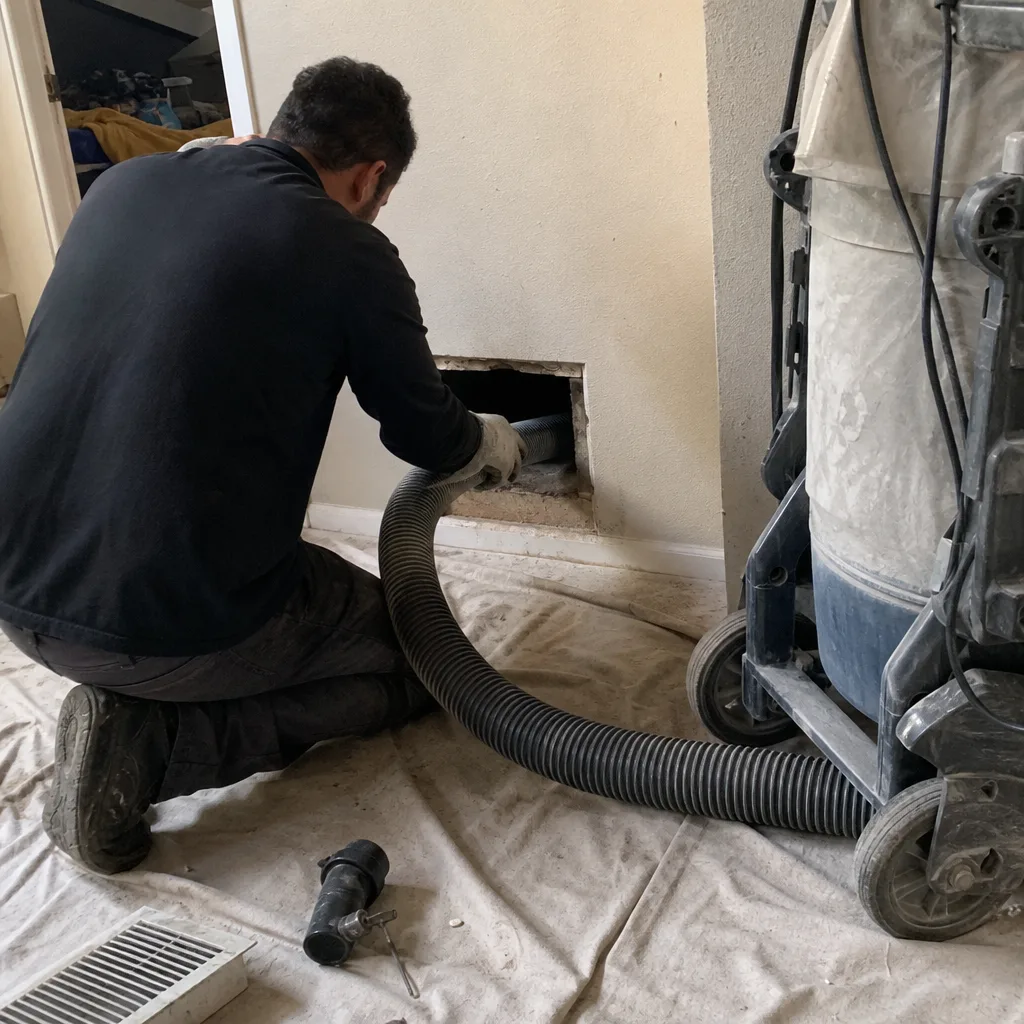
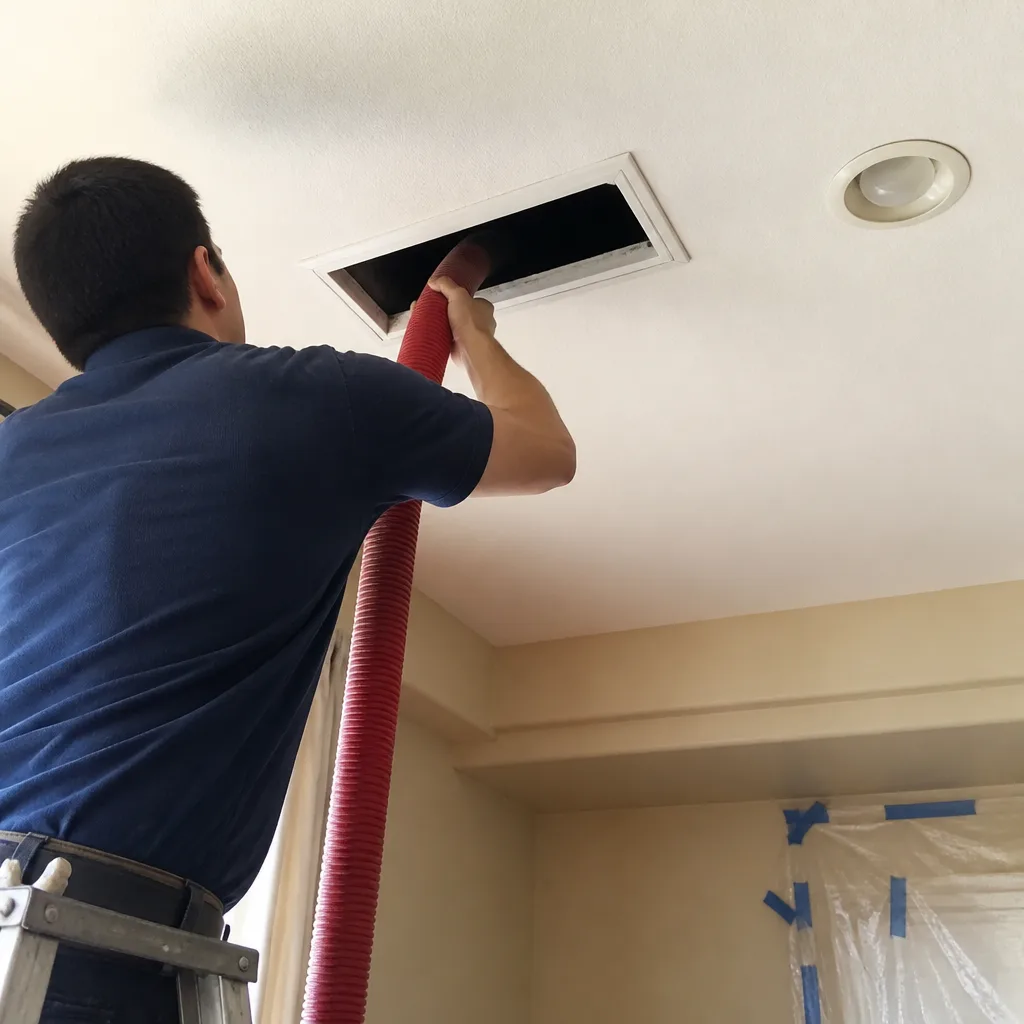
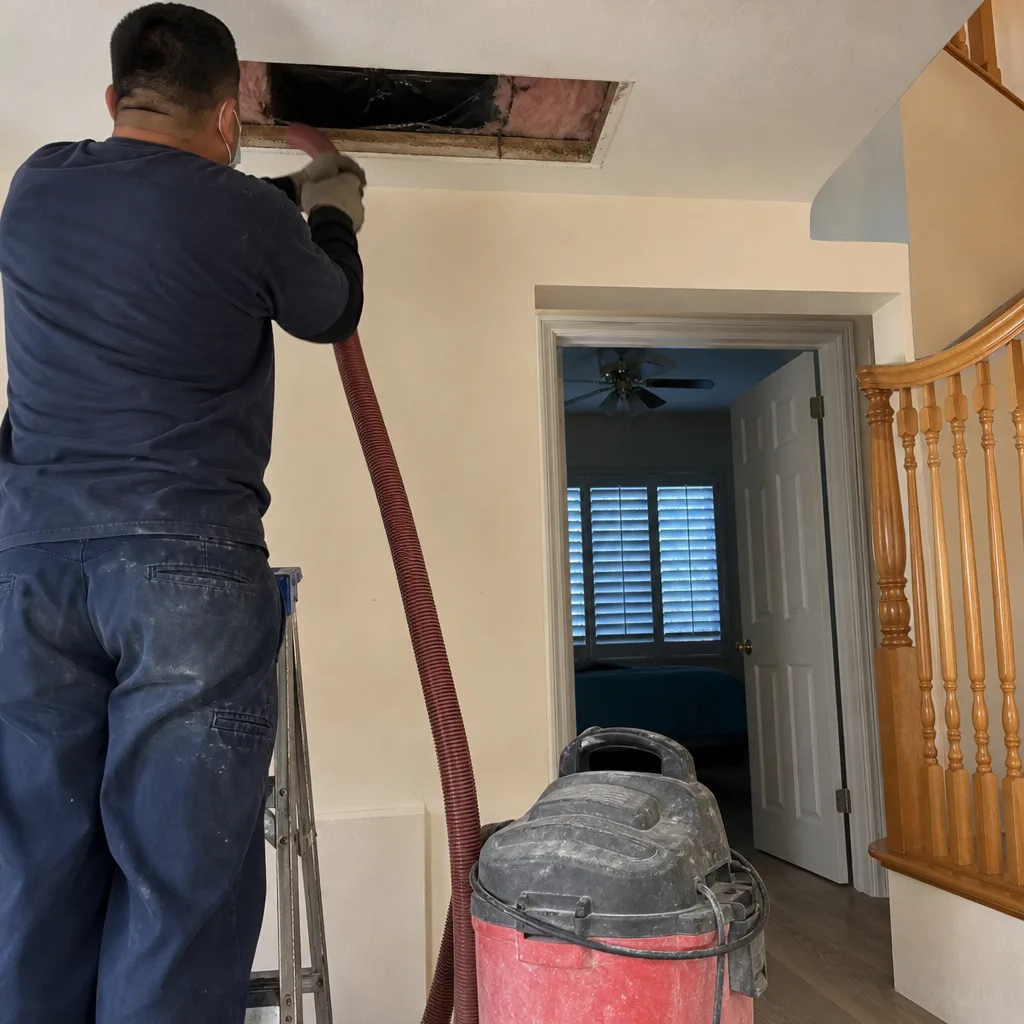
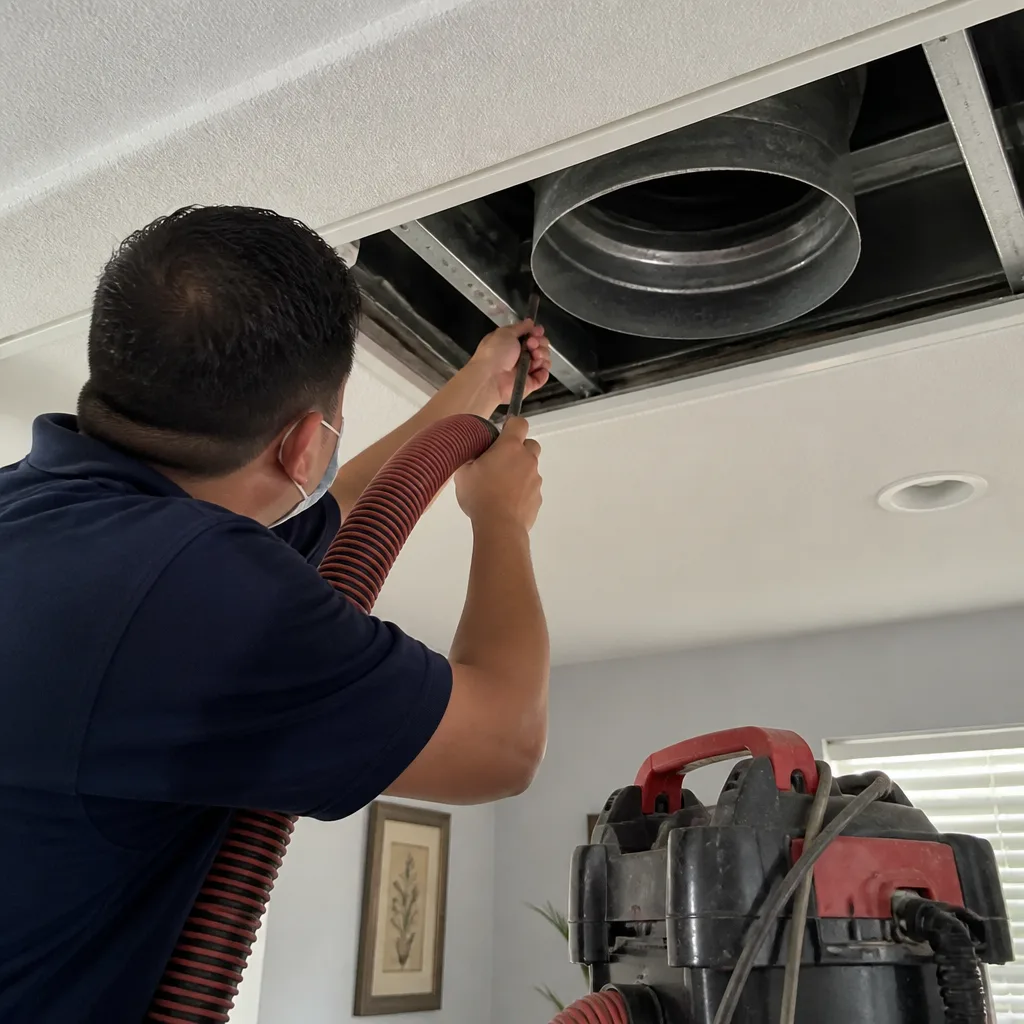
- Professional-grade equipment, not improvised tools. We use Rotobrush and Nikro systems – the same equipment professional IAQ contractors run, not shop vacs retrofitted for duct work. The difference is agitation plus extraction: proper duct cleaning brushes loose the debris while negative air pressure pulls it out of the system, rather than just loosening it and hoping it floats toward a vacuum.
- Before-and-after photos. Every serious duct cleaning company in Milpitas should provide photos of the inside of your ducts before and after the work. If your ducts look cleaner by some arbitrary percentage, the photos show it. If they don’t, the photos show that too. This is non-negotiable; if a company doesn’t offer visual proof, ask why not.
One thing most guides get wrong: duct cleaning is not a fix for structural problems. If your flex duct is crushed, no amount of interior brushing will restore airflow. If your boot is disconnected, cleaning the rest of the system won’t stop the leak. That’s why the monthly and semi-annual checks matter – they separate “dirty” from “damaged,” and professional cleaning only addresses the first one. For the second one, see air duct repair in Milpitas.
How to Visually Inspect Duct Sections in a Milpitas Two-Story
The typical Milpitas two-story home – think the tracts built from the 1980s through the early 2000s near Calaveras Ridge, or the newer builds east of Piedmont Road – puts the air handler in the attic. That means a significant portion of the ductwork runs through unconditioned attic space where temps can swing 40 degrees between day and night in peak summer. Attic heat degrades flex duct faster than nearly any other environmental factor in this climate.
If you’re comfortable on a ladder and your attic has a stable walkway or solid joists, here’s what to look for:
- Bring a bright flashlight and your phone camera. Attic lighting is usually poor. A headlamp frees both hands.
- Start at the supply plenum. This is the main duct trunk leaving the air handler. Check the connection point. Look for a gap at the takeoff collar, sagging insulation, or silver tape that has peeled away. Tape failure is the most common attic duct issue we see in Milpitas.
- Follow each flex run from trunk to boot. You’re looking for three things: kinks, compression, and contact with construction debris. Flex duct should never be stretched tight across a corner or bent at 90 degrees. If a run passes under or over a ceiling joist and looks pinched at the contact point, photograph it.
- Check the return path. Many Milpitas two-story homes use an open return that pulls air from the upstairs hallway through the furnace closet into the attic unit. If the return plenum is made of sheet metal, look for gaps at the seams where air can be pulled directly from the attic instead of from the conditioned house. A leaky return pressurizes the attic and depressurizes the living space – it’s a silent and expensive failure.
- Document every finding, even the normal stuff. A photo of a healthy, properly supported flex run today is your baseline. A year from now, when you’re comparing, you’ll know whether that run has sagged or shifted. Without a baseline, every future inspection starts from guesswork.
If you have any hesitation about attic access, don’t push it. Insulation hides joists, one wrong step puts a foot through the ceiling, and several Milpitas attics have narrow clearances that make even basic photography awkward. The visual inspection is supposed to catch problems, not create a trip to the ER.
MERV Rating Selection for Milpitas Households
MERV stands for Minimum Efficiency Reporting Value, and it’s a 1 – 16 scale measuring how effectively a filter captures particles. The right MERV rating for your Milpitas home depends less on the square footage and more on what’s trying to get through the filter in the first place.
Use this breakdown to choose:
- MERV 1 – 4 (basic fiberglass). These protect the blower from large debris but do almost nothing for air quality. If you have no pets, no allergies, and live in a quiet Milpitas neighborhood away from the freeway corridors, this is technically sufficient – but most homes should do better.
- MERV 5 – 8 (standard pleated). This range captures pollen, dust mites, and mold spores at 60 – 85% efficiency depending on exact rating. Adequate for most Milpitas homes without specific air quality issues. Replace every 60 – 90 days.
- MERV 9 – 12 (upgraded pleated). Recommended for Milpitas households with shedding pets, allergy sufferers, or homes within a half mile of 237, 880, or 680. Captures fine particulate from vehicle exhaust and finer allergens. This is often our starting recommendation for homes near the freeway corridors. Expect to replace these every 45 – 60 days; they load faster.
- MERV 13 – 16 (high-efficiency). For households managing asthma, severe allergies, or homes experiencing wildfire smoke intrusion. MERV 13 filters are specifically rated to capture smoke particles. Caveat: verify your HVAC system can handle the pressure drop of a high-efficiency filter – older blower motors may struggle, and some systems need a filter cabinet upgrade. If you’re uncertain, mention it during your next professional service.
One more thing that matters more than the MERV number itself: the filter must actually fit the slot. A MERV 11 filter that’s undersized and rattling around in the filter rack bypasses nearly everything. If you can see daylight around the filter frame when the system is off, air is going around it when the system is on.
Structural Failure vs. Dirt: Knowing the Difference
Here’s the distinction that saves Milpitas homeowners real money: a dirty duct and a structurally failed duct are two completely different problems, and they require two completely different responses. Dirt inside a duct can be cleaned. A duct that has torn, collapsed, disconnected, or separated at the seam cannot be cleaned into functioning correctly – it needs repair or replacement.
Signs of a dirty duct (cleanable):
- Dust or debris visible inside the duct when looking through a removed register
- Gray or brown film coating the interior surface of the duct
- A lingering stale or dusty smell when the system runs
- Filter loads quickly with fine debris despite normal household activity
- Visible dust buildup on the supply register fins
Signs of structural duct failure (requires repair):
- One room consistently warmer or cooler than the rest of the house, across both heating and cooling seasons
- A musty smell that appears only when the system runs, often from moisture being pulled into the system through a leak
- Higher utility bills with no change in household habits – the system is conditioning a crawlspace or attic
- Visible gap between the boot and the register opening
- Flex duct that appears flattened, kinked, or sagging dramatically between support straps
- Pest activity evidence – rodents enter ductwork through gaps and tears
The distinction matters because the invoice is different. A cleaning might be a few hundred dollars for a full system. A repair could mean replacing a duct run, refitting boots, or sealing a supply plenum – and pricing varies with the scope of the failure. The worst outcome is paying for a cleaning when what you actually needed was a repair, because the cleaning won’t solve the comfort problem – check Air Duct Cleaning Permits, Codes & Inspections in CA: What You Need to Know to understand requirements. This is exactly why we take before-and-after photos and why our estimates always separate what’s cleanable from what needs fixing.
How to Log and Track Duct Maintenance
A maintenance log isn’t just a nice-to-have; it’s what lets a technician walk into your Milpitas home and immediately understand the system’s history without a 20-minute Q&A. When we show up and you hand us a log that says “March filter change, April noise from hallway return, June attic inspection, October cleaning scheduled” – we can jump straight to the likely culprits.
Keep the log simple. A note on your phone or a small notebook works fine. For each entry, record:
- Date and whether it was a monthly check, semi-annual inspection, or professional service
- What you checked – filter, registers, attic duct runs, return grille
- What you found – pass, fail, or something in between. Be specific: “supply boot in master bedroom moved 1/4 inch from register opening” not “some stuff looked off”
- Action taken or planned – changed filter, scheduled repair, will re-check next month
- Photos taken – note the file names or attach them if you’re using a digital log
If you have multiple HVAC zones or a particularly sprawling duct layout, a simple floor plan sketch with zone numbers can make things even clearer. Label each room’s registers with a number, and reference those numbers in your log: “Register 4 (upstairs east bedroom) airflow weak, tissue barely lifted, photo attached.” Three months later, you can compare apples to apples.
An added benefit: when it’s time for professional cleaning or repair, your log serves as documentation for any warranty claims or contractor accountability. If a company tells you a problem is brand new, and your log shows it’s been developing for eight months, that changes the conversation.
Common Mistakes to Avoid
- Replacing the filter and calling it maintenance. A filter is one component in a system. The ductwork, boots, plenums, registers, and return paths all need periodic inspection. If your entire monthly maintenance routine takes 60 seconds, you’re not actually maintaining anything.
- Thinking a high-MERV filter fixes bad ducts. A MERV 13 filter can’t capture what never passes through the system. If your attic return is pulling air from unconditioned space, you’re filtering attic air – no filter rating solves that.
- Ignoring one warm room. In Milpitas homes, a single room that stays warm all summer can indicate a disconnected or crushed duct serving that space. The longer it goes unaddressed, the harder your system works, and the warmer that room stays. Comfort complaints are diagnostic information, not quirks.
- Closing registers to redirect airflow. This increases static pressure in the duct system, which can force air through leaky seams and strain the blower. If one room is too hot or cold, closing other registers treats the symptom, not the cause.
- Skipping the before-and-after proof. Any professional cleaning should come with visual proof of work performed. If you don’t have photos, you’re taking the company’s word for it. That’s not how verification works.
- Waiting for a smell or visible problem before scheduling. Structural duct failures often present as slow, silent utility bill creep. By the time there’s a smell, you’ve been paying for the leak for months or years. A routine professional inspection every few years catches these before they compound.
When to Call a Professional
You should call a professional when any of these conditions appear: visible mold or moisture staining inside ductwork, persistent musty odor when the system runs, rodent or pest activity inside ducts, a supply boot that has physically separated from the register, crushed or collapsed flex duct you can see in the attic, or a room that’s been uncomfortable across both heating and cooling seasons despite regular filter changes. None of these are DIY fixes. Duct Cleaning Milpitas home offers free estimates throughout Milpitas – call (877) 358-5491 to schedule an inspection, and we’ll give you a straight answer about what’s cleanable, what needs repair, and what can wait.
Frequently Asked Questions
Every 3 – 5 years under normal household conditions. Homes in Milpitas with shedding pets, residents with allergies or asthma, recent remodeling projects, or proximity to the freeway corridors (237, 880, 680) may need cleaning more often – closer to the 2 – 3 year mark. If you’re not sure whether your ducts need service, a visual inspection with before-and-after photos will tell you. Call (877) 358-5491 for an honest assessment rather than a guess.
Cheaper quotes often come from companies using consumer-grade equipment or vacuuming only the supply side, leaving the returns, blower, and coil untouched. Professional cleaning with Rotobrush or Nikro systems costs more because it includes agitation plus negative air extraction, complete register removal and re-seating, and photographic proof. A cheap cleaning that skips half the system is not cheap – it’s incomplete work at a lower price.
Demand before-and-after photos of the inside of your ductwork, specifically the main supply trunk and at least one supply branch. Reputable Milpitas duct cleaning companies provide documented photos as standard practice. You should also be able to see that every register was removed and replaced during the process. Call (877) 358-5491 if you want to understand exactly what our reporting includes.
Dirty ducts won’t dramatically increase your energy usage by themselves, but blocked or restricted airflow can. When filters clog, returns get blocked, or ducts accumulate enough debris to narrow the airflow path, the blower works harder to move air. In Milpitas summer, when the system is already running long cycles, that extra resistance shows up on the utility bill. Structural leaks are the bigger energy drain – a disconnected boot can waste 20 – 30% of conditioned air for years.
It can, but only if the smell is coming from accumulated dust and debris inside the ductwork. If the musty odor persists after cleaning, the issue is likely moisture – either a structural leak pulling in crawlspace or attic air, or biological growth inside the system that requires source removal, not just vacuuming. A proper inspection should distinguish between these scenarios before any money changes hands.
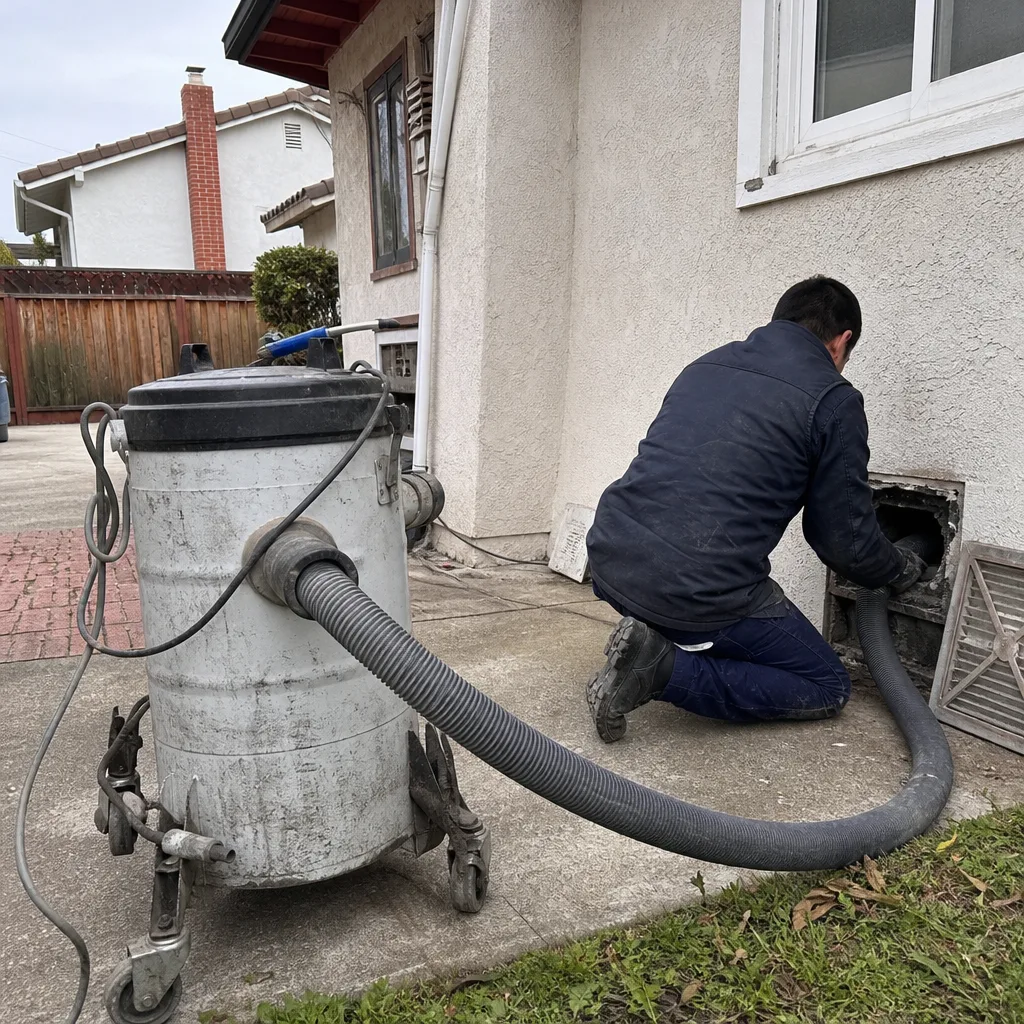
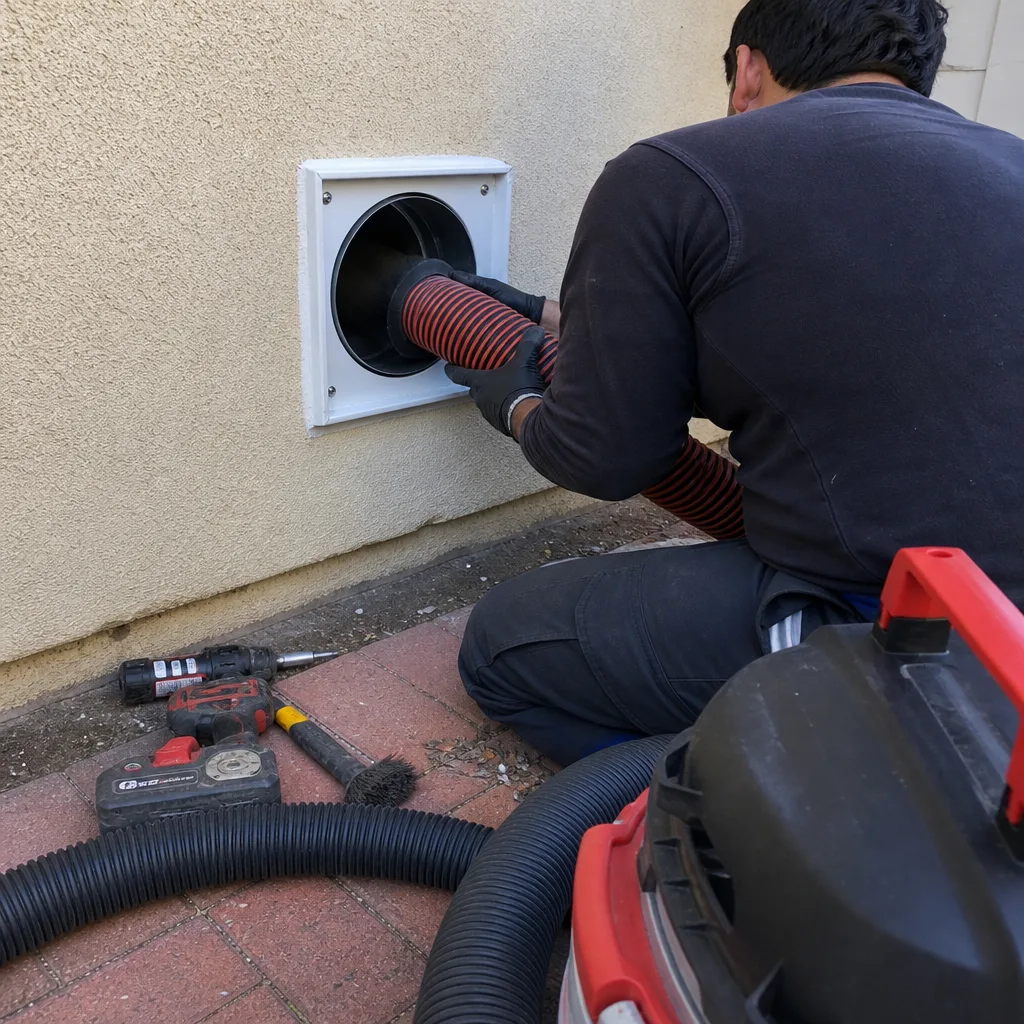
Air duct cleaning addresses the HVAC system’s supply and return ductwork, registers, blower, and coil. Dryer vent cleaning in Milpitas is a separate service that clears the lint-clogged exhaust path from your dryer to the exterior vent – a fire safety issue. The two services use different equipment and different approaches, but they’re related in one important way: both require professional-grade tools and both produce measurable results when done right. A thorough company handles both under one roof.
The Bottom Line
Duct maintenance in Milpitas isn’t a once-a-decade afterthought – and it isn’t a filter change disguised as a routine. It’s a structured inspection protocol that catches structural failures early, before they turn into expensive HVAC repairs or silent energy waste. Monthly checks protect the airflow you already have. Semi-annual inspections catch the failures that monthly checks miss. Professional cleaning every 3 – 5 years removes what accumulated despite your best efforts. Document everything, photograph what looks off, and when a problem exceeds your comfort level – or your ladder – call a professional who works with the right equipment and shows you the proof. Your ducts, your utility bill, and your Milpitas home will all be better for it. For more guides & resources, explore our blog.
Written by the team at Duct Cleaning Milpitas, serving Milpitas since 2018.
See the difference
 Before
 After
 Before
 After
 Before
 After