
Last updated November 2, 2026
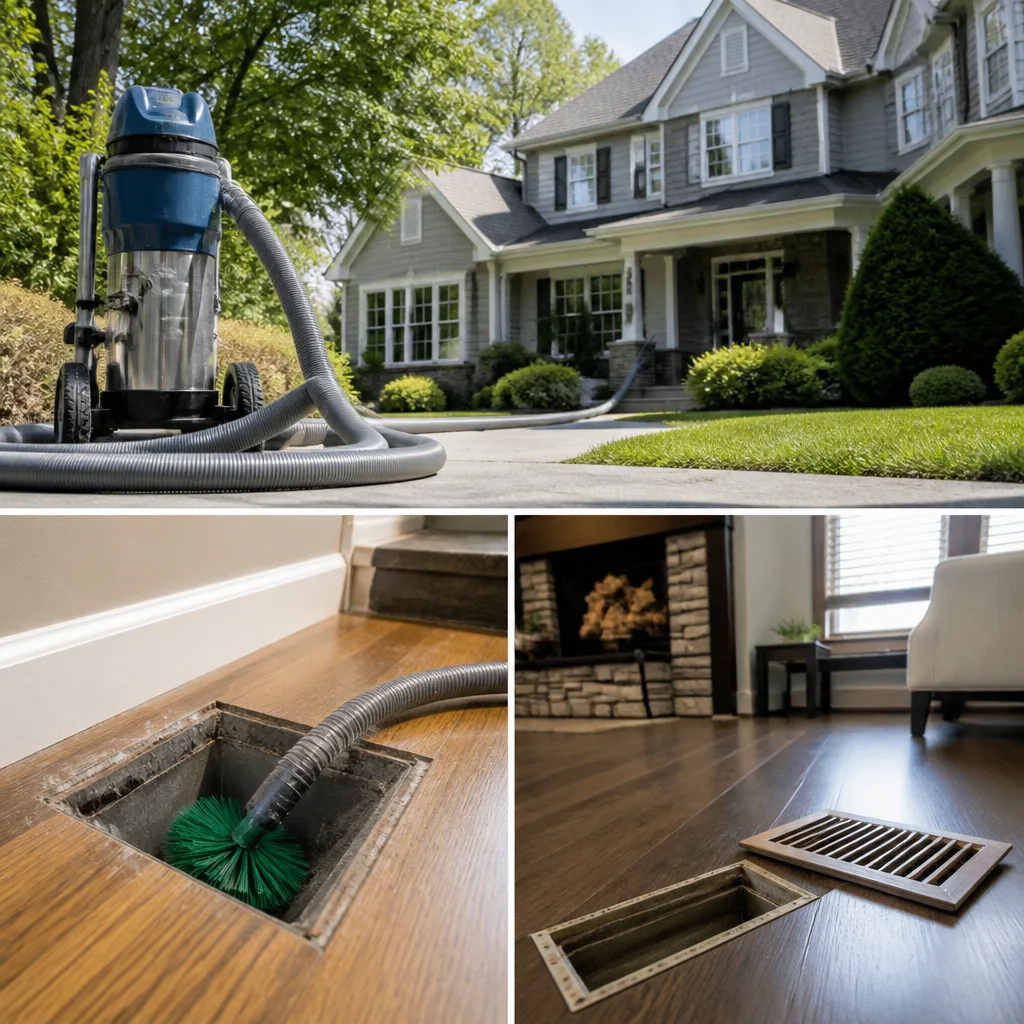 Whole-home duct cleaning
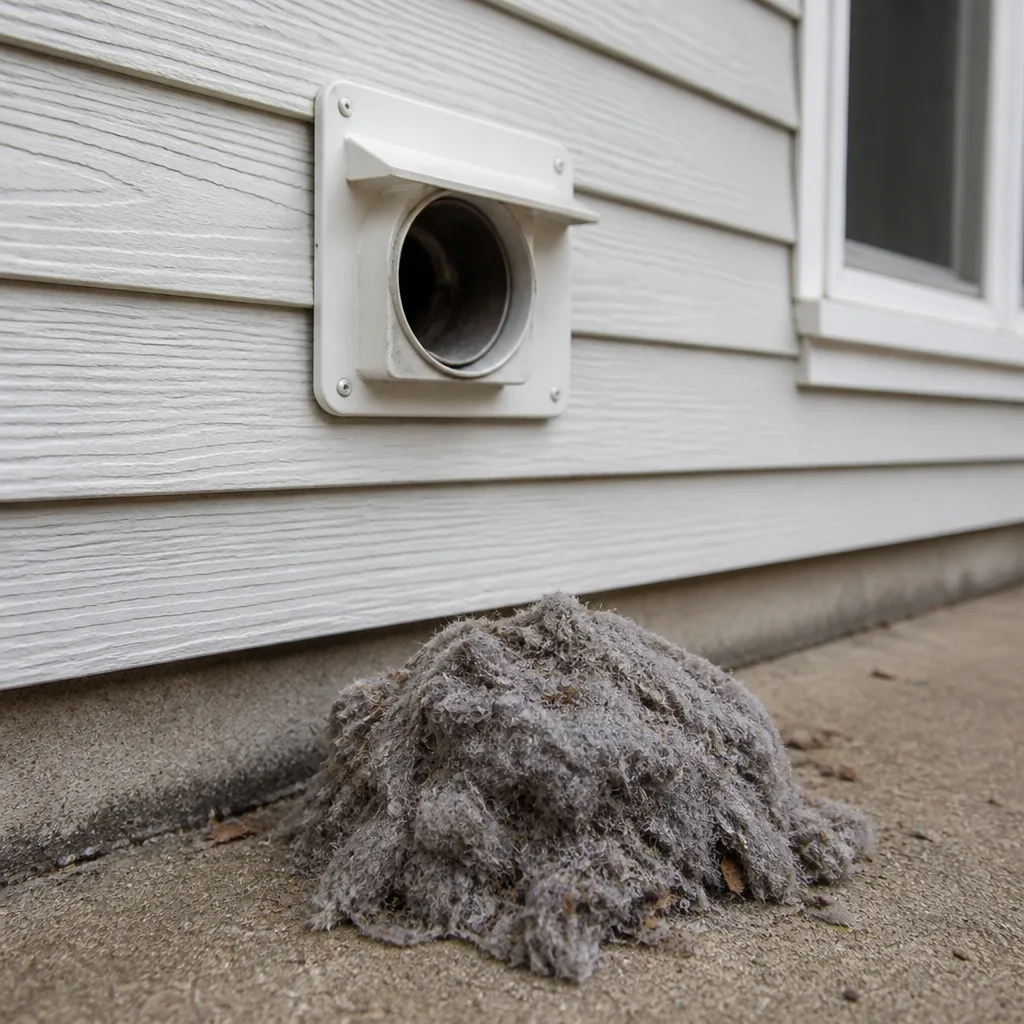 Dryer vent cleaning
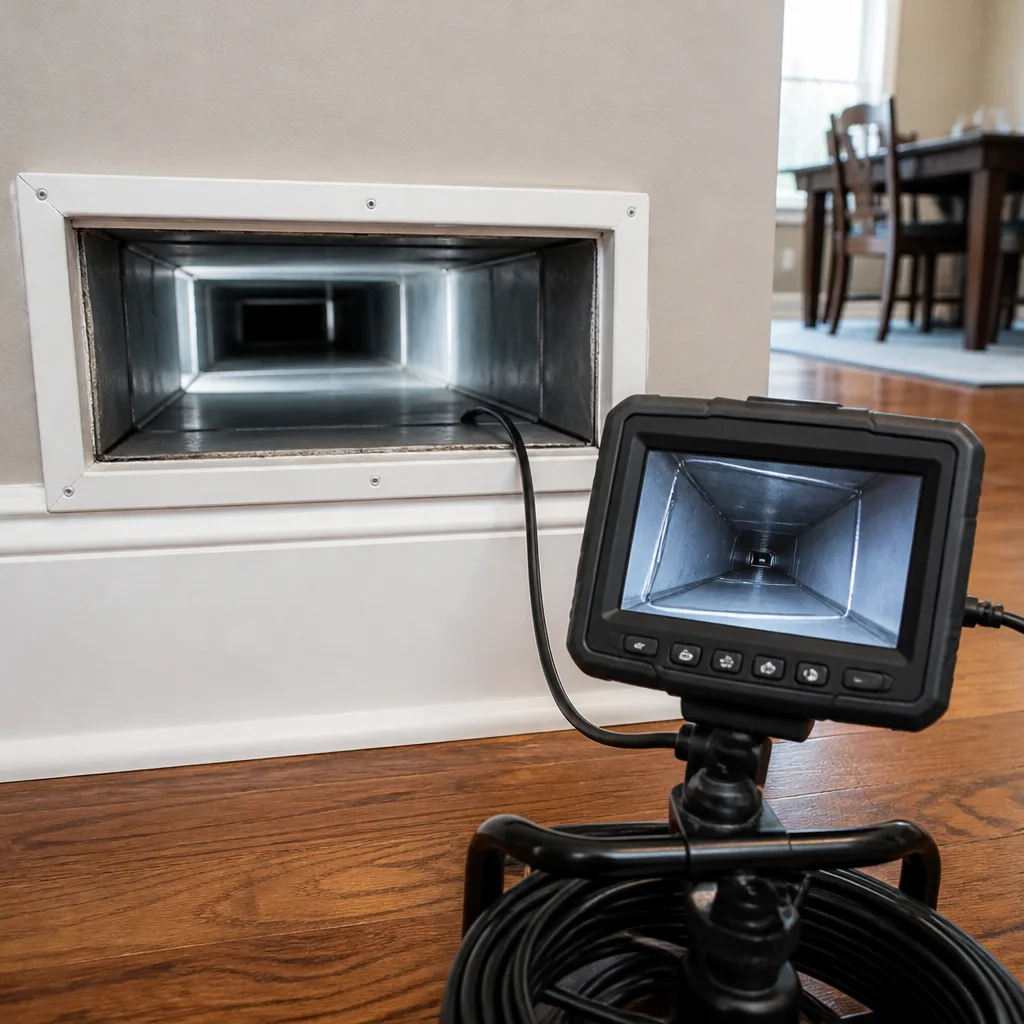 Camera inspection
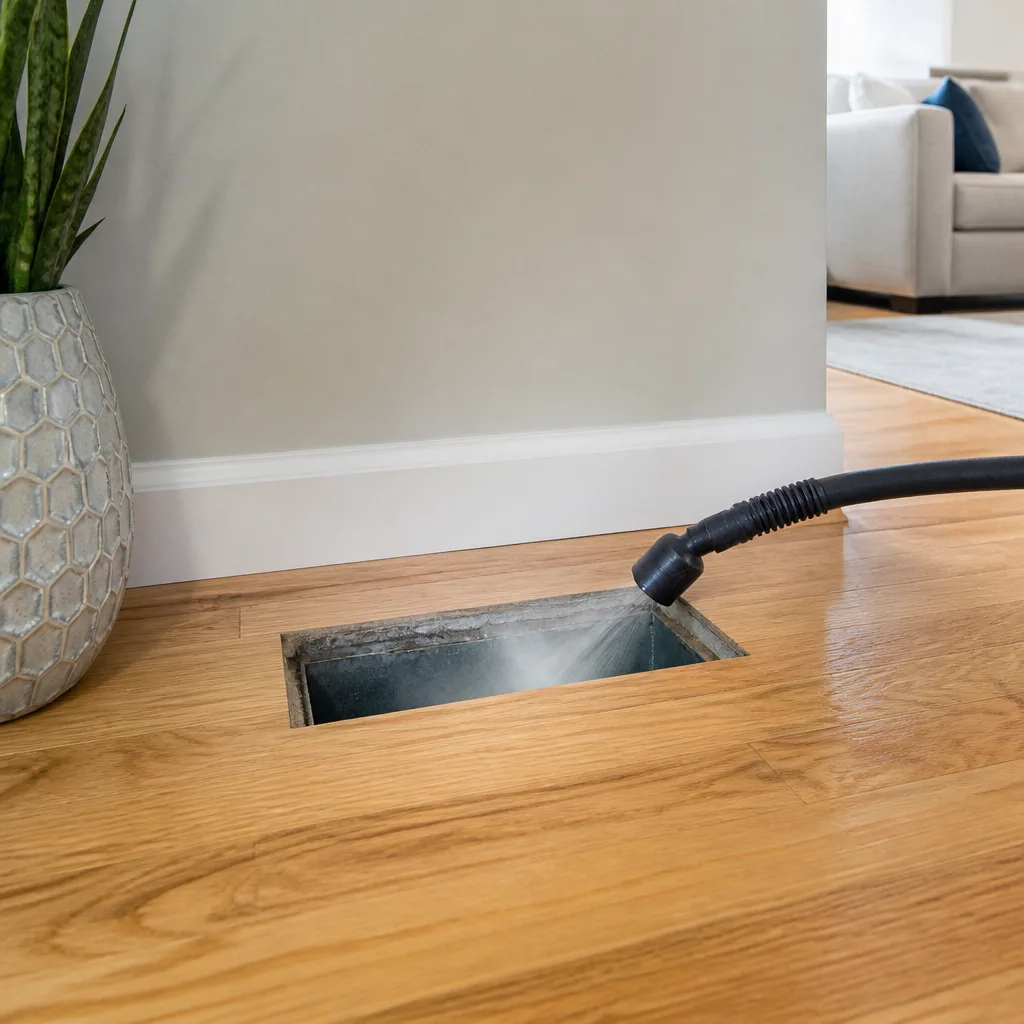 Sanitizing & deodorizing
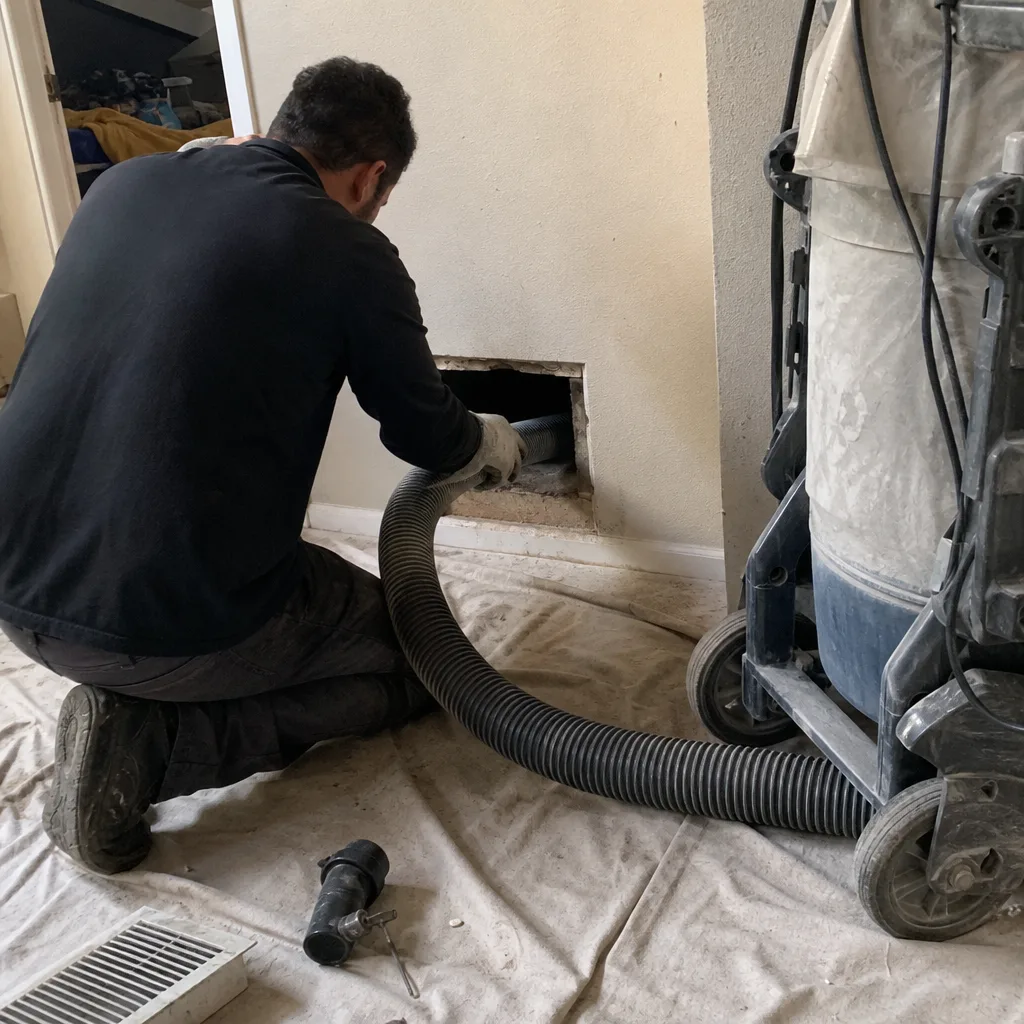
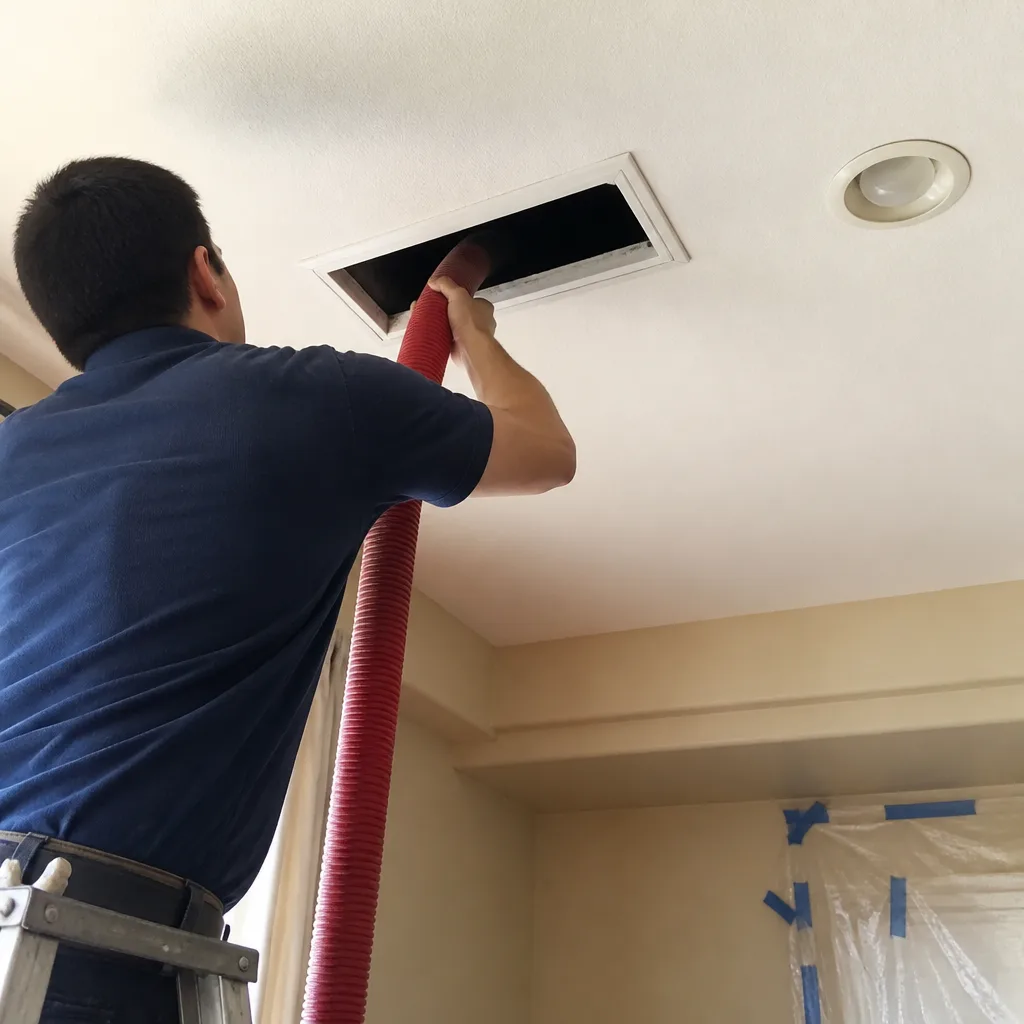
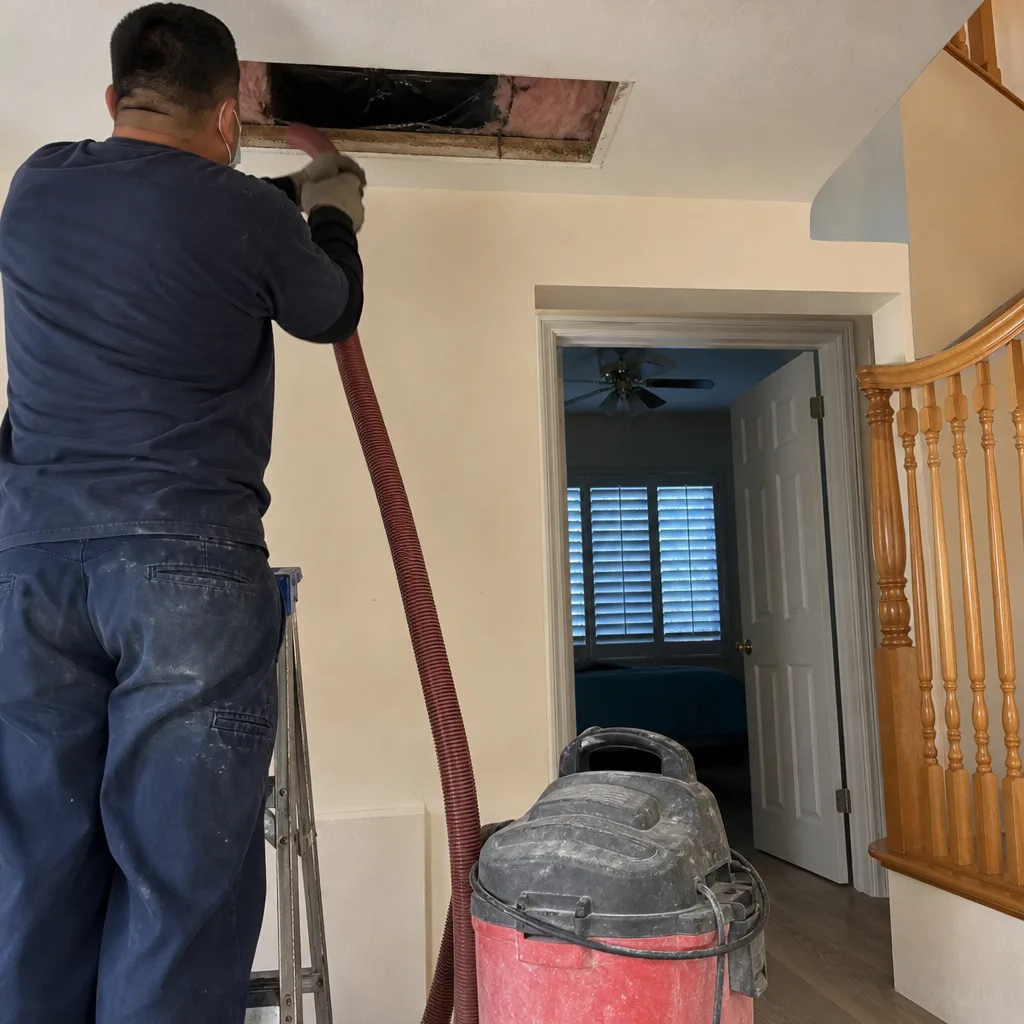
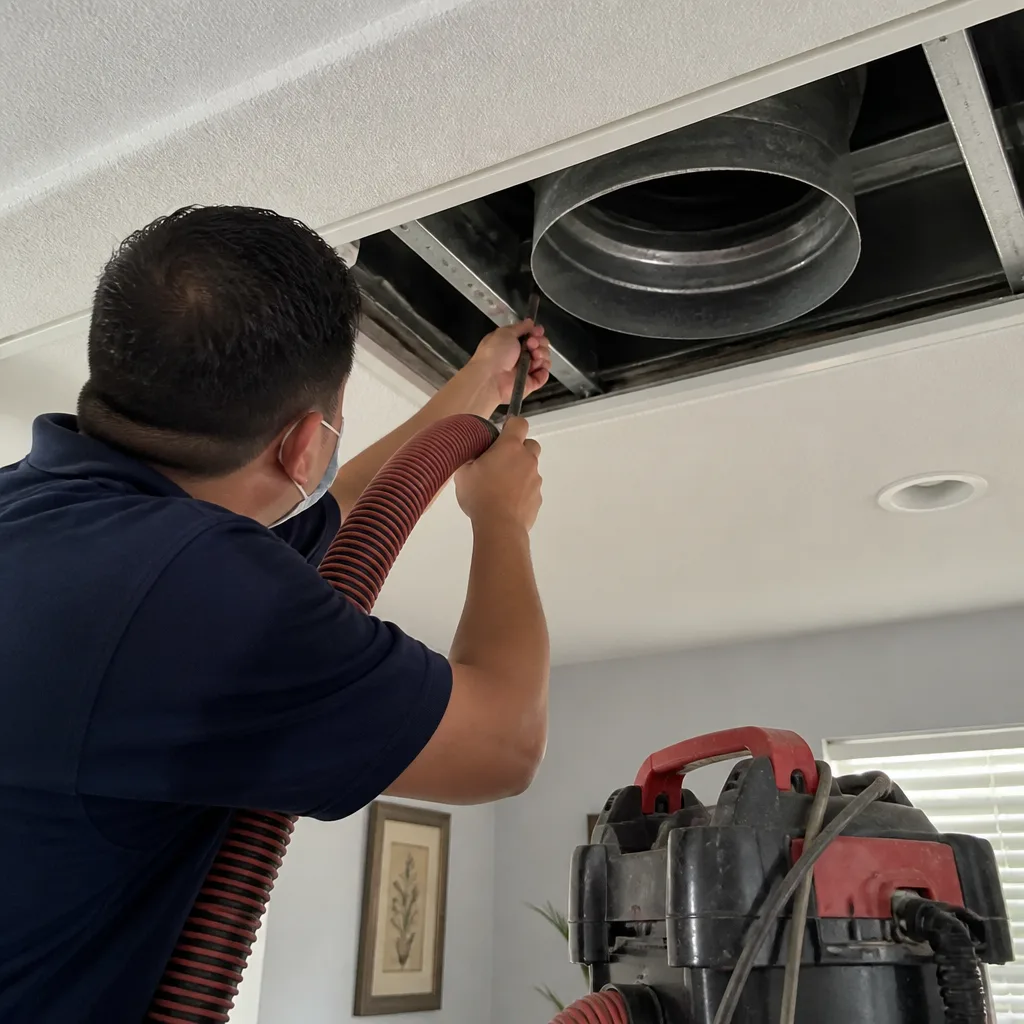
Whole-system duct and dryer vent check with before-and-after photos - you see exactly what came out of your vents
That "$99 whole-house special" is a bait ad - the real number appears once they are in your hallway, or the "clean" is a shop-vac at the register. We photograph the inside of your ducts before and after instead.
Air Duct Cleaning Troubleshooting: Common Problems and How to Fix Them
Here’s a fact most homeowners in Milpitas don’t hear until they’ve already spent money: a technician who tells you dirty ducts are causing your weak airflow before checking your filter, blower wheel, and static pressure is guessing, and charging you to confirm it. Most “duct problems” aren’t duct problems at all. This guide walks through the real diagnosis process, separating what air duct cleaning actually fixes from what it can’t, so you don’t pay for a service that won’t solve your issue. By the end, you’ll know how to spot filter bypass, negative-pressure attics, and post-cleaning regression before you write a check.
Styles & brands we work with
- Whole-home duct cleaning
- Dryer vent cleaning
- Camera inspection
- Sanitizing & deodorizing
Quick Answer
Air duct cleaning troubleshooting starts with identifying whether your symptom points to contamination inside the ducts themselves or to an airflow problem elsewhere in the system. Weak airflow, uneven room temperatures, and high energy bills most often trace back to a clogged filter, undersized return runs, or duct leakage, not dirty ducts. Musty odors that persist after cleaning typically indicate a dirty evaporator coil, condensate pan issue, or a filter bypass that’s letting debris re-enter the system.
Table of Contents
- The Symptom-to-Cause Decision Tree
- Weak Airflow: Why Duct Cleaning Usually Isn’t the Fix
- Musty Odors: Three Distinct Sources, Three Different Fixes
- The Static Pressure Test: A $15 Tool That Outperforms Visual Inspection
- When Duct Cleaning Makes Contamination Worse
- Post-Cleaning Regression: Why Your Ducts Got Dirty Again in Six Months
- DIY Checks You Can Do Before Calling Anyone
- Common Mistakes to Avoid
- When to Call a Professional
- Frequently Asked Questions
- The Bottom Line
The Symptom-to-Cause Decision Tree
Before you schedule any service, you need to know which of three categories your problem falls into. Each category points to a different fix, and only one of them is resolved by Air Duct Cleaning in Milpitas. Here’s how we think through it on every service call.
Category 1: Contamination Problems (Duct Cleaning Fixes These)
These are issues where foreign material inside the ductwork is the root cause. Symptoms include visible dust plumes from supply registers when the blower kicks on, drywall dust coating every vent after a renovation, pet hair accumulating in register grilles, and a fine dust layer that reappears on furniture within days of cleaning. In Milpitas homes, we also see seasonal pollen intrusion through leaky return plenums, a problem made worse by the valley’s spring pollen season. This category responds well to professional cleaning using equipment like Rotobrush and Nikro systems, which agitate and extract debris under negative pressure rather than just blowing it around.
Category 2: Airflow Problems (Duct Cleaning Won’t Fix These)
These symptoms mimic dirty ducts but originate in system design or component wear. A blower motor running below rated RPM, an evaporator coil matted with lint, an undersized return drop, or a collapsed flex-duct section all restrict airflow without any significant debris inside the ducts. In our experience serving Milpitas homes built in the 1970s through 1990s, undersized return runs are the single most common airflow bottleneck, especially in two-story homes where a single return serves the entire upstairs. The fix here is Air Duct Repair in Milpitas or HVAC component service, not cleaning.
Category 3: System Envelope Problems (This Is Why Ducts Get Dirty Again)
These are leaks and disconnections in the duct system itself. A return duct drawing from an unconditioned, dusty attic pulls insulation particles and attic dust directly into your living space. In Milpitas, where many homes have ducts running through unconditioned attics, the summer heat bakes the mastic seals until they crack, and the winter dampness weakens the support straps. A 1/4-inch gap at a return plenum connection is enough to pull visible particulate into the system within weeks of a cleaning. This category explains most post-cleaning regression.
Weak Airflow: Why Duct Cleaning Usually Isn’t the Fix
Weak airflow from one room, or from every room, is the symptom most commonly misattributed to dirty ducts. Here’s the reality: a duct system would need to be more than 50% obstructed by debris to reduce airflow to a noticeable degree, and that level of obstruction is rare in residential systems. What causes weak airflow in most Milpitas homes is one of these four things.
1. A Clogged Filter
This sounds obvious, but we’ve lost count of how many service calls begin with a filter that hasn’t been changed in eight months. A 1-inch MERV 8 filter loaded with dust can cut airflow by 20-30%. The fix costs $8 and takes two minutes. Check this before you call anyone, including us.
2. A Matted Evaporator Coil
The evaporator coil sits between the return duct and the supply plenum, downstream of the filter. If the filter was ever run past its service life, or if there’s a filter bypass gap, the coil fins trap lint and dust. A matted coil is an airflow choke point that no amount of duct cleaning will address, because the coil isn’t in the ductwork. It requires coil cleaning, which is a separate service.
3. Undersized Return Runs
Here’s a scenario we see repeatedly in Milpitas: a homeowner upgrades from a 3-ton to a 4-ton air conditioner, but the return duct stays sized for the old unit. The system starves for air. Symptoms include doors pulling shut on their own, a whistling sound at the return grille, and weak flow from supplies farthest from the blower. The fix is adding a return run or enlarging the existing one, which falls under Air Duct Repair in Milpitas, not cleaning.
4. A Blower Motor or Capacitor Problem
Blower motors lose efficiency as bearings wear, and capacitors degrade with age. A motor running at 850 RPM instead of its rated 1050 RPM moves roughly 20% less air, and the symptom is identical to a “dirty ducts” complaint. A technician who doesn’t check motor performance is skipping the second step of diagnosis. In our experience, homes in Milpitas that run air conditioning for 7-9 months of the year see more blower motor wear than homes in cooler climates, simply because the system logs more run hours.
Musty Odors: Three Distinct Sources, Three Different Fixes
A musty or stale smell from your vents has three possible sources, and confusing them leads to wasted money. Here’s how to tell them apart before you spend a cent.
- Microbial growth on the duct walls. If the smell is present whenever the blower runs, summer or winter, and you notice it in every room, the interior of the ducts themselves may be supporting mold or bacteria. This is most common in systems with a humidity control problem: in Milpitas, homes without a properly functioning AC condensate drain or with uninsulated ducts in a damp crawlspace are the usual candidates. Professional cleaning with agitation brushes, such as a Rotobrush system, removes the surface growth, but the moisture source must be corrected or the problem returns.
- A dead animal in the plenum or duct run. If the smell is intensely localized to one room or one register, and it ramps up quickly over a few days before tapering, the odds point to a rodent or bird that died inside the ductwork. This requires physical removal, not cleaning. We’ve found everything from roof rats to a dead barn owl in Milpitas attic return ducts. Once removed, the affected run should be sanitized, and the entry point sealed so it doesn’t happen again.
- A dirty evaporator coil and pan. If the smell is worse when the AC runs but absent in heating mode, the source is at the coil, not in the ducts. The evaporator coil naturally gets wet during cooling, and if the pan drains slowly, dust and microbial film accumulate. This smell rides the airstream into your ductwork, but cleaning the ducts won’t help; the coil itself needs service. We recommend inspecting the coil as part of any odor-related duct assessment.
The Static Pressure Test: A $15 Tool That Outperforms Visual Inspection
Here’s something most homeowners never hear about: a static pressure manometer, a device that costs about $15, reveals more about airflow health than an hour of looking inside ducts. We use this on every diagnostic call, and it’s the difference between guessing and measuring.
Static pressure is the resistance to airflow inside the duct system. Total external static pressure (TESP) is measured with the pressure probes placed between the filter and the blower, and before the evaporator coil. A properly designed residential system runs between 0.5 and 0.7 inches of water column (WC). When TESP climbs above 0.8 WC, the system is choking, and the symptoms appear as weak airflow, short-cycling equipment, and higher energy bills.
The key diagnostic insight is this: dirty ducts rarely cause high static pressure. What causes high static pressure is restrictive filters, closed or blocked vents, kinked flex runs, dirty coils, and undersized ducts. If a technician tells you dirty ducts are causing your airflow problem, ask them what the static pressure reading was. If they didn’t take one, they don’t know.
In Milpitas specifically, we see a spike in high-static calls during the summer months, when homeowners close off unused rooms to save energy. Closing more than 20% of supply registers drives static pressure through the roof and accelerates blower motor wear. The fix is simple: keep registers open, or have a zoning system installed if you want genuine room-level control.
When Duct Cleaning Makes Contamination Worse
This section might surprise you, but it’s honest: there are circumstances where air duct cleaning makes a contamination problem worse instead of better. A knowledgeable professional identifies these conditions before starting, because the goal is to fix your system, not to prove a point.
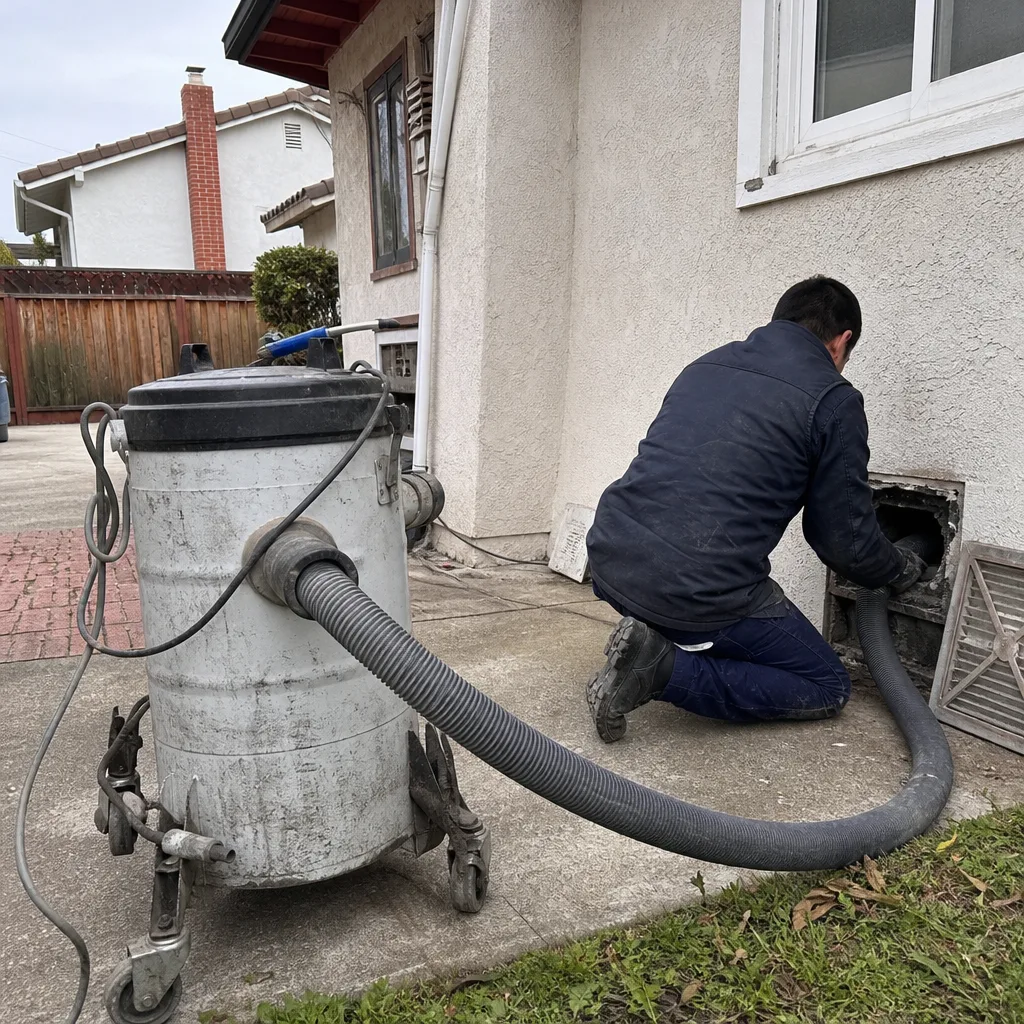
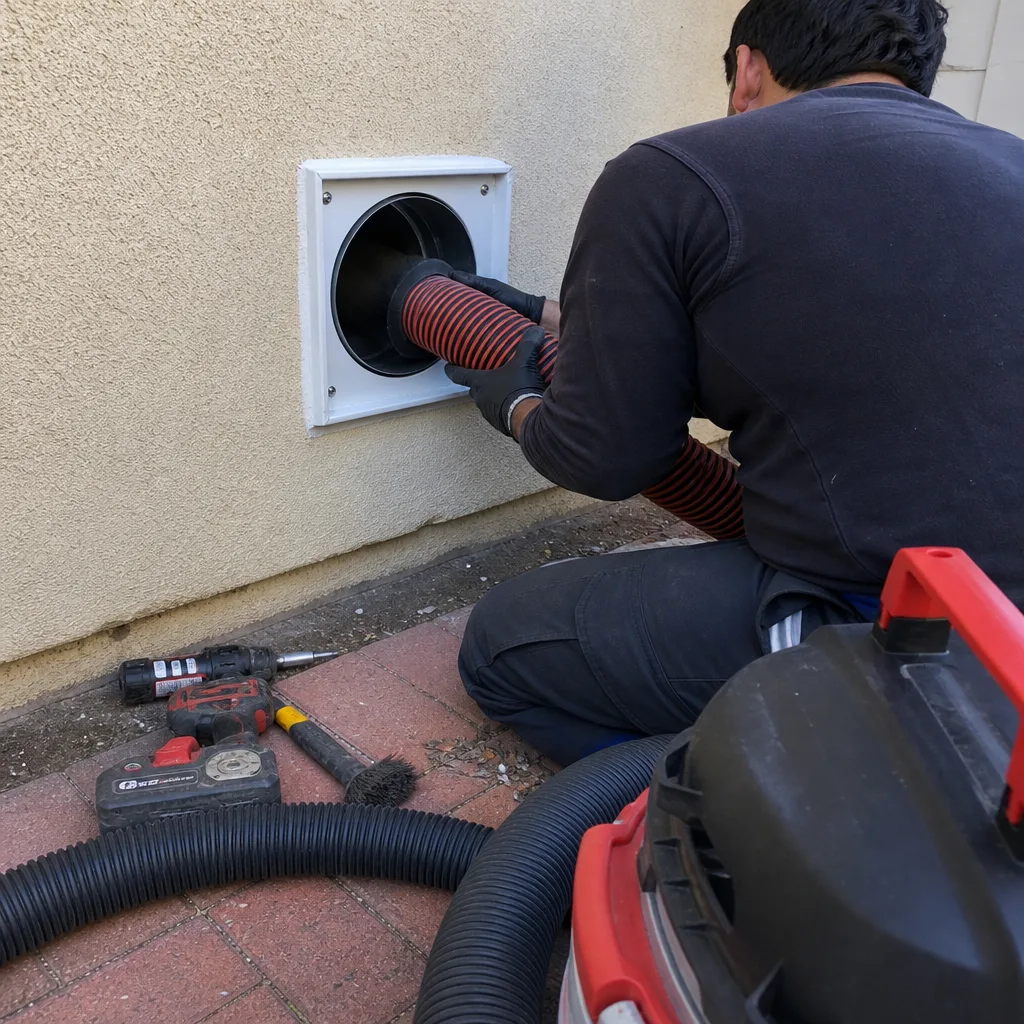
The scenario that matters most is bypass leakage. In a properly sealed duct system, professional cleaning works like this: a high-pressure agitation tool loosens debris from the duct walls, while a powerful vacuum connected to the system creates negative pressure, pulling the loosened debris into the vacuum and out of the house. The system stays under negative pressure throughout, so nothing escapes into living space.
But if the return ducts have significant gaps, tears, or disconnected joints, the vacuum can’t maintain negative pressure. Instead, the agitation phase launches settled dust and debris through those gaps and straight into your attic, crawlspace, or wall cavities. That’s not an improvement; it’s a redistribution. In Milpitas homes with aging duct systems, particularly those where mastic seals have deteriorated in the attic heat, this is a real risk.
A responsible technician inspects for bypass leaks before firing up any agitation equipment. If significant leakage is present, the correct sequence is to seal the leaks first, then clean. That’s why we include a leak inspection in every pre-cleaning assessment. If you’re shopping for duct cleaning and the quote only covers “the cleaning part,” ask what happens if they find leakage during the job. The answer tells you a lot about how careful they’ll be.
Post-Cleaning Regression: Why Your Ducts Got Dirty Again in Six Months
You paid for duct cleaning, the house felt fresher for a few weeks, and then the dust came back. Six months later, the registers look the same as they did before you spent the money. Something is wrong, and it’s not that the cleaner did a bad job (or at least, it’s not automatically that).
Here’s the uncomfortable truth: a duct system that re-contaminates within six to twelve months of professional cleaning almost always has a root cause that cleaning cannot address. In Milpitas, where duct systems run through unconditioned attics for six or seven months of the year, we’ve narrowed the causes down to three recurring culprits:
1. Filter Bypass
The filter is supposed to catch incoming particulate before it reaches the blower, coil, and supply ducts. But if the filter frame is warped, the filter is the wrong size, or the filter slot has a gap around the edges, a portion of the airstream bypasses the media entirely. That unfiltered air carries dust straight into the supply side of your system, and your ducts re-contaminate no matter how thoroughly they were cleaned. We find filter bypass gaps more often than we find dirty ducts.
2. Disconnected or Leaky Return Ducts
A return duct that has separated at a joint, or that has a 6-inch tear from an attic renovation, pulls attic air directly into the system. In Milpitas, where attic dust is a mix of insulation fibers, roofing debris, and seasonal pollen, a single disconnected return is enough to re-dust the entire system in weeks. The same static pressure manometer we mentioned earlier can help here: low return-side static pressure combined with dusty conditions points to a leak.
3. A Negative-Pressure Attic
This one is less obvious, and it’s common in Milpitas homes where a whole-house fan or range hood drops the attic pressure below the living-space pressure. When the attic runs negative, it pulls air from the living space through attic bypasses, but the reverse effect also happens: during system downtime, air moves from the dusty attic into the duct system through every small gap. The attic becomes a particulate reservoir feeding into your supply runs. Fixing this requires sealing the attic bypass points, and often adding attic ventilation to balance the pressure differential.
If your ducts re-contaminated within a year of professional cleaning, the right next step is a leak inspection and static pressure test, not another cleaning. Otherwise you’re just renting clean ducts for a few months at a time.
DIY Checks You Can Do Before Calling Anyone
Before you schedule a diagnostic visit, there are five checks you can do yourself in under an hour. They’ll tell you which category your problem falls into, and they’ll make you a sharper buyer when you do call a professional.
- Check and change the filter. Take the filter out and hold it up to a light. If you can’t see light through it, it’s been restricting airflow. Replace it, run the system for two hours, and see if the symptom improves. This is the cheapest diagnostic in HVAC, and everyone skips it.
- Inspect the registers and grilles. Remove a supply register and a return grille in the same room. Shine a flashlight into each opening. Dust coating the first few inches of the duct is normal; a debris mass thick enough to reduce the opening diameter is not. On the return side, check for a visible gap where the duct meets the wall pan. In Milpitas homes, we frequently find the boot separated there because of attic settling.
- Run the blower with the filter out for 60 seconds. With the system off and the filter removed, observe the blower wheel through the filter slot. Notice whether it spins smoothly, whether the motor starts without hesitation, and whether there’s any rattling from the housing. Don’t run the system longer than a minute without a filter.
- Check every room’s supply register for flow. Turn the system on with the fan set to ON. Walk through the house with a tissue or a strip of paper. Hold it up to each supply register. Same flow in every room? Noticeably weak in one or two? A single weak run points to a kinked flex duct or a disconnected boot, not to system-wide contamination.
- Look at the condensate line. Milpitas summers are dry, so a kinked or clogged condensate line might go unnoticed until you get a musty smell or a water stain at the indoor unit. If there’s standing water in the drip pan, or the line drain terminal is dry while the AC runs, you have a moisture problem that contributes to odor and microbial growth.
Common Mistakes to Avoid
- Paying for cleaning before checking static pressure. If your symptom is weak airflow and the tech can’t tell you the system’s static pressure, you don’t know yet whether cleaning will help. In Milpitas homes with high-efficiency filters and undersized returns, we see static pressure readings over 0.9 WC, and cleaning does nothing for that.
- Assuming musty smell equals moldy ducts. The source is just as often the evaporator coil, the condensate pan, or a deceased animal in a horizontal duct run. Paying for duct sanitizing when the problem is a dirty coil leaves you with the same odor and a lighter wallet.
- Skipping the leak inspection before equipment starts. If the system has bypass leaks, agitation equipment redistributes settled debris into attic or crawlspace air. A professional who skips the inspection step is creating new problems. Ask about the pre-cleaning inspection before you book.
- Believing a cheap quote that doesn’t include a walkthrough. Real duct cleaning requires the technician to map the system, identify the trunk line, plan access points, and assess the equipment needed. A quote given over the phone without a system inspection isn’t a real quote; it’s a marketing price. Milpitas homes come in dozens of duct configurations, which is why we inspect before we quote.
- Treating duct cleaning as an annual maintenance item. For most homes, 5 to 7 years is a reasonable interval, unless a specific event (renovation, water damage, pest intrusion) triggers an earlier cleaning. If a company tells you cleaning is needed every year, they’re not giving you information; they’re setting up a subscription.
- Ignoring the dryer vent while addressing the ducts. In Milpitas, where laundry rooms often sit at the center of the house, dryer vent runs can be long, with multiple elbows. If you’re addressing indoor air quality, Dryer Vent Cleaning in Milpitas is the other half of the equation, and the one with a direct fire-safety payoff.
When to Call a Professional
You’ve done the filter check, the register inspection, and the walkthrough with the tissue. Some problems still call for a technician with professional-grade tools. Call if you see visible mold growth in the ducts, if you suspect a dead animal in a run, if one room has persistent weak airflow despite a clean filter, if your energy bills have climbed 20% or more with no obvious cause, or if your ducts were cleaned within the last year and they’re already dusty again. Those scenarios require diagnostic equipment: a manometer, a borescope camera, and the experience to read both. Duct Cleaning Milpitas offers free estimates throughout Milpitas, and every assessment includes a static pressure measurement and a leak inspection. Call (877) 358-5491 to schedule a walkthrough.
Frequently Asked Questions
You need cleaning if you see visible dust plumes from supply registers when the blower starts, find construction debris or drywall dust in the registers after a renovation, notice pet hair and fine dust accumulating on register grilles within days of vacuuming, or if a recent rodent or bird infestation left debris in the system. In Milpitas, we also recommend inspection after wildfire smoke intrusion or a period where the system ran without a filter. For most homes with no specific event, a thorough visual inspection is the only reliable way to know, and that’s what we do before quoting any cleaning.
Rapid re-dusting after professional cleaning points to a system envelope problem: filter bypass, a disconnected return duct, or a negative-pressure attic pulling particulate into the return path. These are root causes that cleaning cannot resolve. The diagnostic sequence is a static pressure test, a leak inspection with a smoke pencil or camera, and a close look at the filter frame for gaps. In our experience with Milpitas homes, a disconnected return or a bypass gap is present in a majority of rapid-recontamination cases. Call us at (877) 358-5491 for a leak assessment.
Dirty ducts can aggravate respiratory symptoms, particularly for people with asthma, allergies, or compromised immune systems, but the ducts are one part of a larger IAQ picture. What’s more impactful for most Milpitas households is the filter quality, the presence of bypass leakage, and whether the HVAC system is pulling attic dust into the living space. The filtration products we carry from Honeywell and Aprilaire address the filter side of that equation, and we install them as part of system improvement, not as a standalone upsell.
Duct cleaning removes debris from the interior of the ductwork. Duct repair fixes structural problems: reconnecting separated boots, sealing leaks, replacing crushed or kinked flex runs, and re-mastic-ing joints. They’re distinct services, and diagnosing which one your system needs is the core of effective troubleshooting. We offer both, plus Dryer Vent Cleaning in Milpitas, so the assessment drives the recommendation rather than the other way around.
Whole-system duct cleaning for a typical single-family Milpitas home runs between $450 and $900, depending on the number of runs, the accessibility of the main trunk, and whether the system includes a second zone. The price should include a full leak inspection, agitation with professional equipment, and post-cleaning photos of the duct interior. Quotes that come in significantly lower usually mean per-vent pricing that escalates on-site, or a “blow and go” job with no negative-pressure vacuum. For an exact quote on your system, call (877) 358-5491.
Duct cleaning can marginally improve airflow if debris was genuinely restricting the duct diameter, but in most Milpitas homes the bigger energy impact comes from sealed ducts and correct filter maintenance. A leaky return pulling hot attic air into the system during summer forces the AC to work against heat you’re not even getting cooling credit for. That’s a repair issue, not a cleaning issue, and it’s why we recommend a full-system assessment before committing to either service.
The Bottom Line
Duet cleaning is a real service that solves real contamination problems, but it’s not a universal fix for every airflow complaint. The sequence matters: check the filter, inspect the registers, measure static pressure if possible, and identify whether your symptom belongs to the contamination category, the airflow category, or the system envelope category. In Milpitas, where attic duct runs and long cooling seasons create specific failure patterns, a professional who inspects and measures before quoting is worth the call. When the diagnosis points to cleaning, insist on professional-grade equipment, negative-pressure methodology, and post-cleaning documentation. Anything less is a guess you paid to confirm. For a free assessment of your duct system, call (877) 358-5491 or reach out through our Duct Cleaning Milpitas home page.
Written by the team at Duct Cleaning Milpitas, serving Milpitas since 2018.
See the difference
 Before
 After
 Before
 After
 Before
 After