
Last updated November 2, 2026
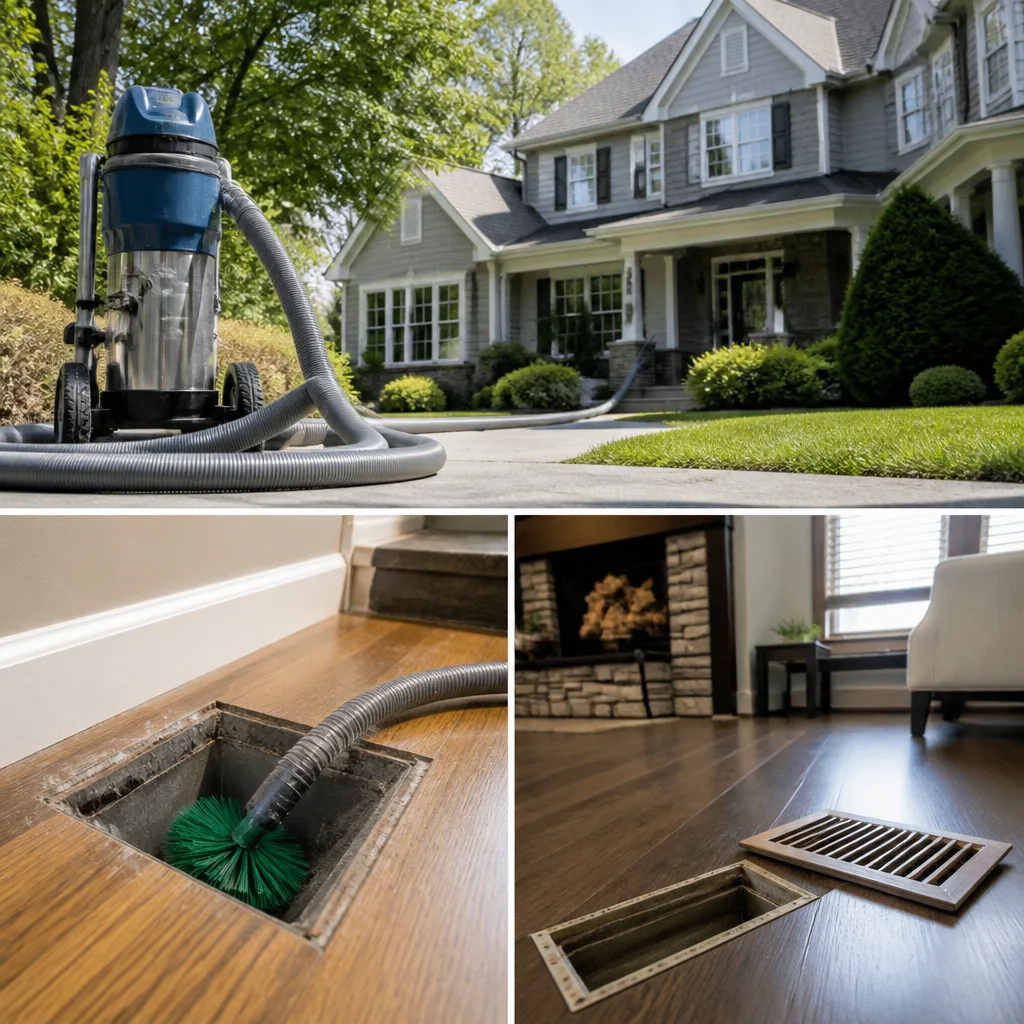 Whole-home duct cleaning
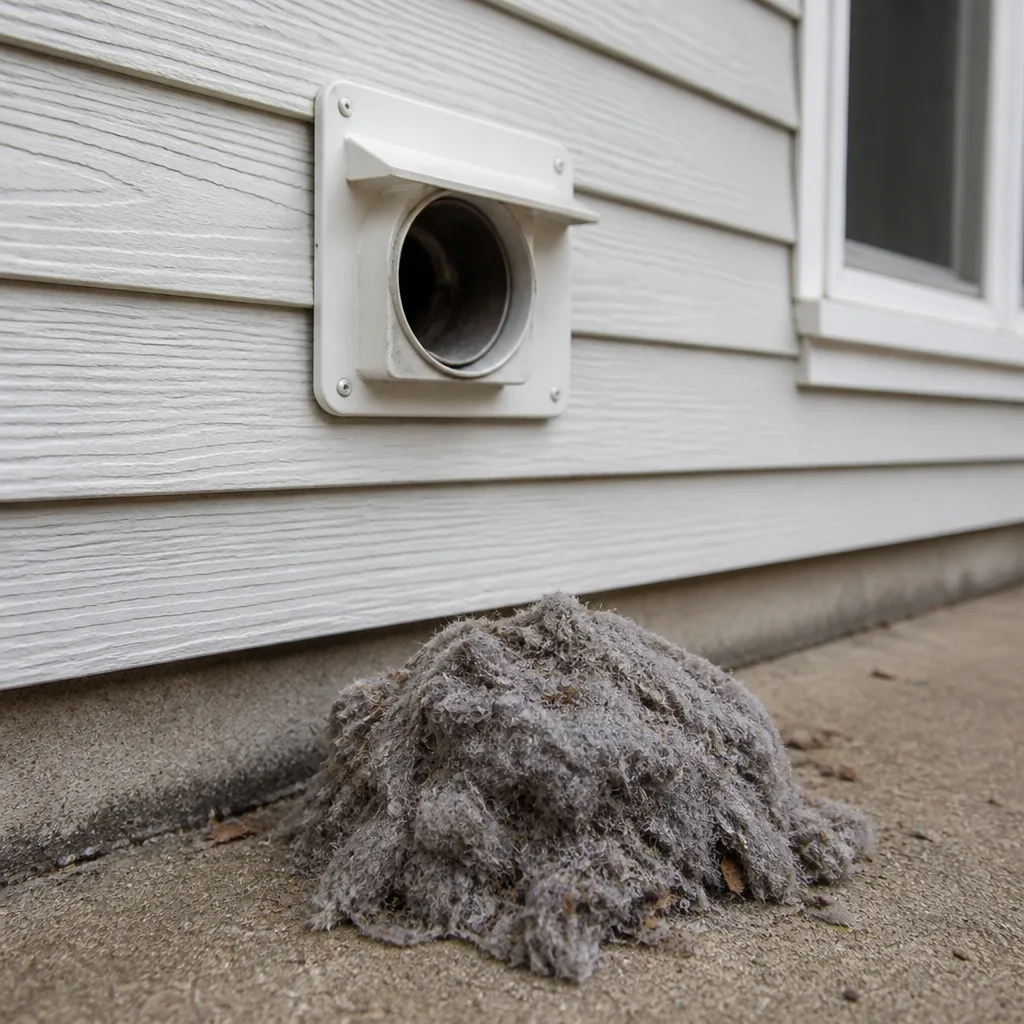 Dryer vent cleaning
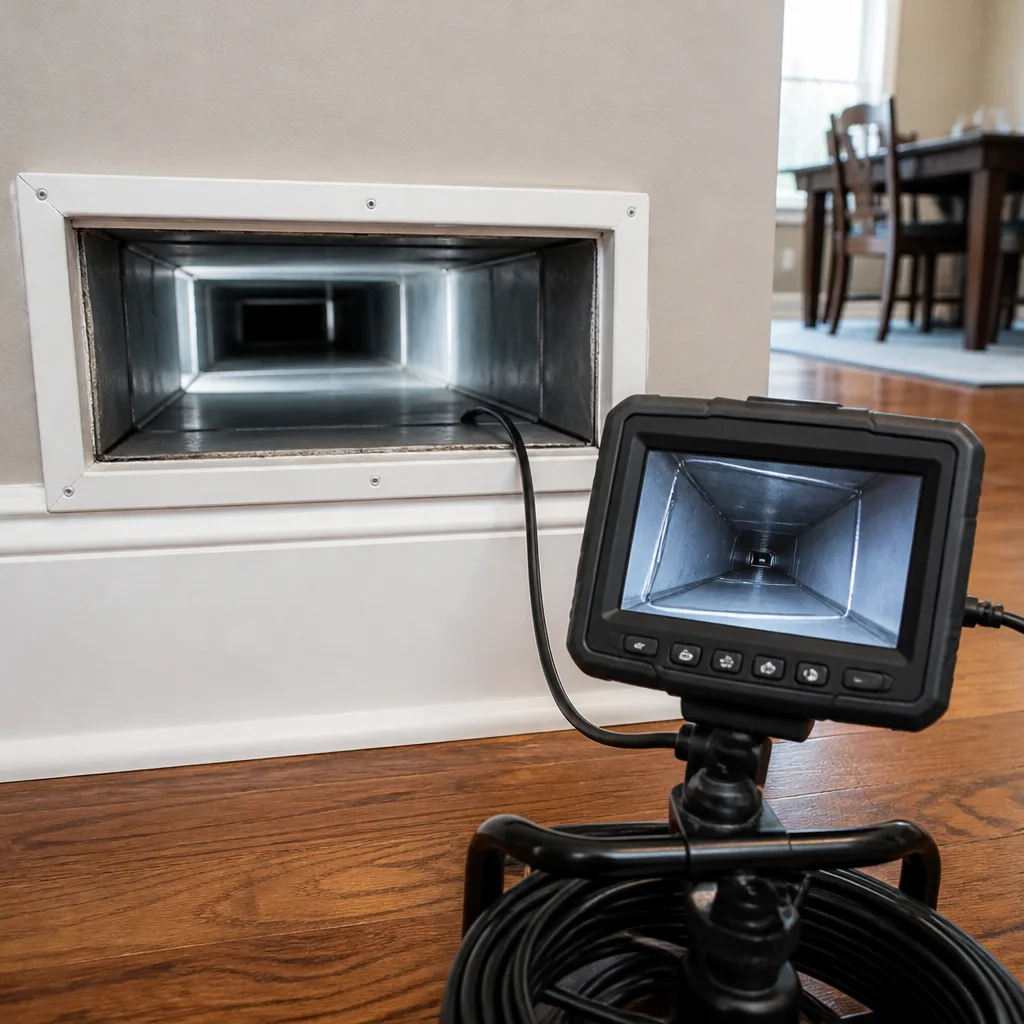 Camera inspection
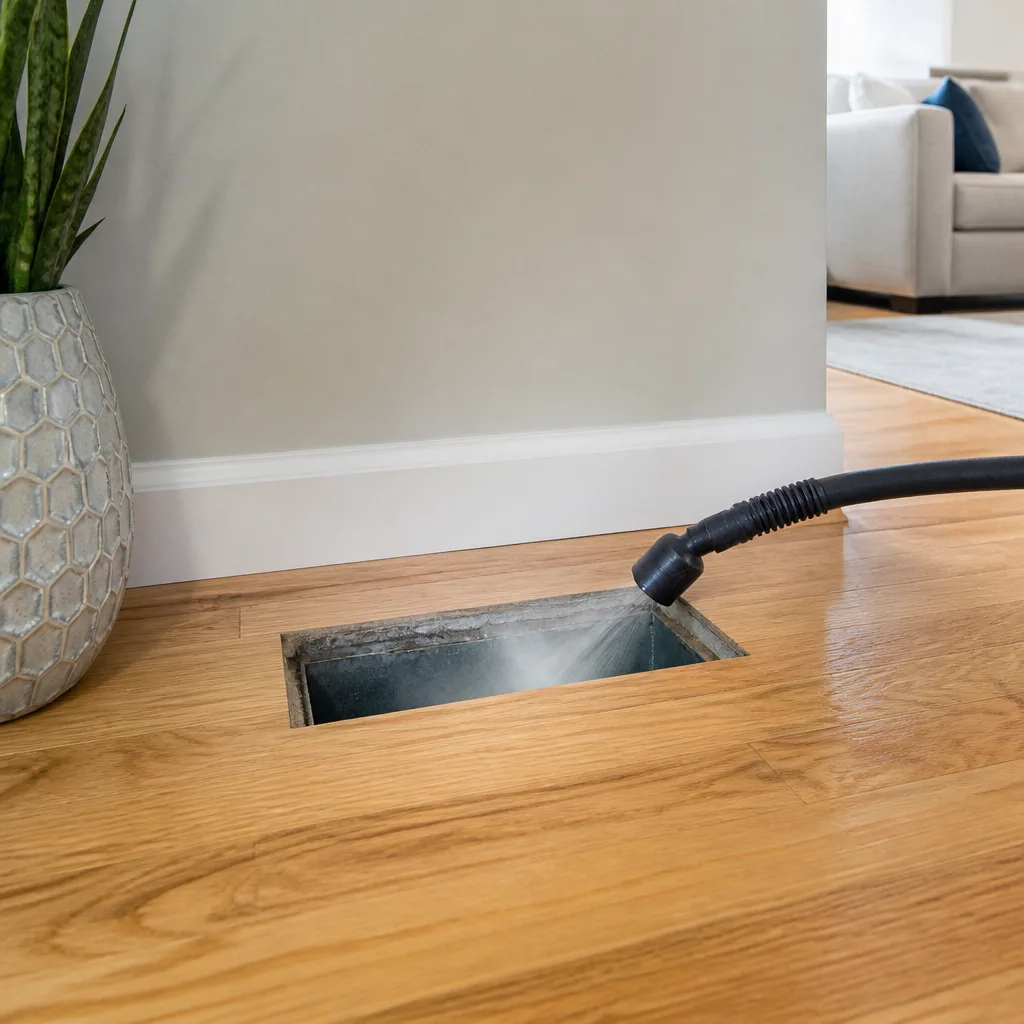 Sanitizing & deodorizing
Whole-system duct and dryer vent check with before-and-after photos - you see exactly what came out of your vents
That "$99 whole-house special" is a bait ad - the real number appears once they are in your hallway, or the "clean" is a shop-vac at the register. We photograph the inside of your ducts before and after instead.
Choosing the Right Air Duct Cleaning Brand: A Buyer’s Guide for Milpitas
Here’s a fact most Milpitas homeowners don’t know: California has no licensing requirement for duct cleaning equipment. A contractor can legally pull up to your house with a 5-gallon shop vac, a ladder, and a business card, then charge you $400 for what amounts to little more than a light dusting. The only real protection you have is knowing which equipment names actually represent professional negative-pressure, source-removal cleaning. This guide gives you that framework. By the time you finish reading, you’ll know exactly what questions to ask before anyone touches your ducts in Milpitas.
Quick Answer
The best air duct cleaning brands in Milpitas are Rotobrush and Nikro for portable negative-pressure systems, Abatement Technologies and HEPA-Aire for HEPA-filtered containment units, and truck-mounted systems with a minimum of 2,000 CFM suction. A company using recognized professional equipment from these manufacturers, combined with proper agitation tools for your specific duct type, will deliver a fundamentally different result than one improvising with shop vacs or rental gear.
Styles & brands we work with
- Whole-home duct cleaning
- Dryer vent cleaning
- Camera inspection
- Sanitizing & deodorizing
Table of Contents
- Why Equipment Brand Matters More Than Price
- Understanding Negative-Pressure Cleaning Systems
- The Professional Brands: Rotobrush, Nikro, Abatement Technologies, and HEPA-Aire
- Portable Units vs. Truck-Mounted Systems: What CFM Really Means
- How Equipment Choice Changes by Duct Type: Fiberglass, Flex, and Sheet Metal
- 7 Questions to Ask a Duct Cleaning Contractor Before You Book
- How Equipment Documentation Protects You After the Job
- Milpitas-Specific Considerations: Climate, Construction, and Code
Why Equipment Brand Matters More Than Price
Duct cleaning is one of the few home services where the tool genuinely determines the outcome. A plumber’s wrench is a wrench. A painter’s roller is a roller. But the difference between a professional negative-pressure duct cleaning system and a shop vac is not one of degree. It’s a difference of kind. A shop vac moves air at 100 to 200 CFM. A portable Rotobrush or Nikro system moves air at 1,000 to 1,500 CFM. A truck-mounted system can exceed 5,000 CFM.
In Milpitas, where late-summer days routinely push HVAC systems to run for 12 hours or more, dust accumulation inside ducts isn’t cosmetic. It’s a loading problem. The more particulate that builds up on duct walls, the more your system carries into the air you breathe every cycle. Proper equipment removes that material at the source. Improvised equipment stirs some of it up and leaves the rest behind.
We’ve seen the after-effects of both approaches. When a homeowner calls us after a budget cleaning, the complaint is usually the same: the house smells dusty again within two weeks, or they noticed dust on furniture that wasn’t there before. That’s what happens when negative pressure is insufficient to contain what agitation dislodges. The dust gets loosened, then drifts out of the registers because there isn’t enough suction pulling it into the collection system.
Equipment brand matters because established manufacturers build their systems around specific engineering principles: negative pressure containment, HEPA filtration at the point of collection, and agitation tools matched to duct materials. When a contractor owns Rotobrush or Nikro equipment, they’ve made a capital investment that only makes sense if they do this work seriously. That investment tells you something about how they’ll approach your home.
Understanding Negative-Pressure Cleaning Systems
Every legitimate air duct cleaning method relies on the same fundamental principle: the system must operate under negative pressure while agitation occurs. In practical terms, that means the cleaning unit creates suction inside your ductwork that is strong enough to pull dislodged debris into a collection chamber before it can escape into your living space. This is source removal, and it’s what industry standards call for. If a contractor can’t explain negative pressure in one sentence, that’s a red flag.
Here’s how a professional negative-pressure setup works, step by step:
- Access and sealing: The technician cuts access ports into the main supply and return trunks and seals off all registers in the system.
- Connection: The vacuum unit connects to one access point, creating suction throughout the duct path now that registers are sealed.
- Agitation: While the system is under suction, the technician runs agitation tools (brushes, air whips, or skipper balls) through the ducts to dislodge adhered dust and debris.
- Containment: Dislodged material is immediately pulled by negative pressure into the collection unit, not into the room.
- Filtration: Air exhausted by the unit passes through HEPA or high-efficiency filtration before returning to the space or venting outside.
The key distinction is what happens to the air after it’s vacuumed. A shop vac has no meaningful filtration for fine particulate. It captures larger debris but exhausts fine dust right back into the room, sometimes through a clogged filter that’s been pressed into service for months. Professional units use multi-stage filtration, with HEPA-rated final filters on the better systems, so what leaves the unit is cleaner than what went in.
For a deeper look at what a complete cleaning involves, our Air Duct Cleaning in Milpitas page walks through the full process from inspection to resealing.
The Professional Brands: Rotobrush, Nikro, Abatement Technologies, and HEPA-Aire
Not every brand name printed on a piece of equipment means the same thing. In the duct cleaning industry, a handful of manufacturers have earned recognition from industry standards bodies because their systems are engineered specifically for the task. When a Milpitas contractor says they use Rotobrush or Nikro equipment, that’s a verifiable statement. These names exist in professional catalogs, not big-box home improvement stores.
Rotobrush is perhaps the most widely recognized name in portable duct cleaning. The company’s systems are built around a self-contained design that combines the vacuum and agitation functions in one portable unit. The brush head rotates inside the duct while the attached vacuum hose pulls dislodged material directly into the collection bag. Rotobrush systems are the default choice for many professional IAQ contractors because they’re maneuverable enough for tight attic and crawlspace work while still delivering the negative pressure a proper cleaning requires.
Nikro builds portable HEPA-filtered negative air machines and duct cleaning systems that are particularly valued in contamination-sensitive environments. Their units are designed around high-efficiency particulate capture, which matters when you’re dealing with fine dust rather than visible debris. A Nikro unit with a HEPA final filter is a meaningful step up in air quality protection during the cleaning process itself.
Abatement Technologies is a name that signals capability beyond basic vacuuming. The company manufactures HEPA-filtered containment equipment used in mold remediation, lead abatement, and healthcare construction. When a duct cleaning contractor carries Abatement Technologies equipment, they’re prepared for jobs that involve more than household dust: post-renovation debris, vermin contamination, or situations where air quality is genuinely compromised. The Milpitas housing stock, much of it built in the 1960s and 1970s, often requires this level of care when systems haven’t been cleaned in decades.
HEPA-Aire and similar HEPA filtration systems round out the professional picture. These units are often used in conjunction with cleaning equipment to provide continuous air scrubbing during the job, capturing any particulate that becomes temporarily airborne. If you’ve ever worried about a cleaning making your house dustier, this is the equipment category that prevents it.
The bottom line: when a contractor names their equipment, they’re either telling you they’ve invested in professional tools or they’re hoping you won’t ask. Asking is the cheapest form of protection available.
Portable Units vs. Truck-Mounted Systems: What CFM Really Means
CFM stands for cubic feet per minute, and it’s the single most useful number for comparing duct cleaning equipment. It describes how much air the system moves, which translates directly to how much suction force is available at the point of cleaning. But CFM numbers are only meaningful in context. A system that advertises 1,500 CFM at the unit may deliver only 500 CFM at the end of a 25-foot hose run. Friction loss through the hose reduces effective suction. Professional contractors know this and size their equipment accordingly.
Here’s a practical breakdown of what CFM ranges mean for residential duct cleaning:
- Under 500 CFM: Shop vac territory. Insufficient for duct cleaning. Will not contain dislodged debris effectively.
- 500 to 1,000 CFM: Marginal for small residential systems. May work on short, simple duct runs but struggles with long trunk lines or heavily soiled systems.
- 1,000 to 1,500 CFM: The sweet spot for portable professional units like Rotobrush and Nikro systems. Adequate for most Milpitas homes, which typically run 15 to 30 feet of trunk duct from the air handler.
- 2,000 CFM and above: Truck-mounted territory. Power for large homes, long duct runs, or heavily contaminated systems. These units typically pull from a diesel or PTO-driven vacuum mounted in the service vehicle.
Truck-mounted systems represent the top end of cleaning power. The vacuum unit sits in the truck, connected to your ducts through a large-diameter hose run through a window or door. The advantage is raw suction: 5,000 to 12,000 CFM is not unusual. The disadvantages are access constraints (the truck needs to park close to the house) and higher cost, which means the service typically runs more. For most single-family homes in Milpitas, a well-operated portable professional system is entirely adequate. For very large homes in the Dixon Landing area or commercial spaces, truck-mounted power may be the better choice.
What matters more than the CFM number itself is that the contractor can state it. If they can’t tell you how much suction their equipment produces, they haven’t thought about it, which means they’re probably not the specialist you’re looking for.
How Equipment Choice Changes by Duct Type: Fiberglass, Flex, and Sheet Metal
Milpitas homes built in different decades have different duct materials, and the right cleaning approach varies accordingly. This is where equipment really earns its keep: the agitation method and suction level must match the duct material or you risk damage.
Sheet metal ducts are the most forgiving. They’re rigid, durable, and can handle aggressive agitation methods like pneumatic air whips and rotating brushes. Most homes built in Milpitas before 1980 have sheet metal trunks with some flex duct branches. For these systems, a Rotobrush with a standard brush head or a pneumatic agitation tool delivers thorough cleaning without risk of damage.
Flex duct requires a lighter touch. The inner liner is a thin plastic or foil sleeve supported by a wire coil. Aggressive brushing can tear the liner or separate it from the coil. Professional tools for flex duct rely on compressed air agitation or skipper balls that travel through the duct without abrading the walls. This is technique more than raw power, and it’s a place where experience shows. We’ve repaired more than one flex duct run that was damaged by an over-aggressive cleaning from a budget operator.
Fiberglass-lined duct is the most delicate of the three. Found in some Milpitas homes built in the 1970s and 1980s, fiberglass lining is a layer of insulation bonded to the inside of sheet metal ducts. It cannot be scrubbed with rotating brushes because the brushing action abrades the fiberglass, releasing fibers into the airstream and damaging the lining. Professional cleaning of fiberglass-lined ducts requires either contact tools designed specifically for lined surfaces or alternative methods like air washing at controlled pressure. A contractor who doesn’t know what type of ducts you have before quoting is a contractor to avoid. If you need duct repair after years of wear or a previous rough cleaning, our Air Duct Repair in Milpitas service covers lined duct replacement and sealing.
| Duct Type | Common in Milpitas | Recommended Agitation Method | Equipment Consideration |
|---|---|---|---|
| Sheet Metal | Homes built pre-1980 | Rotating brush, air whip | Rotobrush or pneumatic tools work well; aggressive cleaning is safe |
| Flex Duct | Most homes 1980s-present | Compressed air, skipper ball | Lighter touch required; avoid rotating brush on inner liner |
| Fiberglass-Lined | Select homes 1970s-1980s | Contact tools designed for lining or air washing | Rotating brush can damage lining; contractor must identify before cleaning |
7 Questions to Ask a Duct Cleaning Contractor Before You Book
The best time to evaluate equipment is before the van arrives, not after the work begins. These seven questions will separate professional operators from improvisors faster than any review site. They’re particularly useful for Milpitas homeowners because our market has a mix of general handymen services and genuine duct specialists, and the phone quote rarely reveals the difference.
- “What equipment do you use, and what’s the brand and model?” A professional will name their system without hesitation. “Rotobrush aiR+,” “Nikro HEPA vacuum,” or “a truck-mounted system from [manufacturer]” are answer types you want. “A powerful vacuum” is not.
- “What CFM does your system pull?” This is the single most revealing technical question. A legitimate contractor knows this number. If they look confused, you’re talking to the wrong person.
- “Does your system use HEPA filtration during cleaning?” Not all professional systems are HEPA-filtered, but the answer tells you how seriously they take containment. For homes with allergy sufferers or respiratory concerns in Milpitas, HEPA filtration during cleaning is the safer choice.
- “What agitation method will you use on my ducts, and have you identified what type of ducts I have?” If they haven’t asked about your home’s construction era or duct material, proceed with caution. The answer should reference sheet metal, flex, or fiberglass-lined duct and the corresponding tool.
- “Do you own your equipment or rent it?” There’s nothing automatically disqualifying about renting, but ownership signals ongoing investment in the trade. A contractor who owns Rotobrush or Nikro equipment has made a four- or five-figure commitment to doing this work properly.
- “Can you show me before-and-after photos from a recent Milpitas job?” Any professional contractor doing source-removal cleaning documents their work. If they can’t show you photos of the inside of ducts they’ve cleaned, ask why.
- “What’s included in your price, and is it one flat number per system?” The bait-and-switch model in this industry works by quoting a low per-vent price, then discovering “extra contamination” once the tech arrives. One flat price per system, agreed before work starts, is the transparent alternative.
These questions take five minutes to ask. They’re the difference between hiring a specialist and gambling on an improvisor. If you want to understand the full scope of what a thorough cleaning involves before you start making calls, our Duct Cleaning Milpitas home page covers the service in detail.
How Equipment Documentation Protects You After the Job
The value of professional equipment doesn’t end when the tech pulls out of your driveway. It extends into the documentation that comes with the service. When a contractor uses HEPA-filtered equipment from a recognized manufacturer, that equipment produces a verifiable record of what happened during the cleaning. This matters for several practical reasons in Milpitas.
First, if you have a post-cleaning air quality dispute (you find dust in the house, or the system doesn’t seem cleaner), the equipment record establishes baseline standards. A contractor running a Rotobrush or Nikro unit can document the filter loading during your job, which shows how much material was removed. A contractor with a shop vac has no such record, and the dispute becomes your word against theirs.
Second, for property managers in Milpitas responsible for tenant-occupied units, equipment documentation provides a defensible answer when questions arise about maintenance history. “We used a professional HEPA-filtered system from X manufacturer on this date” is a stronger position than “we cleaned it.”
Finally, documentation supports warranty claims and insurance matters. If a cleaning is implicated in duct damage or an air quality complaint, the ability to produce equipment specs and service records separates professionals from fly-by-night operators. This is part of why established brands matter: they carry professional reputations that their users are careful not to squander with sloppy work.
You can also protect yourself financially. One flat price per system means the final invoice matches the quote. No per-vent surprises. No added fees for “extra contamination” discovered mid-job. If a contractor won’t commit to a system price before they arrive, find a different contractor.
Milpitas-Specific Considerations: Climate, Construction, and Code
Milpitas has a particular set of conditions that influence both how ducts get dirty and how they should be cleaned. Understanding these local factors will help you evaluate equipment choices more intelligently.
Climate and air quality: Milpitas sits near the bottom of the bay, but not near enough to fully escape inland heat in summer. Days above 90 degrees are common in July and August, and HVAC systems work hard during those stretches. That means more air movement through your ducts, which means more captured particulate. Milpitas also occasionally experiences elevated particulate levels from regional events, whether wildfire smoke drifting from the East Bay hills or seasonal agricultural activity in surrounding areas. Fine particulate that infiltrates your home ends up in your ducts. The finer the particulate, the more important HEPA filtration becomes during cleaning, because fine particles are the ones that escape cheap filters and recirculate.
Construction era and duct materials: Milpitas experienced major housing development in two waves: the 1950s through 1970s, when the city transitioned from orchards to suburbs, and the 1980s through 1990s expansion. Homes from the earlier wave commonly have sheet metal ducts, which clean well with standard professional equipment. Homes from the later wave more likely have flex duct, which requires the gentler techniques described above. Some homes near the Milpitas foothills and in older sections of the city have fiberglass-lined duct runs. A contractor who understands Milpitas’s housing stock will ask about your home’s era before they quote. One who doesn’t ask is flying blind.
Permits and code: Air duct cleaning itself doesn’t require a permit in Milpitas or anywhere in California. But duct repair or replacement work may trigger permit requirements if structural changes are involved. A professional duct specialist knows where the line is. If cleaning reveals damaged duct that needs structural repair, the right contractor can tell you whether the repair is inside the scope of a cleaning-and-sealing job or whether it requires a permitted HVAC modification. This is another place where the specialist-with-real-equipment distinction matters: someone showing up to clean ducts with a shop vac is not going to know Milpitas building code requirements for duct repair.
Proximity to industrial areas: Parts of Milpitas sit adjacent to light industrial and office-park zones, and the city’s position near major freeway corridors (880, 680, 237) means vehicle-related particulate is a constant background presence. Ducts in Milpitas homes tend to accumulate a characteristic fine gray-black dust that’s a mix of roadway particulate, indoor dust, and organic material. It’s not hazardous in most cases, but it’s exactly the kind of sub-micron material that requires proper negative-pressure containment and HEPA filtration to remove without redistributing through the house.
Common Mistakes to Avoid
- Choosing on price alone. The cheapest quote in Milpitas is almost never a professional equipment operator. A legitimate negative-pressure cleaning with HEPA filtration costs what it costs. The low number is low for a reason, and you’ll either pay the difference later in a re-clean or live with a system that wasn’t actually cleaned.
- Not asking about equipment at all. Most homeowners make one call, get one quote, and book based on availability. A five-minute equipment conversation before booking would reveal in advance whether the contractor owns professional gear or is bringing a shop vac to your air ducts.
- Accepting a per-vent price. Per-vent pricing is the classic bait-and-switch structure. The quote sounds reasonable for “up to 10 vents,” then mysteriously your 14-vent system needs a “larger job” adjustment. Demand one system price, agreed before work starts.
- Allowing the tech to skip register sealing. If the contractor isn’t sealing all registers during cleaning, the system is not under true negative pressure. You’re paying for agitation with partial containment, which means dust recirculates into your rooms. Watch for this during the job.
- Ignoring the dryer vent. Dryer vent cleaning is a safety service, and many duct cleaners skip it or offer it as an upsell. In Milpitas, where homes are tight and dryer vents often run long, restricted vents are a genuine fire risk. A Dryer Vent Cleaning in Milpitas service should be part of any full duct assessment. Lint buildup is the leading cause of dryer fires, and the vent is part of your home’s exhaust system even though it’s not part of the HVAC ductwork.
- Having ducts cleaned before identifying why they’re dirty. If your ducts are dirty because of a return-side leak pulling attic air, cleaning them without fixing the leak means they’ll be dirty again within months. A proper cleaning includes an inspection that identifies where the contamination is coming from, not just removal of what’s already there.
- Believing duct cleaning eliminates all indoor air quality issues. Duct cleaning is one component of indoor air quality. Filtration matters too. A contractor who works with air quality brands like Honeywell and Aprilaire can help you understand the bigger picture, but even the best cleaning won’t fix a home with no filtration on a system that runs constantly. The right professional will tell you this. The wrong one will sell you a cleaning and leave you disappointed.
See the difference
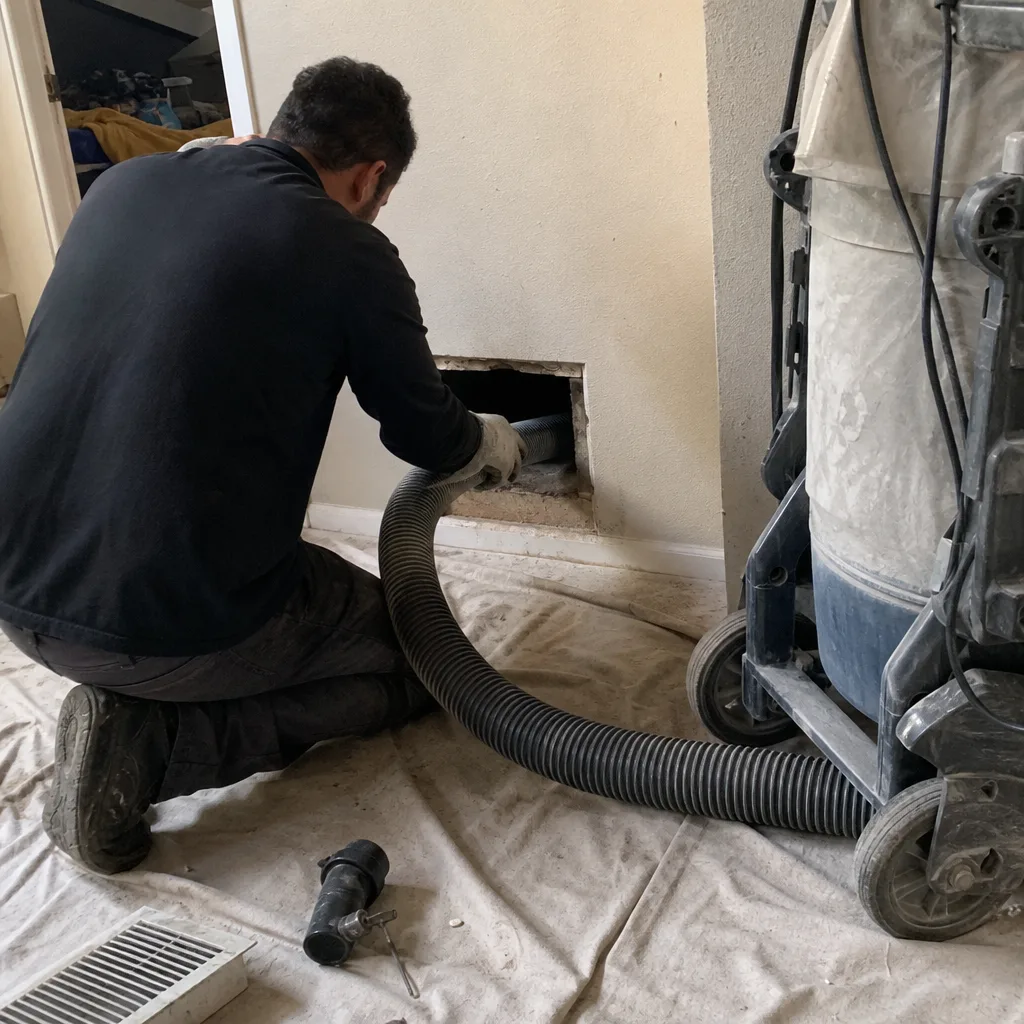 Before
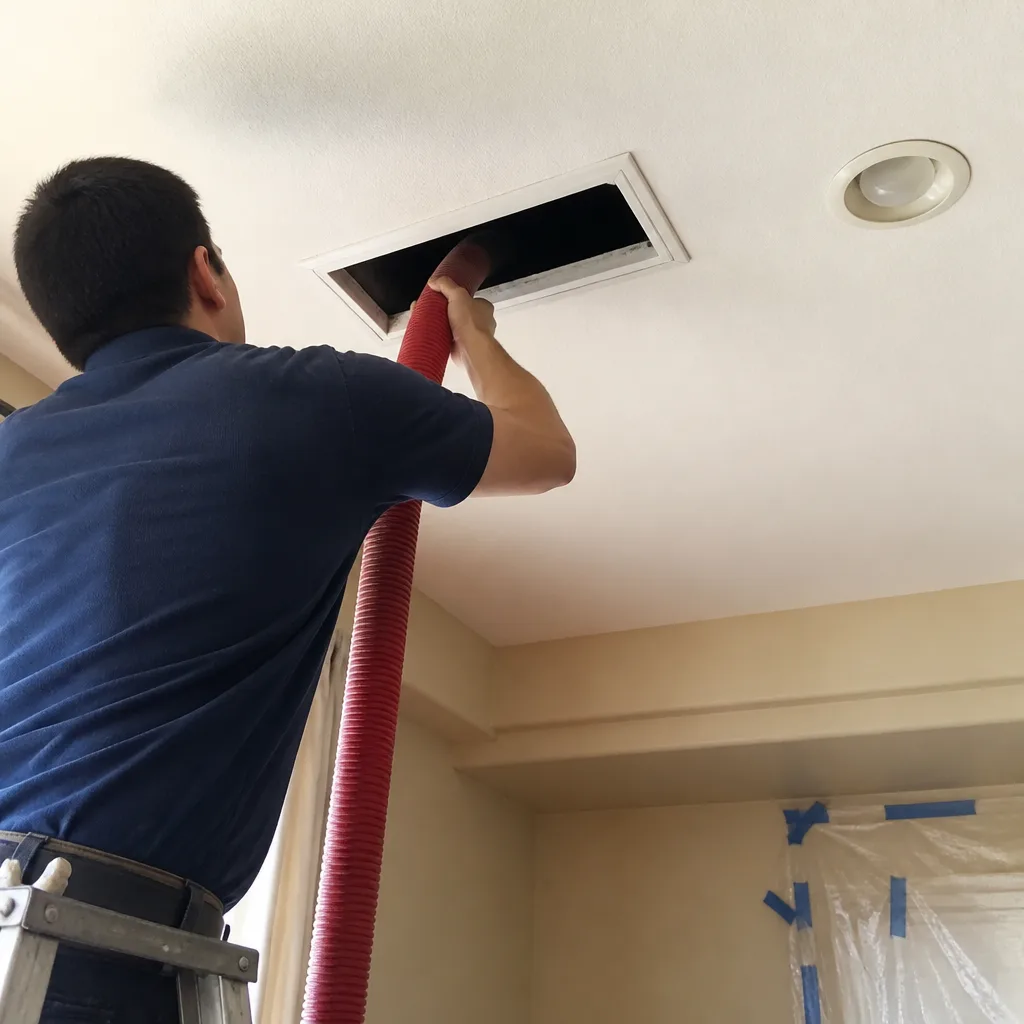 After
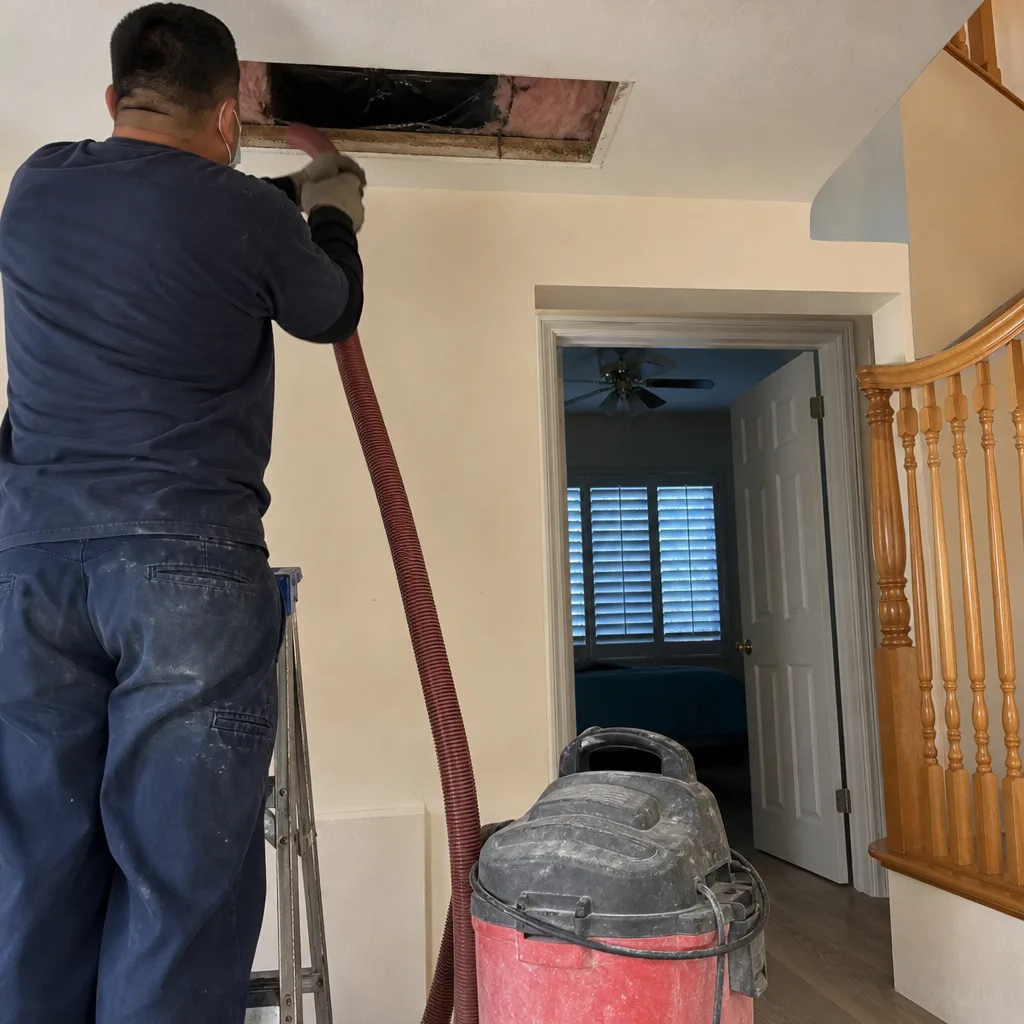 Before
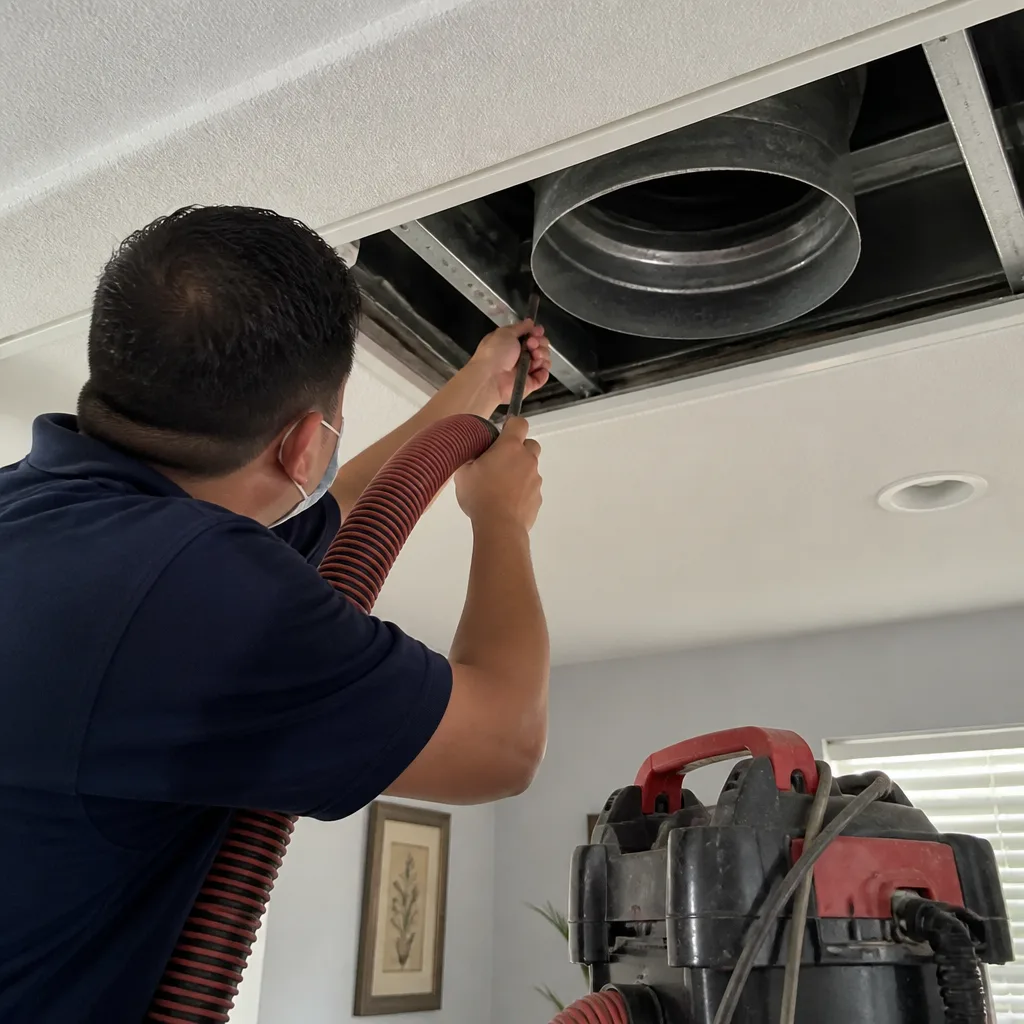 After
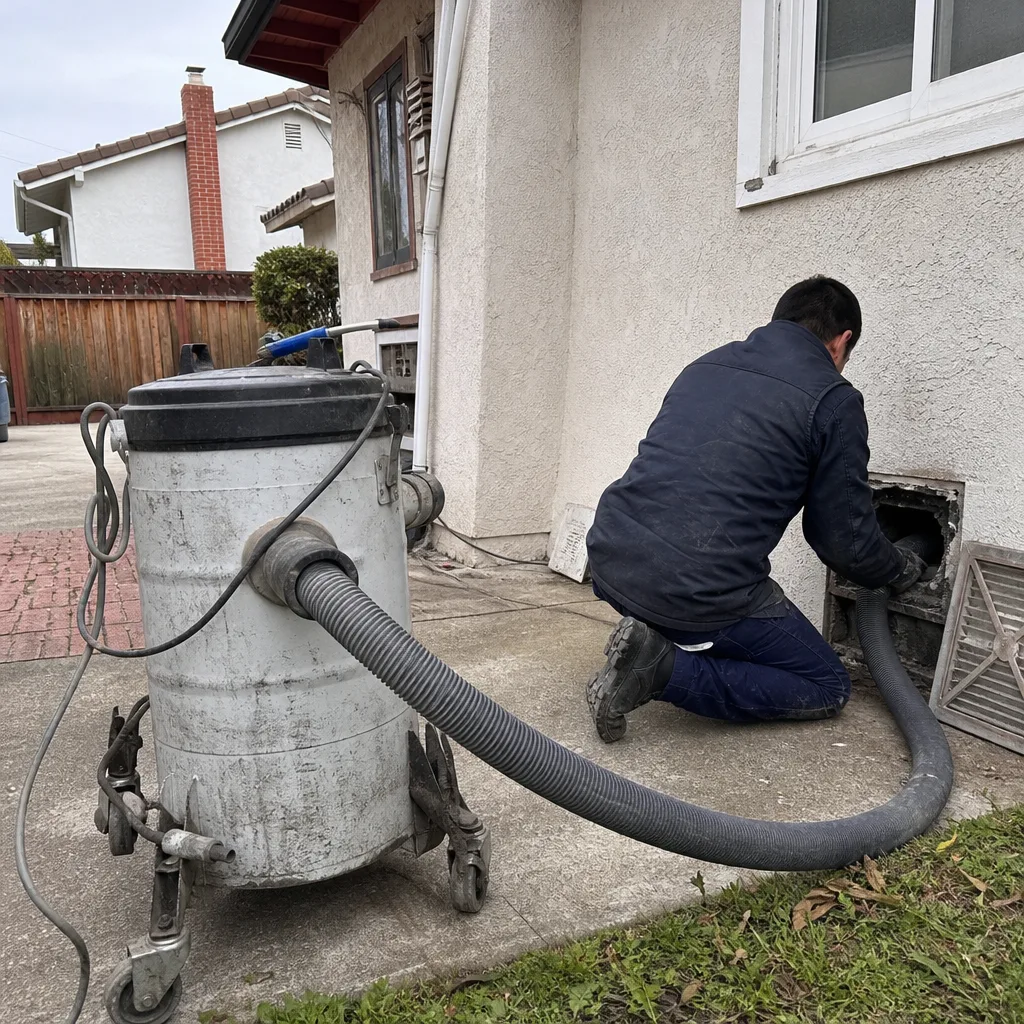 Before
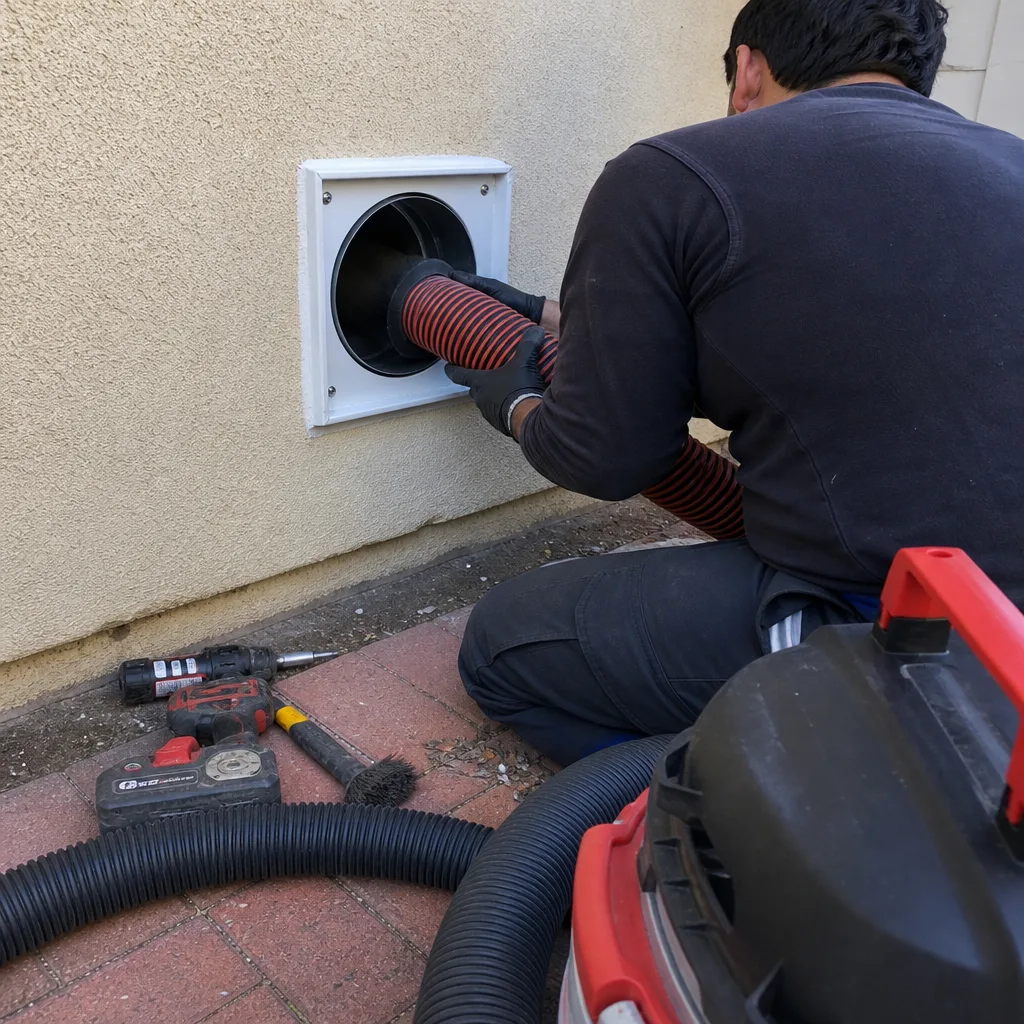 After
When to Call a Professional
Some duct issues are obvious enough that you can see or feel them. If you notice dust accumulating rapidly on furniture within days of dusting, visible dust blowing from registers when the system starts, unexplained respiratory symptoms that improve when you leave home, or a musty odor coming from vents during cooling cycles, your ducts need assessment. If your dryer is taking longer than 45 minutes to dry a normal load, the vent is restricted and needs professional attention. If you’ve had renovation work done and the contractor didn’t seal off the register openings, construction dust has migrated into your system. All of these are calls for a professional with the right equipment from the start. Duct Cleaning Milpitas offers free estimates in Milpitas, so you can call (877) 358-5491 and have a professional evaluate the system before you spend anything.
Frequently Asked Questions
The best equipment depends on your home’s duct configuration, but portable professional systems from Rotobrush and Nikro represent the industry standard for residential work, while Abatement Technologies and HEPA-Aire units add HEPA-filtered containment for homes with air quality concerns or heavy contamination. Truck-mounted systems pulling 2,000+ CFM are the top end for large homes. The common thread across all legitimate equipment is negative-pressure source removal with documented filtration.
The price gap comes down almost entirely to equipment and scope. A contractor using a shop vac or rented portable unit has minimal capital cost and can price low while still making margin. A professional operator with owned Rotobrush or Nikro equipment, HEPA filtration, documentation practices, and one-flat-price-per-system transparency has a cost structure that reflects the actual work. The low quote isn’t a deal. It’s a different, lesser service wearing the same name. Call (877) 358-5491 and ask what equipment we use. Then ask the cheap quote the same question. The difference will be clear.
Ask them directly about make, model, and CFM rating. A professional operator can answer immediately and with specificity. Then ask to see the equipment on the truck when they arrive, before work begins. If the answer was vague on the phone or the truck contents don’t match the description, you’ve caught an improvisor. Requesting before-and-after photos from a recent job is another effective verification. Professionals document their work. Improvisors don’t.
For most Milpitas homes, look for a system that delivers at least 1,000 to 1,500 CFM at the point of cleaning. That’s the range where portable professional units from Rotobrush and Nikro operate effectively on typical residential duct systems. Anything below 500 CFM is shop-vac territory and fundamentally inadequate for duct cleaning. Larger homes with long trunk runs or heavy contamination benefit from truck-mounted systems pulling 2,000+ CFM.
Not necessarily. If your system is clean and you have no air quality complaints, duct cleaning may not provide measurable benefit. But keep in mind that Milpitas homes with older HVAC systems and no filtration improvements often have accumulated dust that isn’t visible in living spaces because the system distributes it evenly. A visual inspection with a camera is the only way to know. We’d rather tell you your ducts don’t need cleaning than sell you a service with no benefit. That’s the difference between a specialist and a transactional operator.
For most Milpitas homes, every 4 to 6 years is a reasonable interval, but the honest answer depends on your circumstances. Homes with pets, smokers, recent renovation work, or family members with respiratory conditions may need cleaning more frequently. Homes with high-quality filtration (MERV 11 or better, properly maintained) may go longer. If it’s been more than 6 years since your last cleaning, or you have no record of the system ever being cleaned, an inspection is warranted. Call (877) 358-5491 if you’re unsure. We’ll evaluate honestly and tell you if cleaning is justified.
The Bottom Line
Equipment brand is the most reliable proxy for duct cleaning quality, because the names that matter (Rotobrush, Nikro, Abatement Technologies, HEPA-Aire) are attached to engineering that produces genuine negative-pressure source removal. In Milpitas, where no licensing requirement exists, your due diligence is the only quality control. Ask what equipment the contractor uses, verify the CFM rating, confirm they’ll match agitation method to your duct type, and demand one flat price per system before work starts. Do those four things and you’ll get a professional cleaning. Skip them and you’re hoping to get lucky. Duct Cleaning Milpitas serves the full Milpitas area with professional-grade equipment, covering air duct cleaning, dryer vent cleaning, and air duct repair in Milpitas. Call (877) 358-5491 for a free estimate.
Written by the team at Duct Cleaning Milpitas, serving Milpitas since 2018.